
Journey Through the Ancient Capital: Gyeongju
Rediscover the ancient beauty of Gyeongju(경주) on a rainy day. Explore the elegant Hanok(한옥) of Gyochon Village(교촌마을), the majestic Woljeonggyo Bridge(월정교), and the royal splendors of Donggung Palace and Wolji Pond(동궁과 월지).

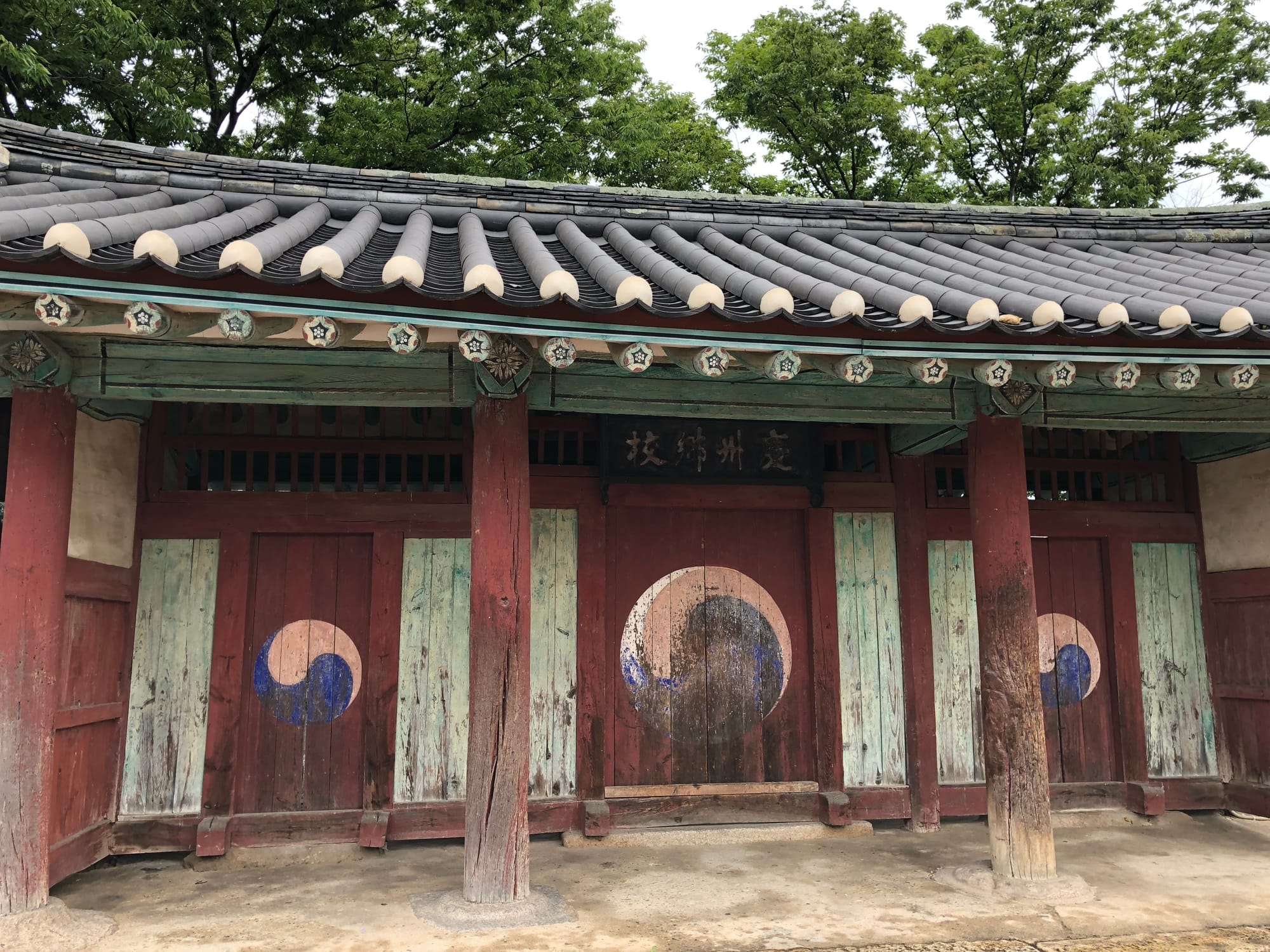
1. The Quiet Atmosphere of Gyochon Village
Visiting Gyochon Village(교촌마을) in Gyeongju(경주) on a rainy day offered a serene and grounded experience. The wet stone walls and damp earth created a peaceful atmosphere, making the historical site feel even more authentic. Walking through the quiet alleys lined with traditional houses allowed for a deeper appreciation of the heritage preserved in the ancient capital.
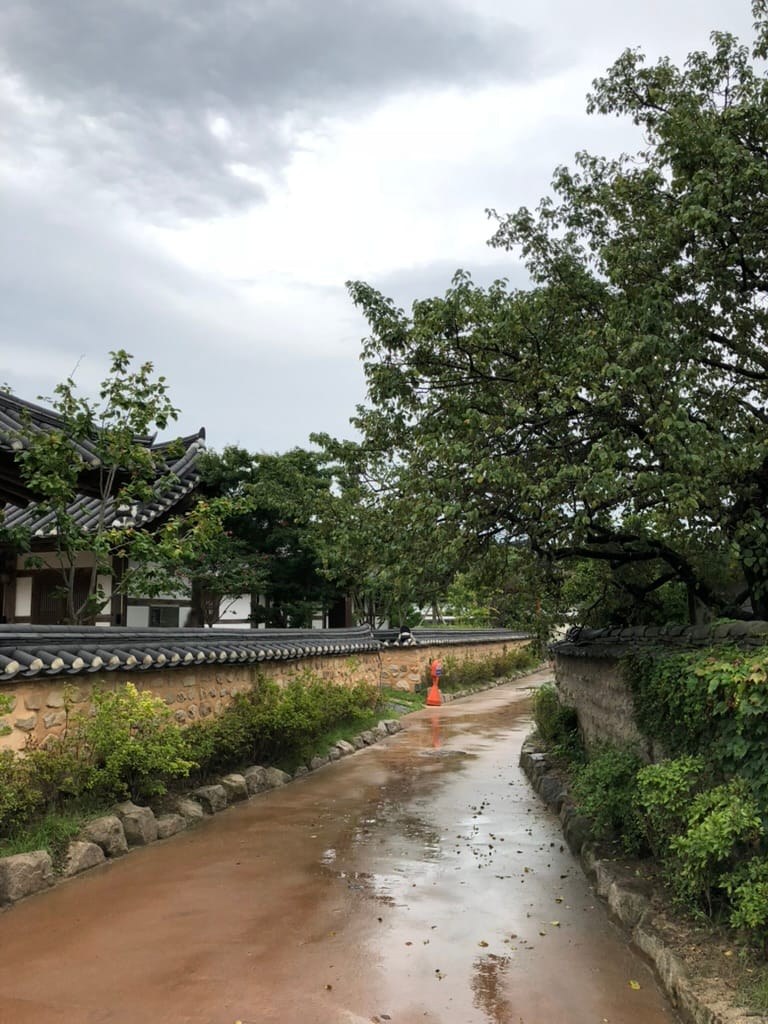
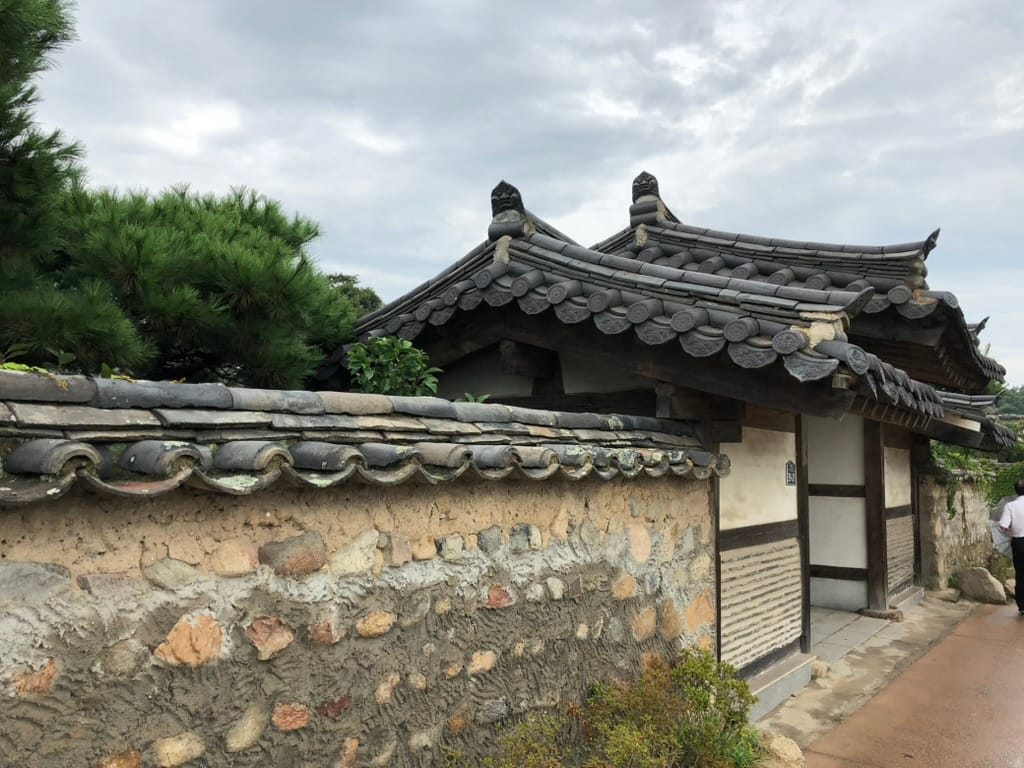
A wet, quiet alleyway and the entrance to a traditional house in Gyochon Village(교촌마을).
2. The Elegance of Hanok(한옥) Architecture
The architecture in the village showcases the intricate beauty of traditional design. I was fascinated by the curved eaves of the Giwa(기와) roofs and the sturdy wooden structures that harmonize with nature. Observing the detailed patterns of the tiles and the open wooden porches provided a glimpse into the sophisticated craftsmanship of the past.
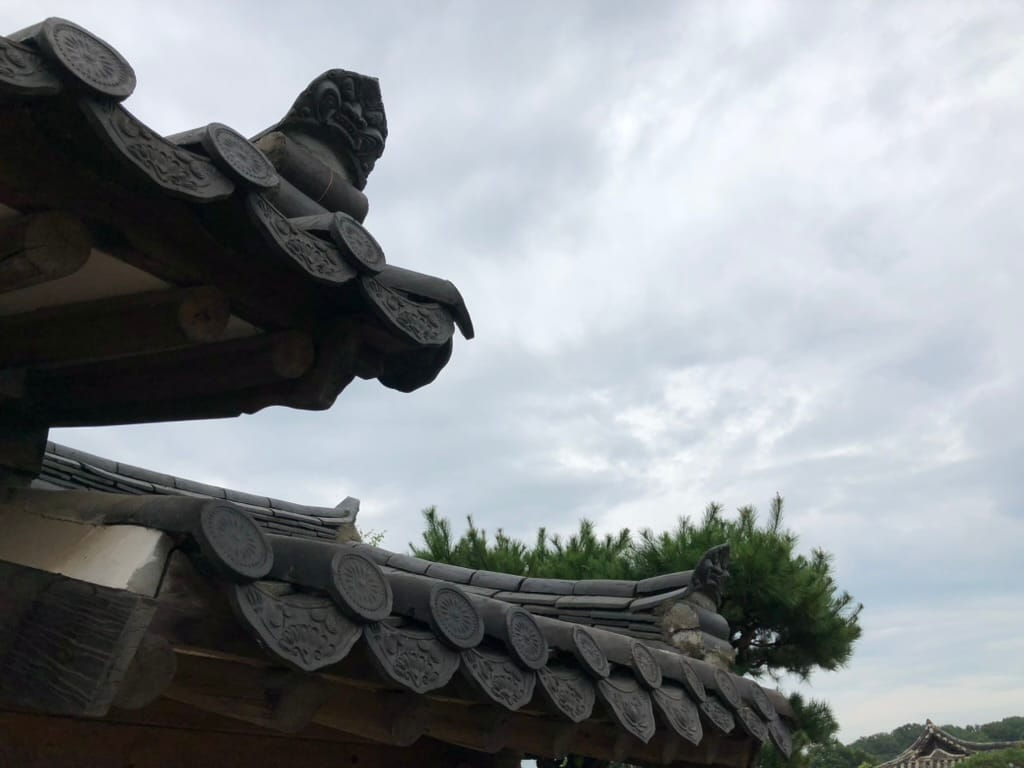
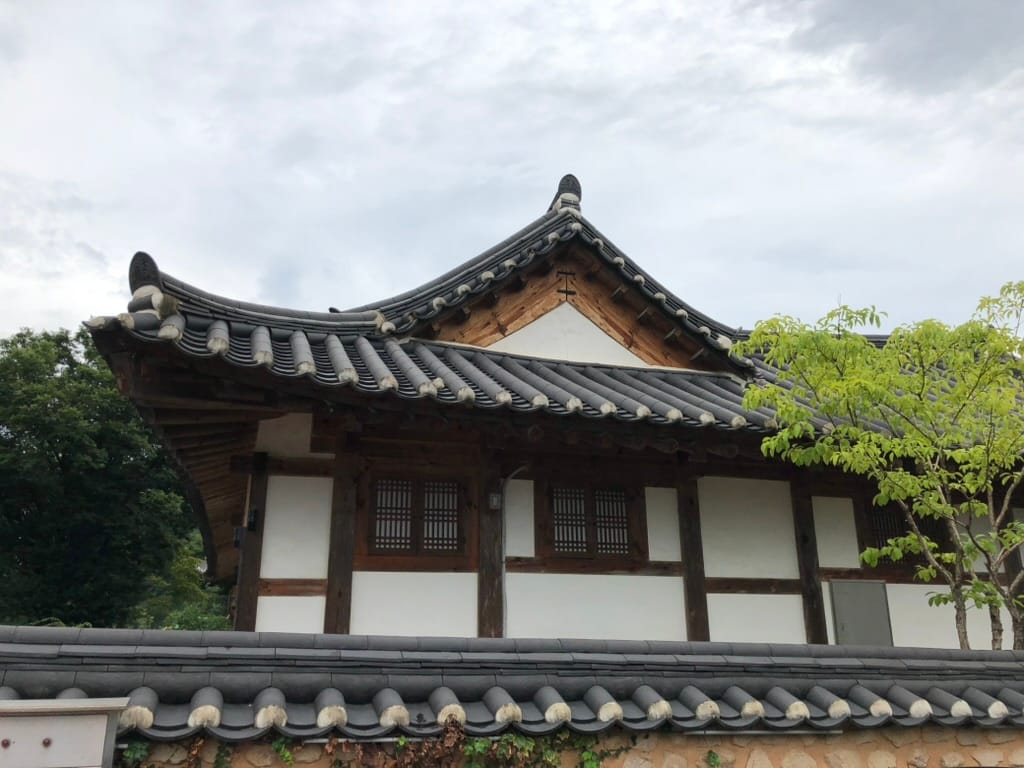
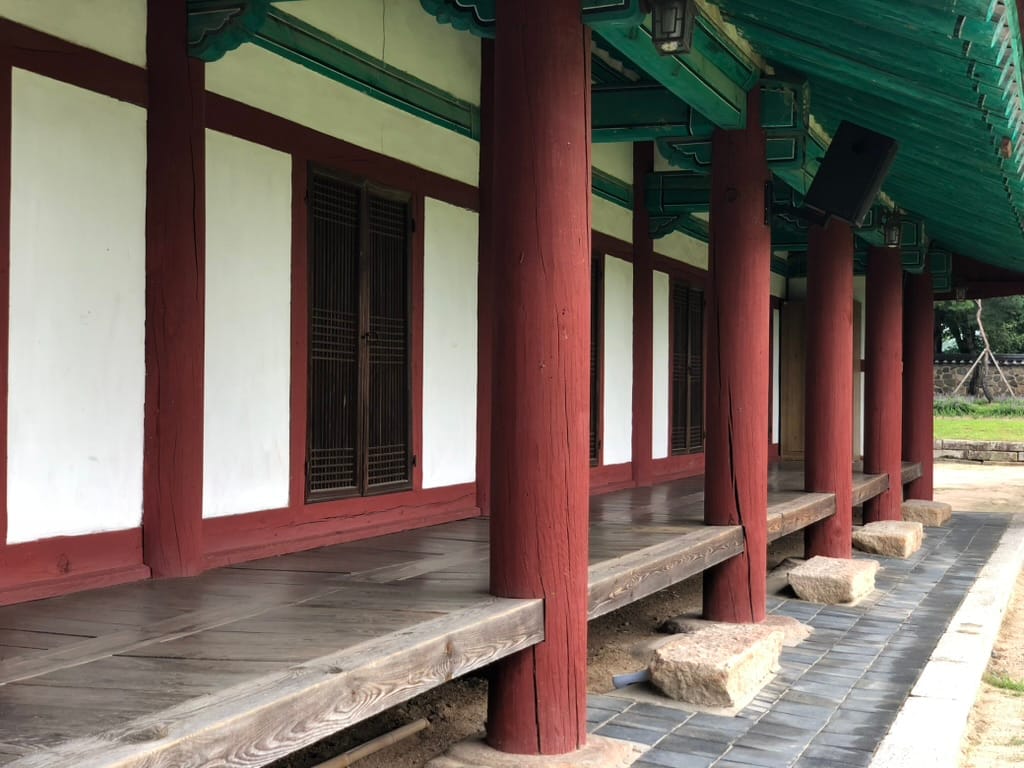
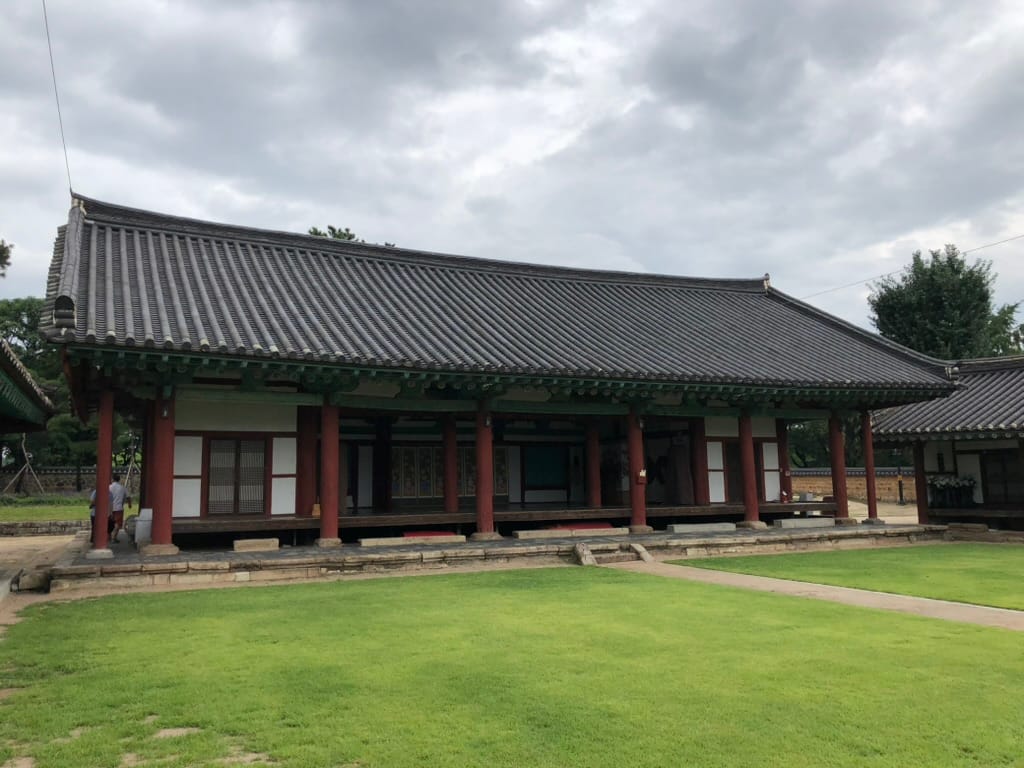
Detailed views of Giwa(기와) roof tiles and the interior structure of a Hanok(한옥) building.
3. Gyeongju Hyanggyo(경주향교): A Place of Learning
Gyeongju Hyanggyo(경주향교) stands as a dignified symbol of educational history. The large wooden gate adorned with the Taeguk(태극) symbol represents the academic and spiritual foundations of the past. The spacious courtyard and the surrounding stone walls remain well-preserved, maintaining a scholarly atmosphere even under the rainy sky.
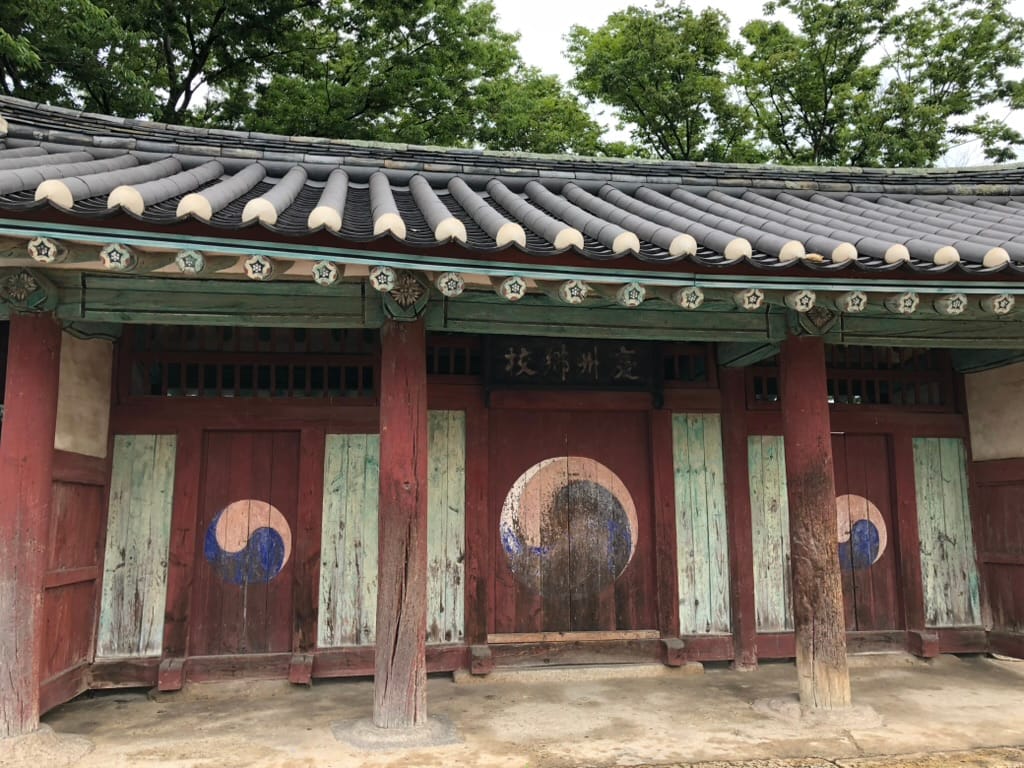
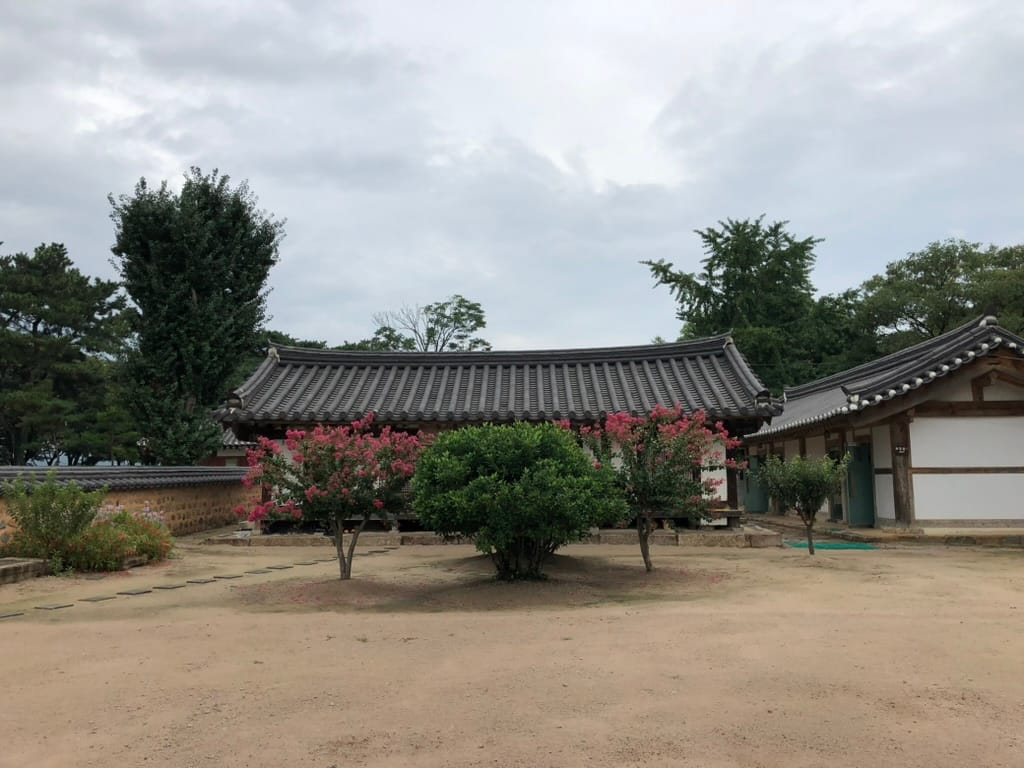
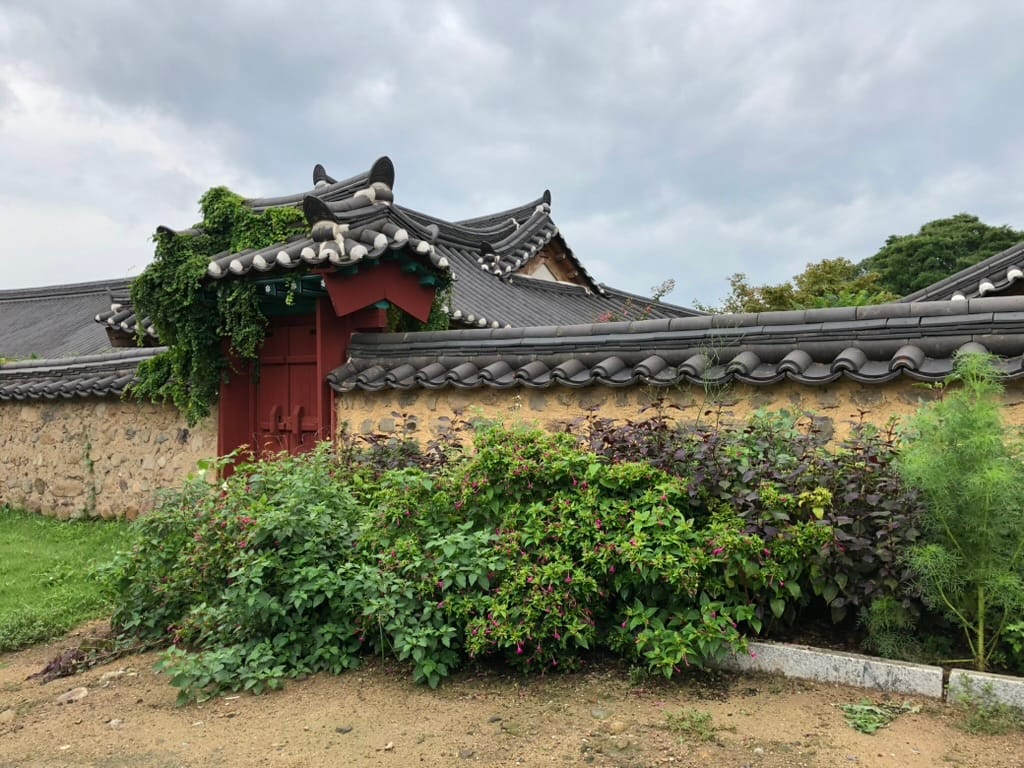
The historic gate with the Taeguk(태극) symbol and the peaceful courtyard of Gyeongju Hyanggyo(경주향교).
4. Nature and Living Creatures in the Village
The village is home to vibrant flora and friendly local residents. Bright pink crape myrtle flowers and sturdy pine trees provide a beautiful contrast against the stone walls. Encountering a Donggyeong-i(동경이) dog—a breed native to this region—and a quiet cat by the traditional wall added warmth to the rainy journey.
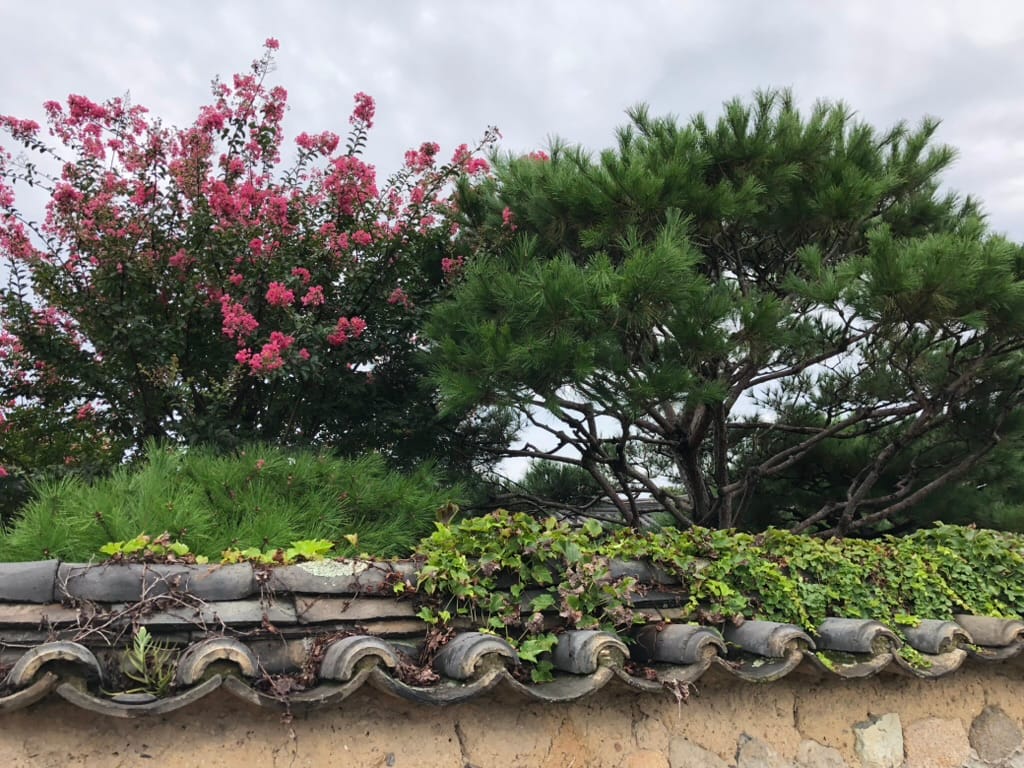
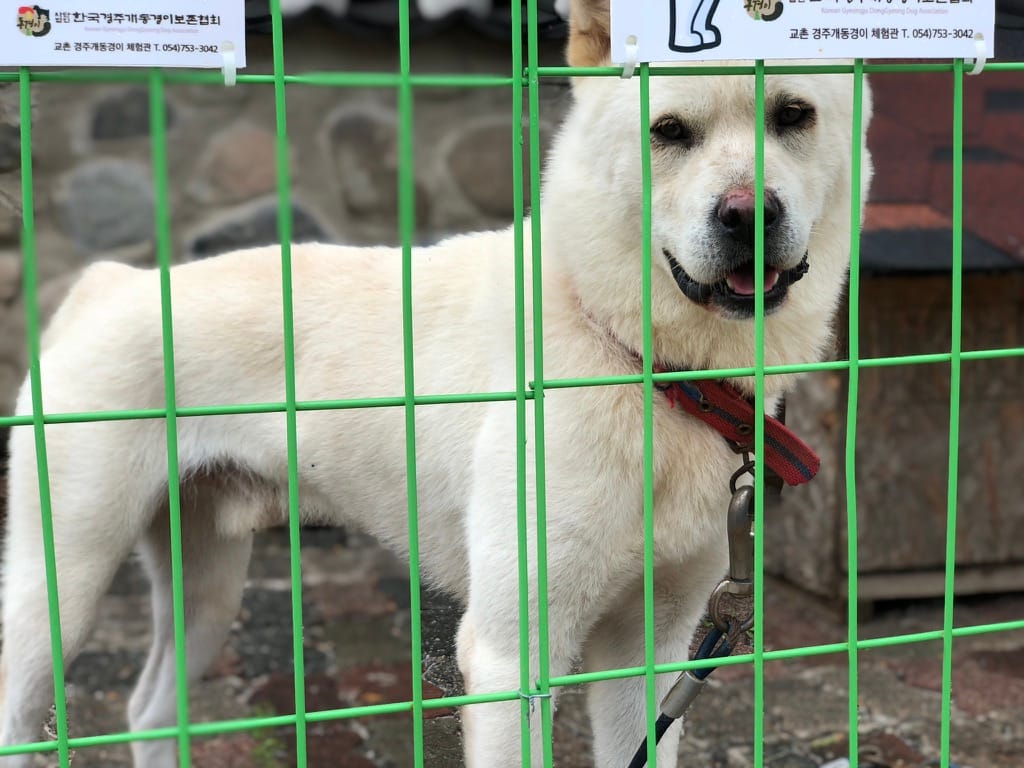
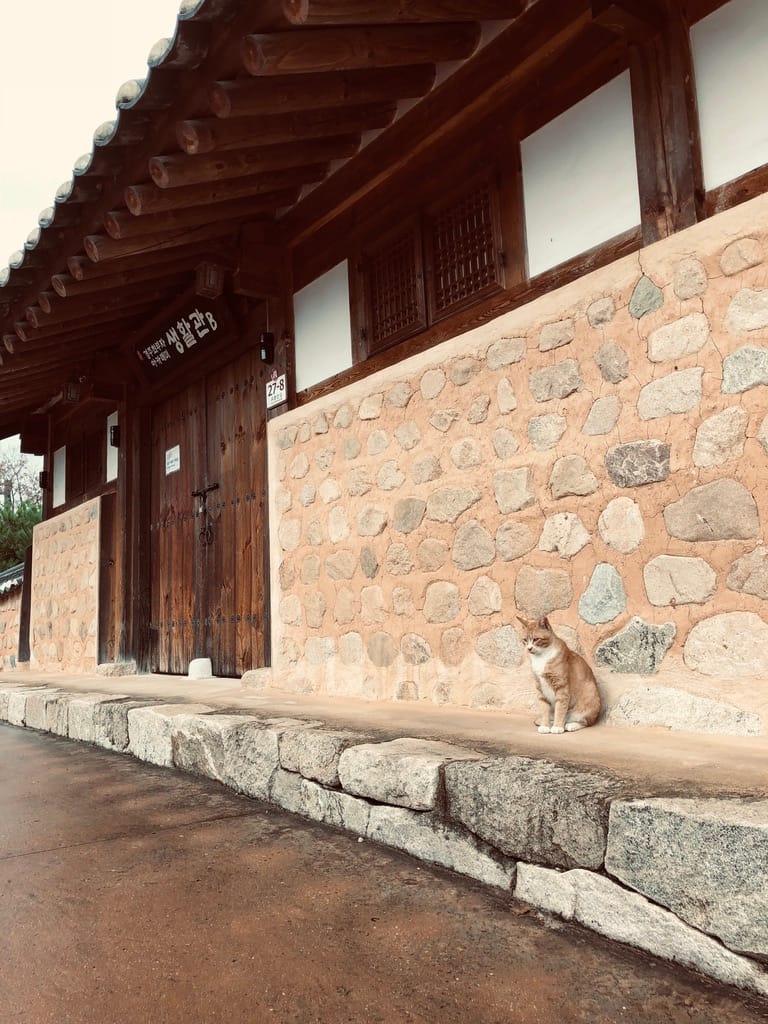
Blooming flowers, the native Donggyeong-i(동경이) dog, and a cat resting by a stone wall.
5. The Majesty of Woljeonggyo Bridge(월정교)
Woljeonggyo Bridge(월정교) is an architectural masterpiece that spans across the stream. Its massive structure and vibrant traditional colors were incredibly impressive even under the gray sky. Seeing the bridge reflected in the calm water captured the majestic spirit of the ancient city.
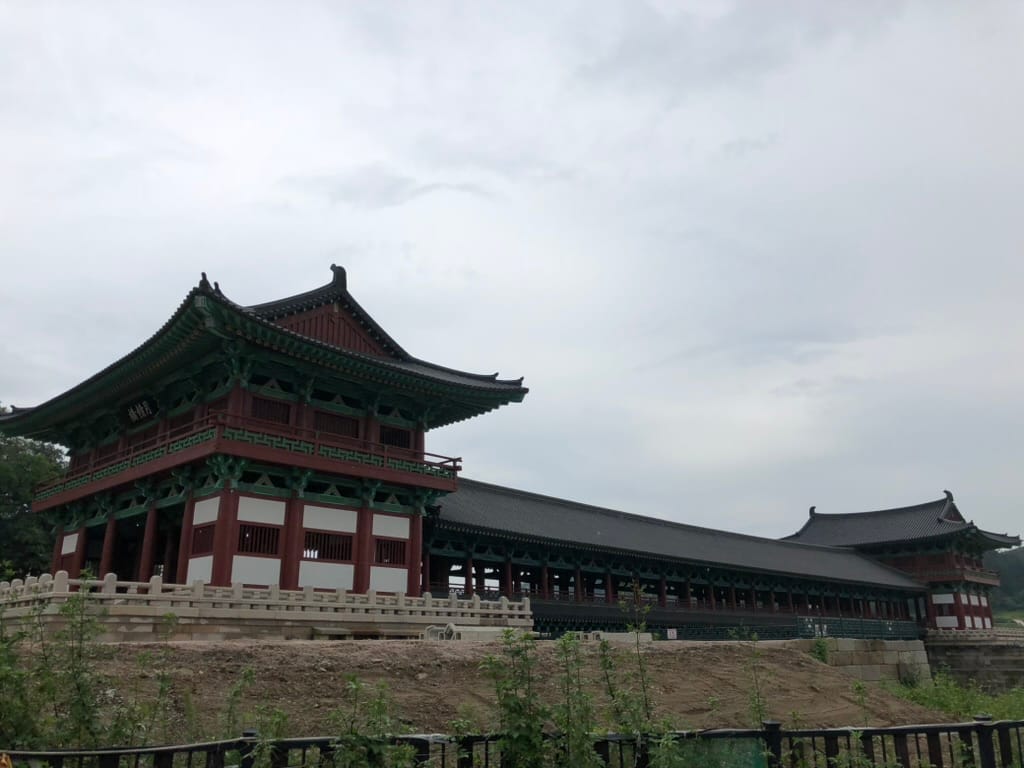
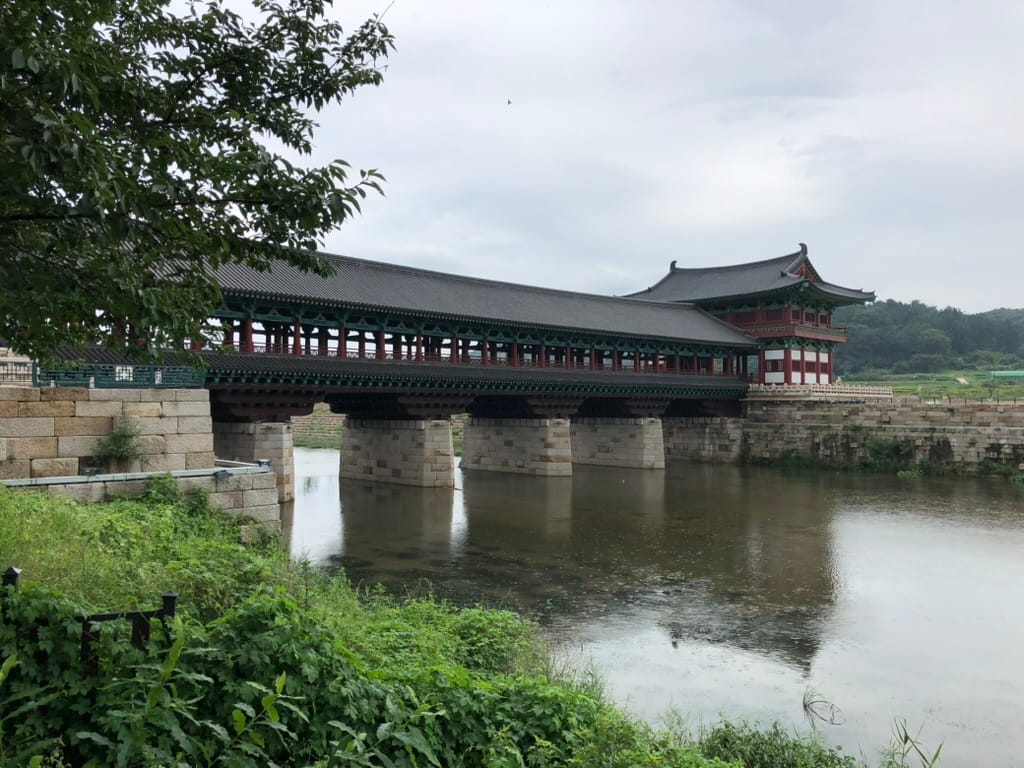
Various views of the magnificent Woljeonggyo Bridge(월정교).
6. Iconic Landmarks: Daereungwon(대릉원) and Cheomseongdae(첨성대)
A trip to Gyeongju(경주) is incomplete without visiting the royal tombs at Daereungwon(대릉원) and the ancient observatory, Cheomseongdae(첨성대). The large green mounds under the misty sky looked mystical, while Cheomseongdae(첨성대) stood as a testament to the scientific advancement of the Silla Dynasty(신라시대).
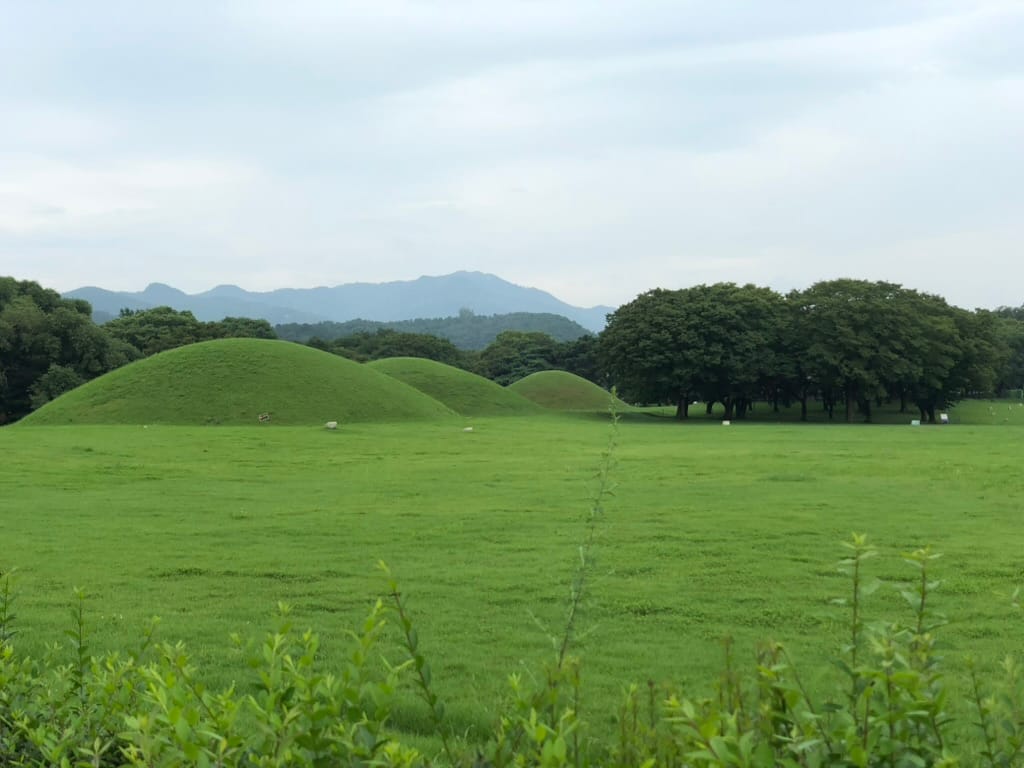
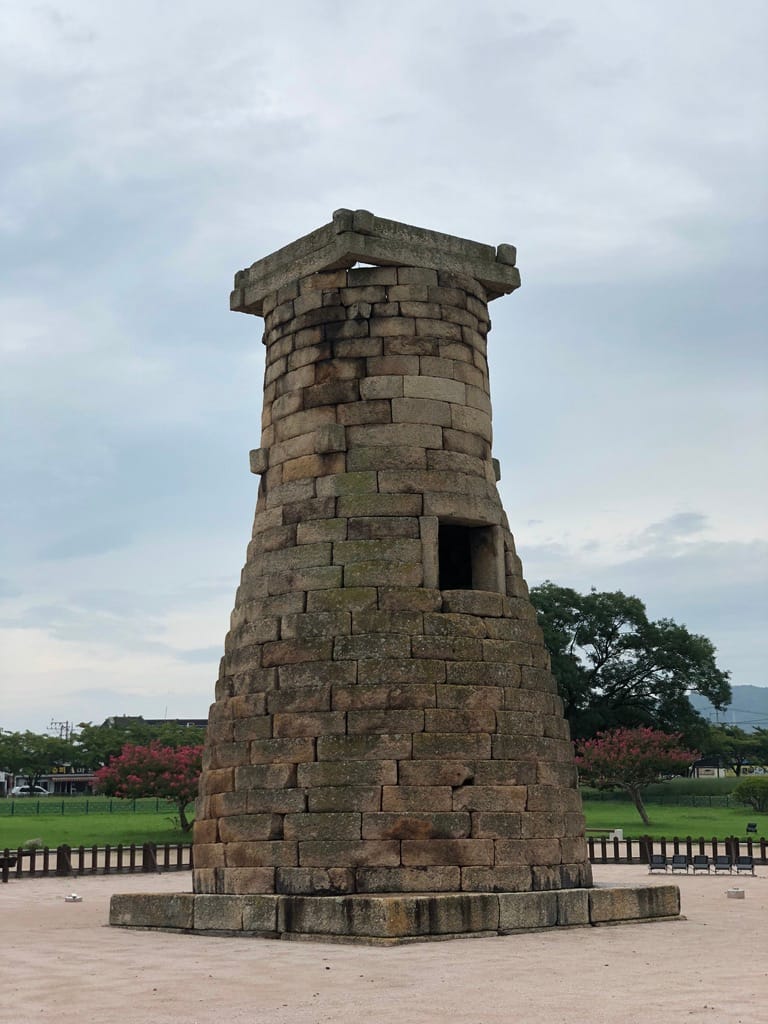
The mystical royal tombs of Daereungwon(대릉원) and the iconic Cheomseongdae(첨성대).
7. The Splendor of Donggung Palace and Wolji Pond(동궁과 월지)
Donggung Palace and Wolji Pond(동궁과 월지) offered a breathtaking view of royal gardens. I was captivated by the vibrant and intricate Dancheong(단청) patterns on the wooden pavilions. The reflection of the traditional structures on the pond's surface, combined with the lush greenery, showcased the peak of royal aesthetics from the past.
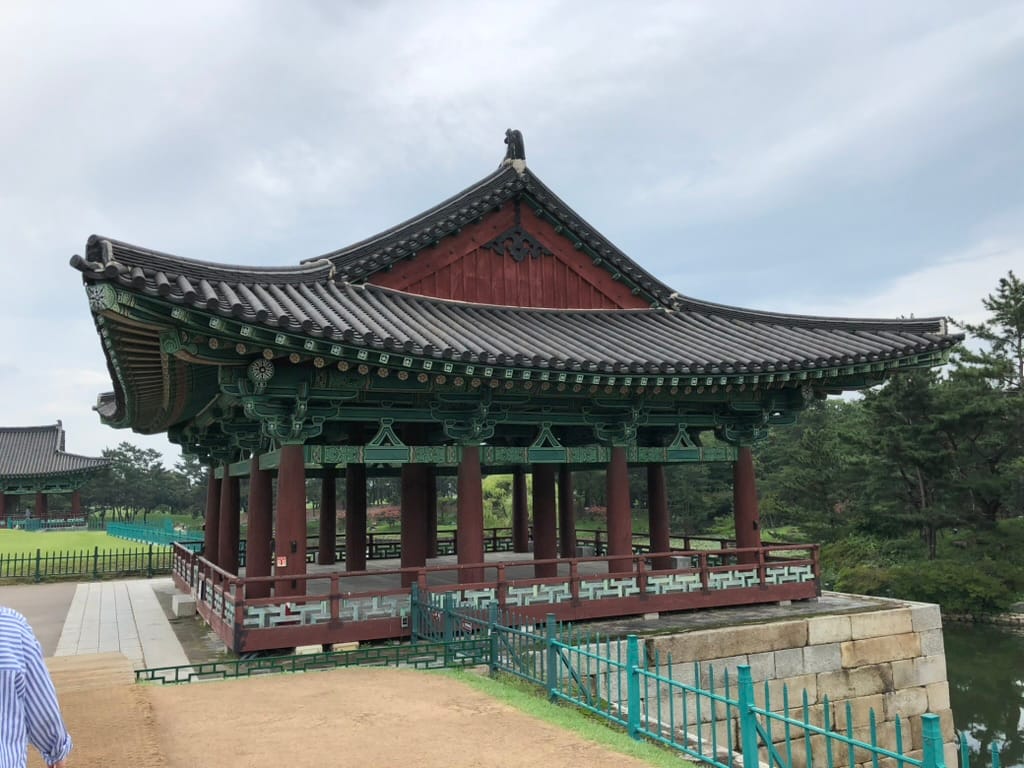
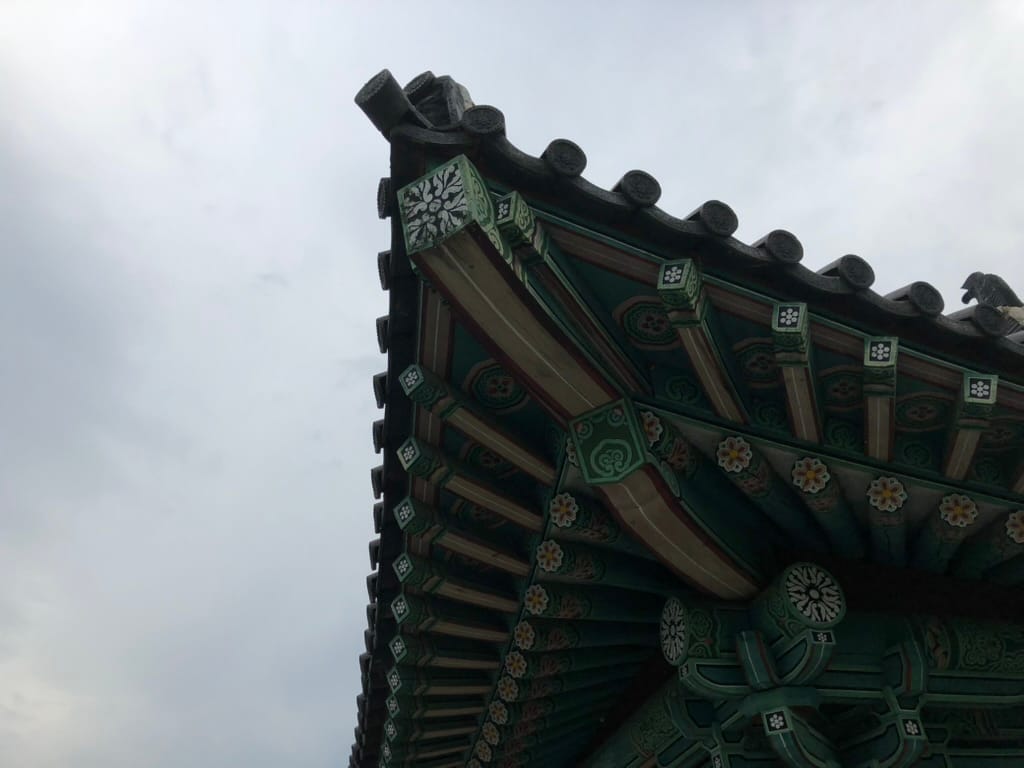
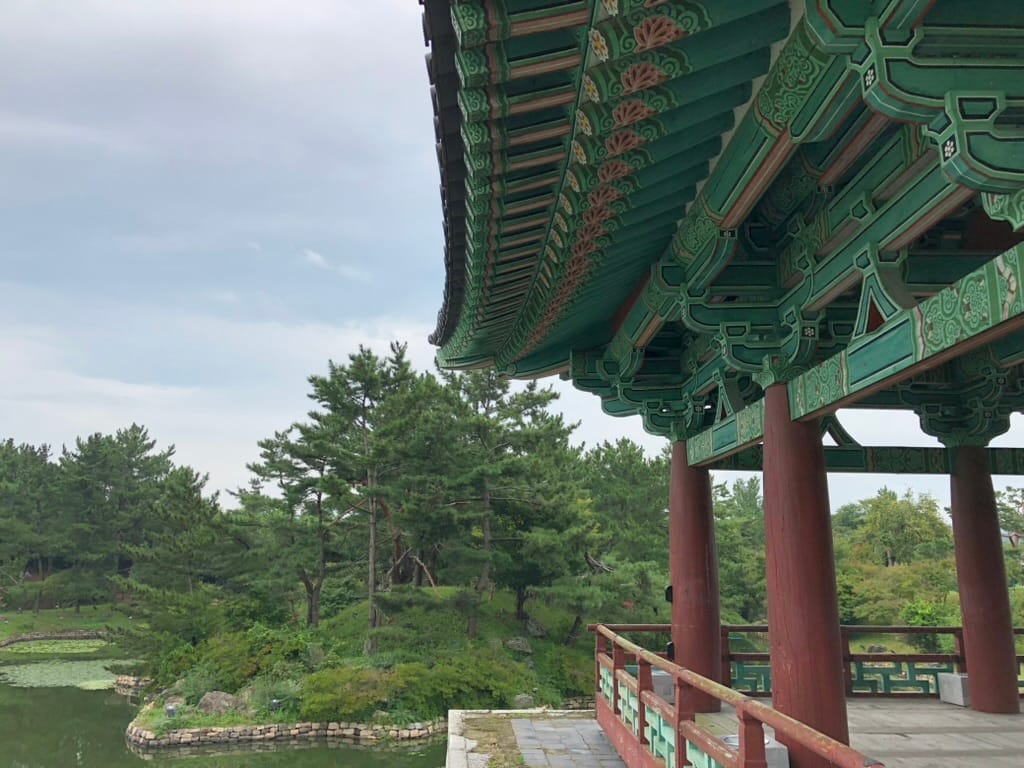
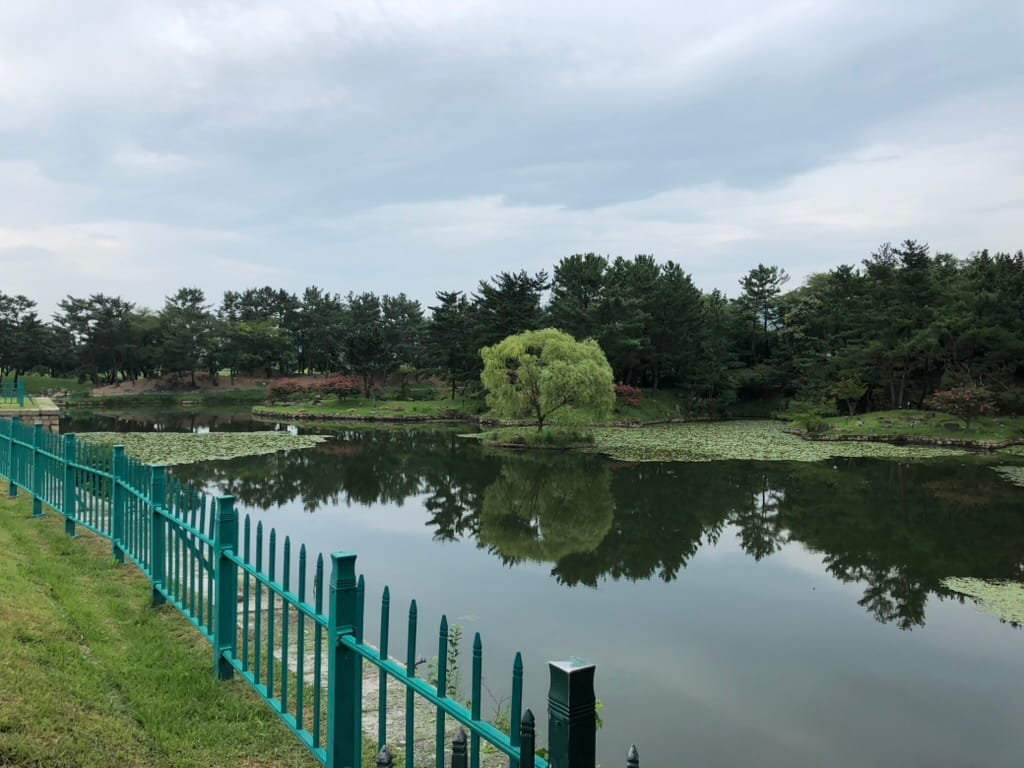
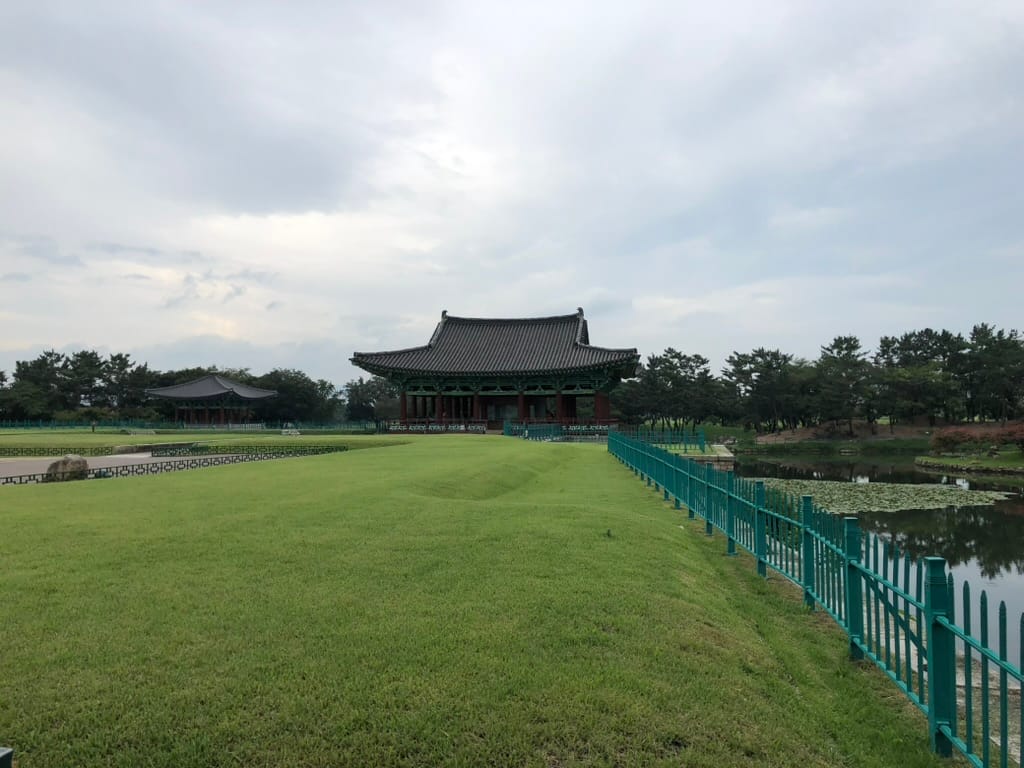
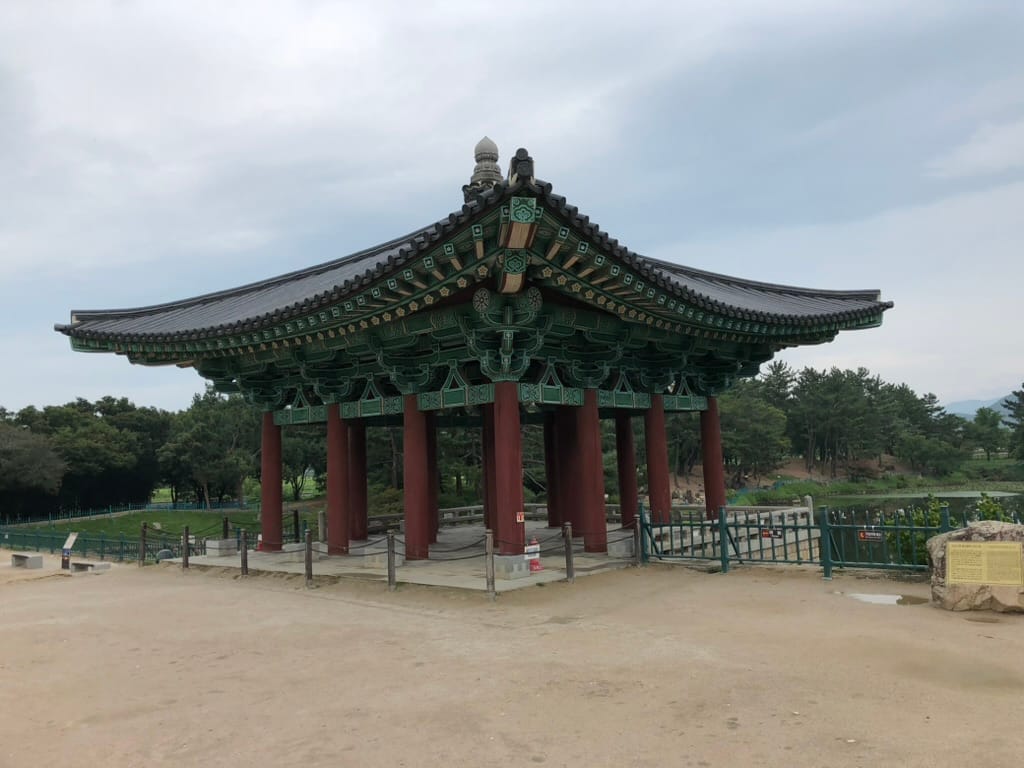
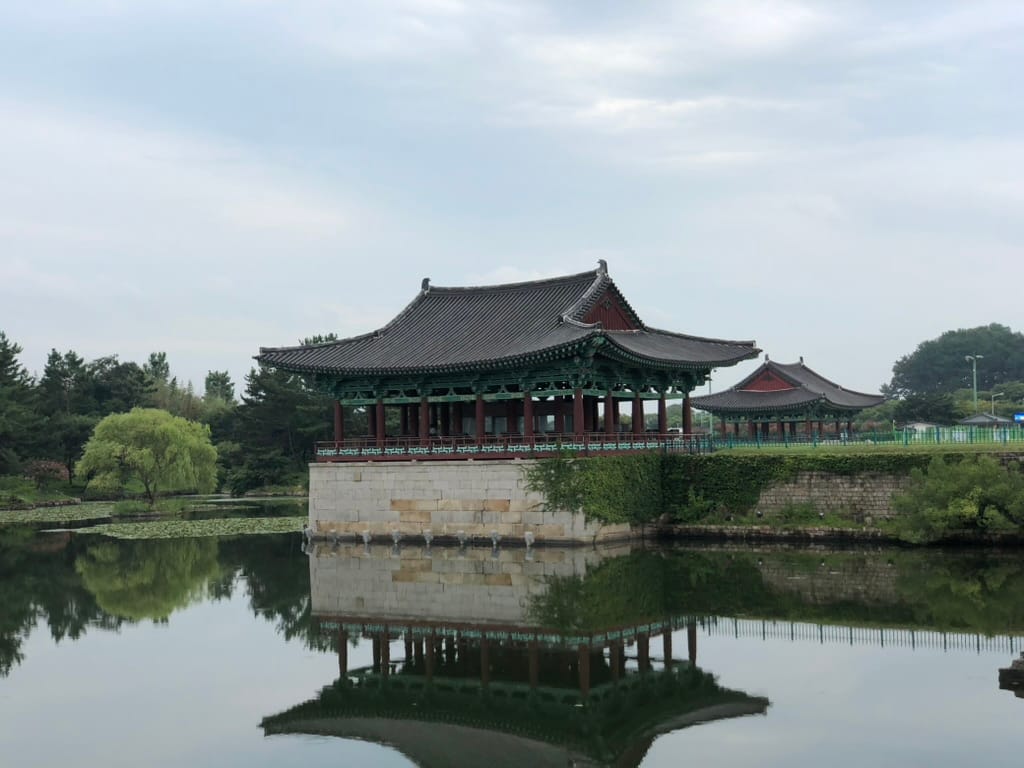
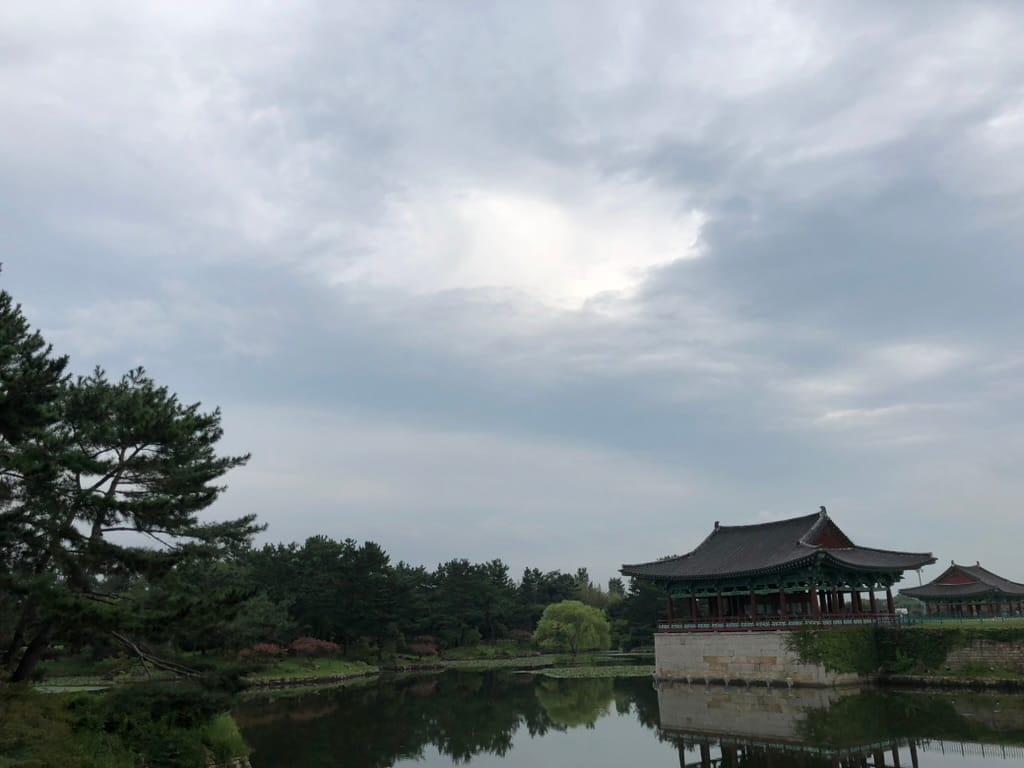
Stunning pavilions, intricate Dancheong(단청) patterns, and the peaceful reflections at Donggung Palace and Wolji Pond(동궁과 월지).
8. Traces of Ancient Poetry: Poseokjeong(포석정)
A visit to Poseokjeong(포석정) provided a look at the unique leisure culture of the royalty. The stone water channel, where poets once floated wine cups, remains as a trace of ancient gatherings. Seeing the water flow through the historic stone path allowed me to imagine the sophisticated atmosphere of the banquets held here long ago.
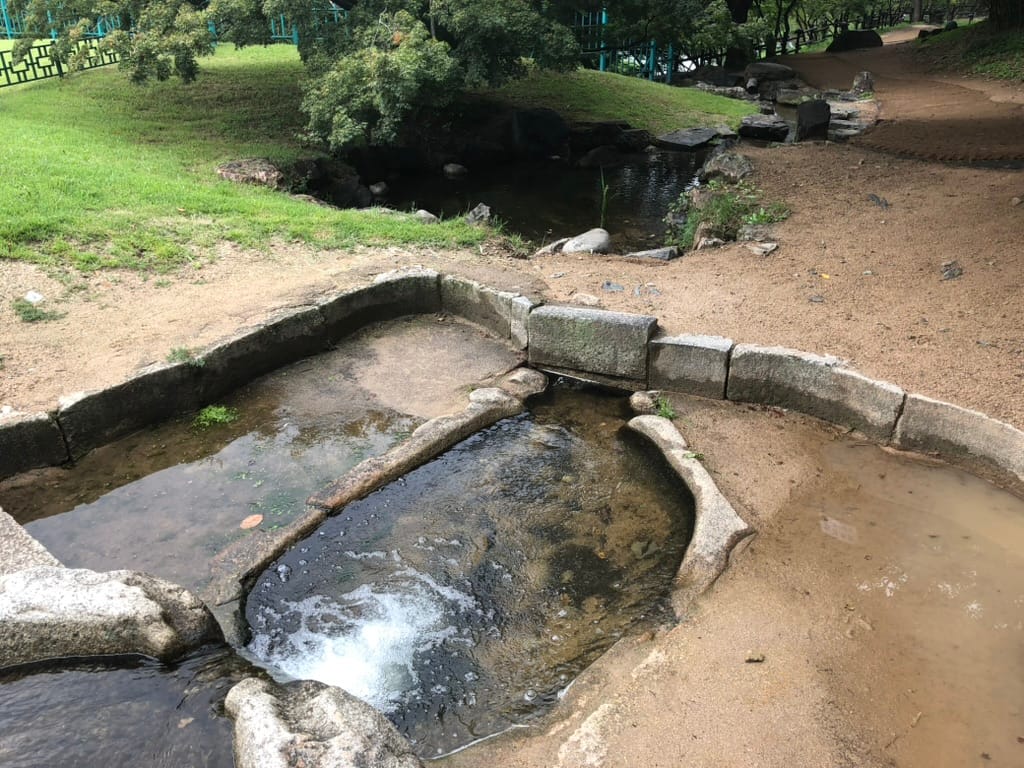
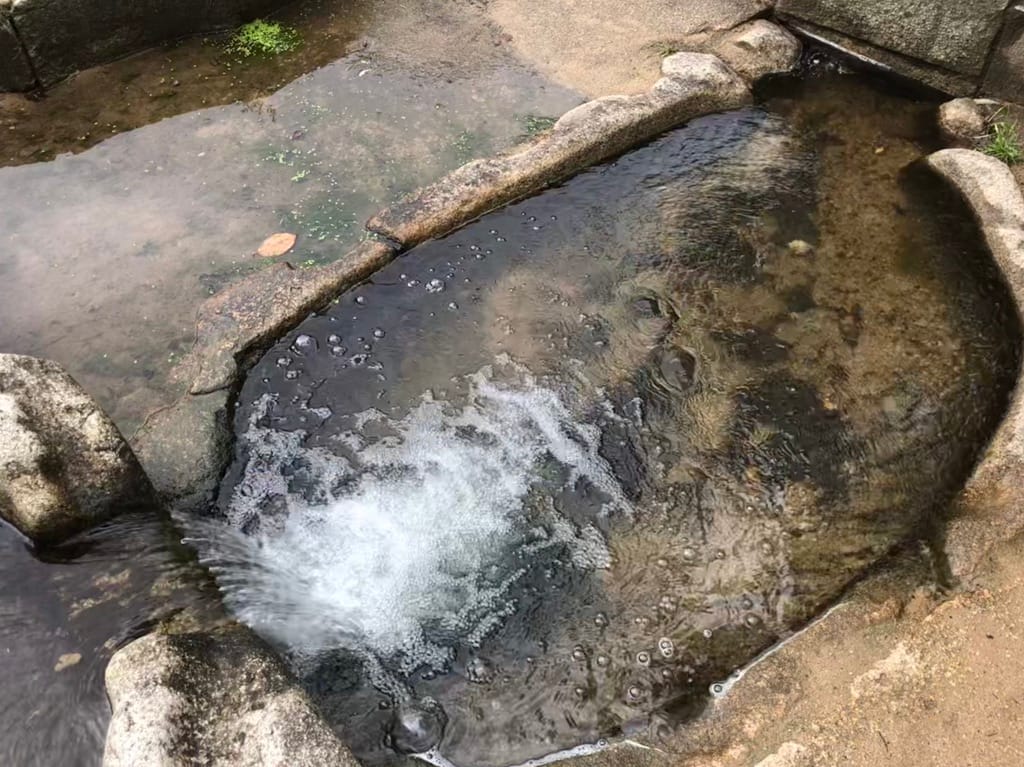
The unique stone water channel at Poseokjeong(포석정).
Glossary
- Gyeongju(경주): A historic city in North Gyeongsang Province, South Korea.
- Gyochon Village(교촌마을): A traditional village in Gyeongju famous for its Hanok houses.
- Gyeongju Hyanggyo(경주향교): A local government-run school from the Joseon Dynasty.
- Woljeonggyo Bridge(월정교): A reconstructed bridge from the Silla period.
- Daereungwon(대릉원): A park containing royal tombs of the Silla Dynasty.
- Cheomseongdae(첨성대): The oldest surviving astronomical observatory in Asia.
- Donggung Palace and Wolji Pond(동궁과 월지): A secondary palace site with a royal garden.
- Poseokjeong(포석정): An ancient site known for its abalone-shaped stone water channel.
- Hanok(한옥): A traditional Korean house.
- Giwa(기와): Traditional Korean roof tiles.
- Taeguk(태극): The traditional Korean symbol representing cosmic harmony.
- Donggyeong-i(동경이): A rare, short-tailed dog breed native to Gyeongju.
- Silla Dynasty(신라시대): One of the Three Kingdoms of ancient Korea.