
Exploration of Yang-gok 5-Day Market and the Flavors of Wando-jip
An overview of the historical background of Yang-gok 5-Day Market(양곡오일장), formerly known as Orani Market(오라니장터). The post details its significance as a cattle market and independence movement site, alongside a review of the food stall Wando-jip(완도집).

1. Yang-gok 5-Day Market and Gimpo's Trading Traditions
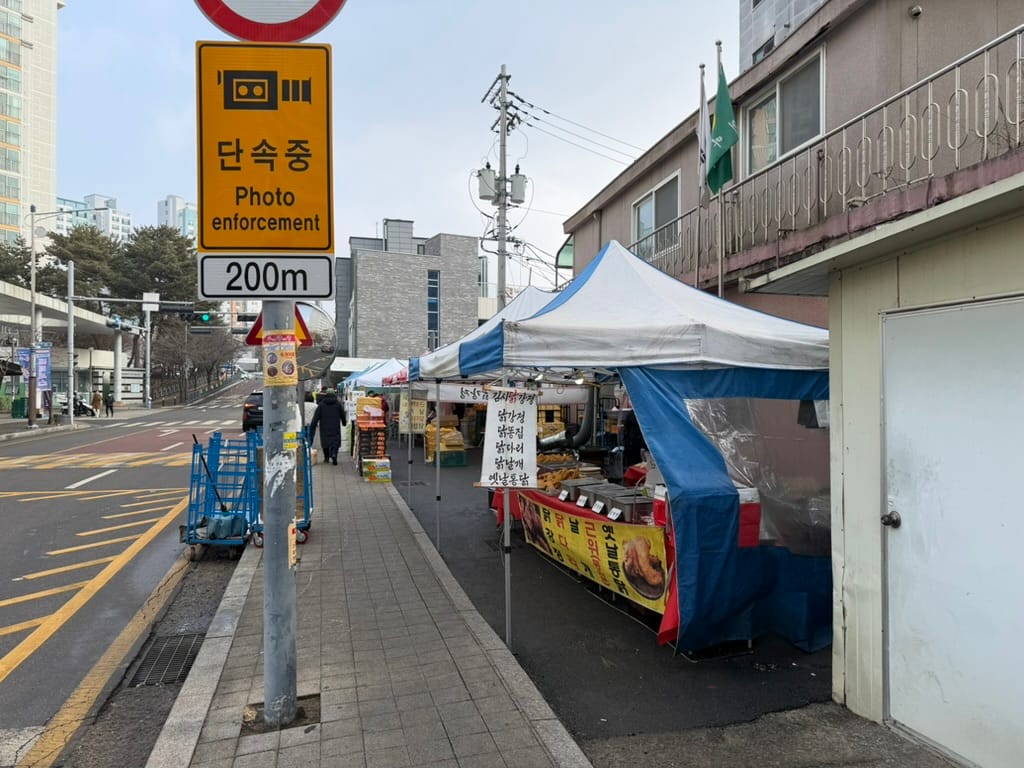
Gimpo-si(김포시) hosts several major traditional markets that operate on a five-day cycle. Representative markets include Gimpo 5-Day Market(김포장) in Buk-byeon-dong and Ma-song 5-Day Market(마송5일장) in Tong-jin-eup. Yang-gok 5-Day Market(양곡오일장) in Yangchon-eup(양촌읍) opens on days ending in 1 and 6. Historically known as Orani Market(오라니장터), this location was once one of the largest marketplaces in the western Gyeonggi-do region. It was particularly famous as a major cattle market and holds historical significance as a site where an independence movement protest took place on March 23, 1919. While the market in Buk-byeon-dong is currently known for its large scale, Yang-gok 5-Day Market is relatively small but preserves these deep historical roots.
2. Wando-jip: The Sole Food Stall of Yang-gok Market
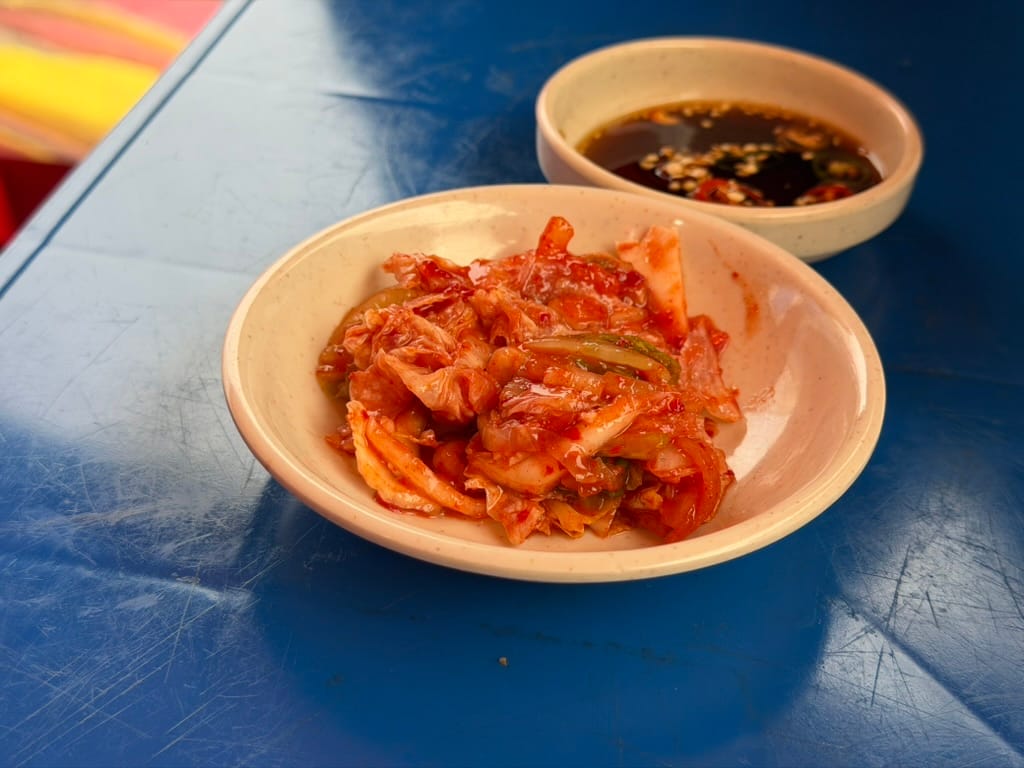
The scale of the market significantly influences the number of available eateries. In the larger Gimpo 5-Day Market, visitors can find approximately five to six food stalls. However, Yang-gok 5-Day Market is small enough that it features only one Po-jang-ma-cha(포장마차) named Wando-jip(완도집). This stall serves as a central hub for those seeking a meal within the market grounds. The interior is arranged with simple blue tables and red stools, creating an authentic and humble atmosphere characteristic of traditional marketplace dining.
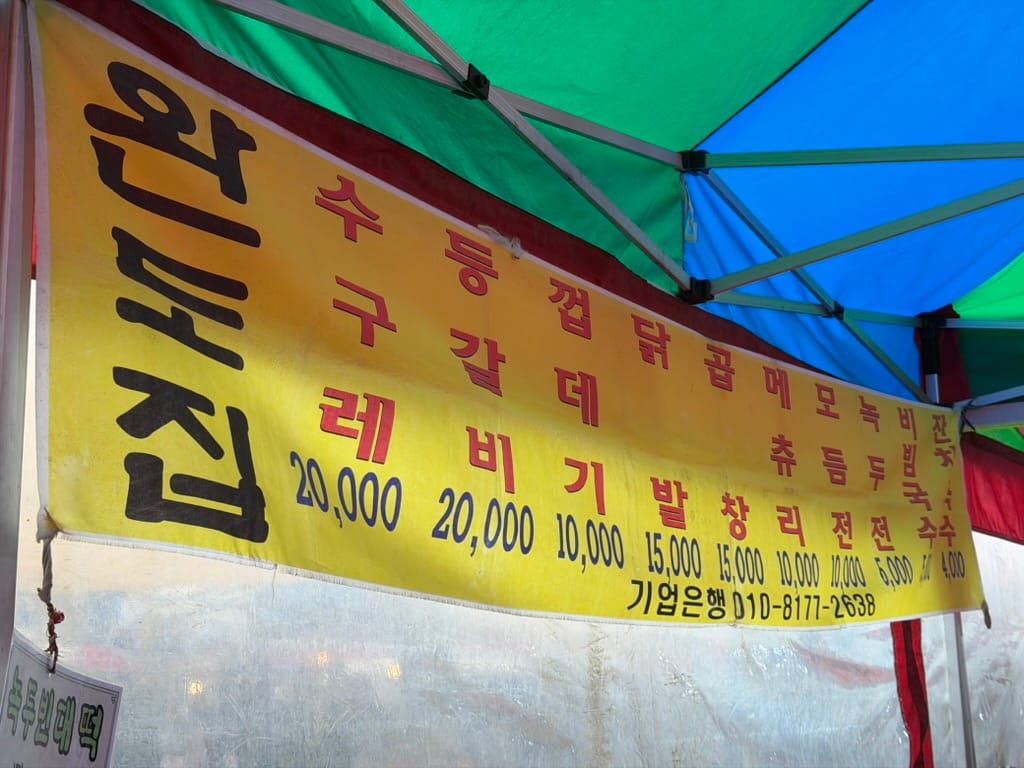
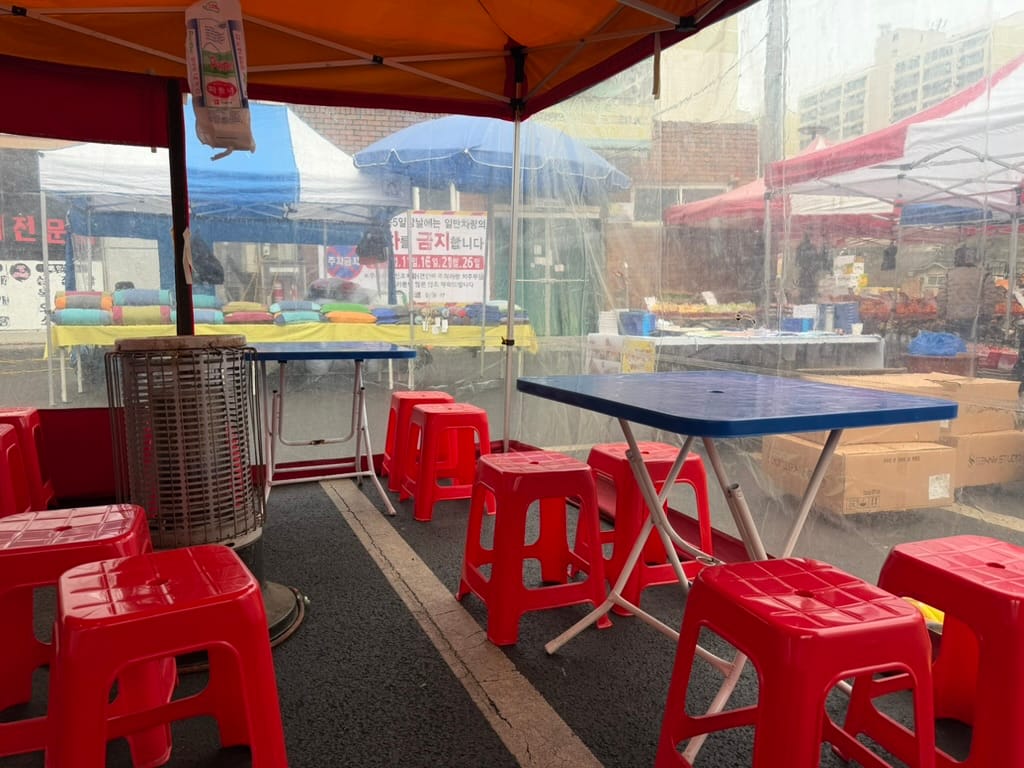
The interior atmosphere and menu banner of Wando-jip, featuring traditional marketplace seating.
3. Experience with Deung-gal-bi and Dining Environment
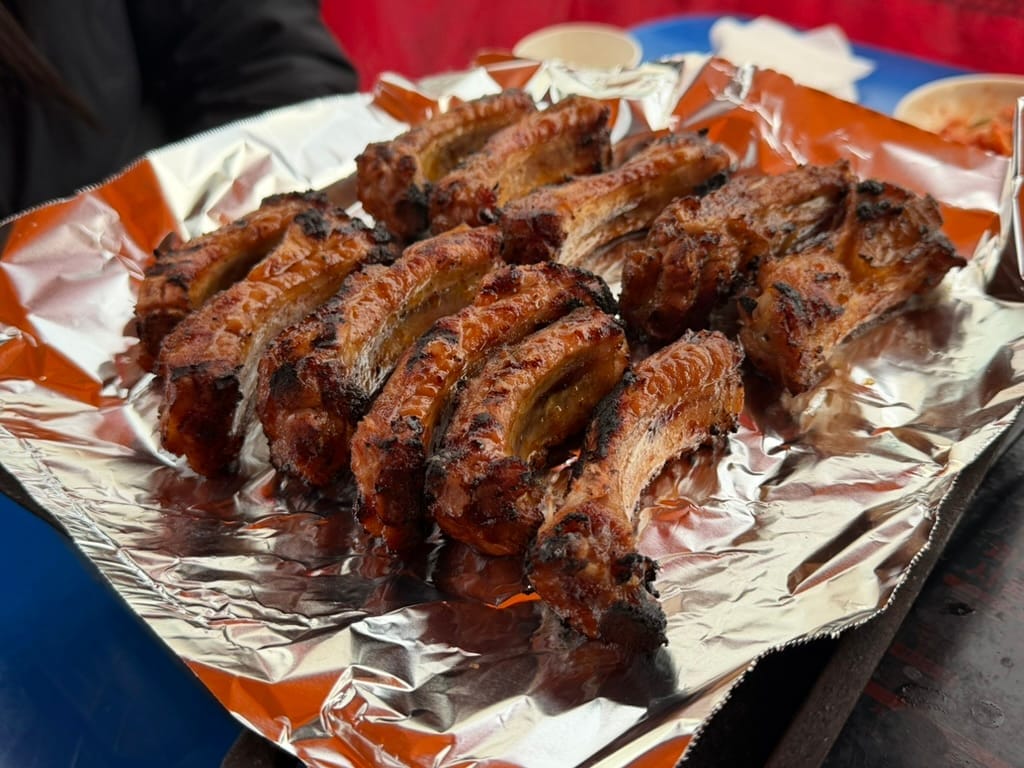
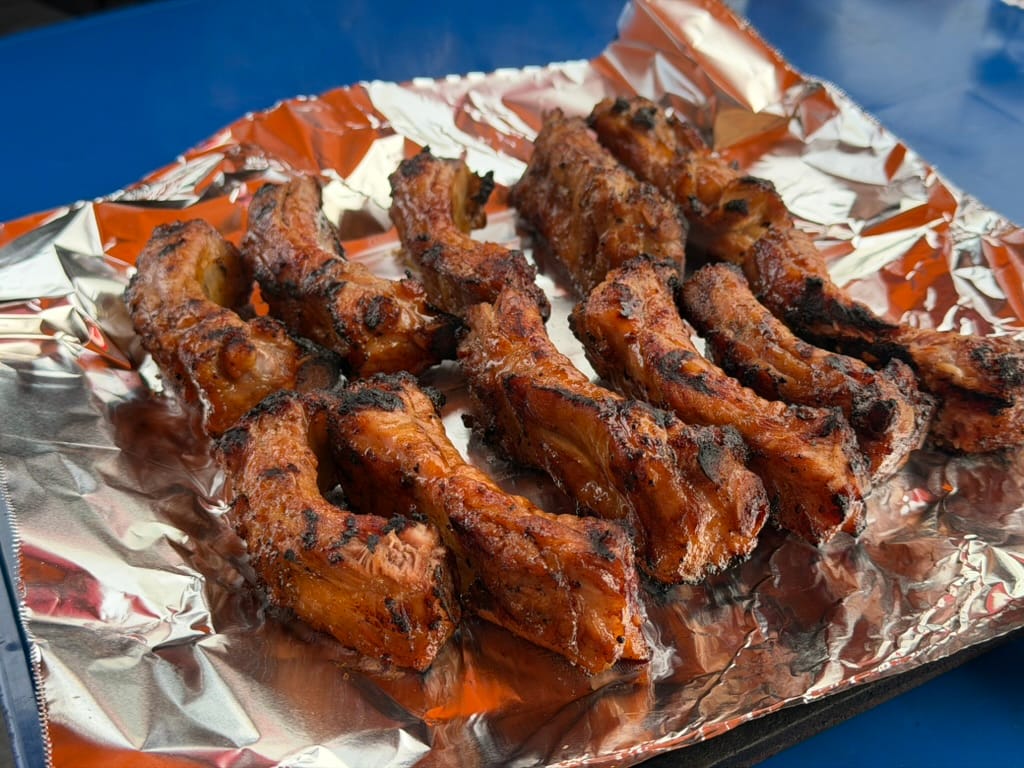
The meal at Wando-jip included Deung-gal-bi(등갈비) priced at 20,000 KRW and two bottles of Soju(소주). The ribs were pre-cooked and then reheated on a gas grill at the table. Preparation took some time, and the taste was acceptable but not distinctive. Unlike the charcoal grills at Gimpo 5-Day Market, which often leave smoke on clothing, this setup was largely smokeless. Compared to the charcoal-grilled version, it tasted cleaner with a milder smoky note.
4. Review of Mo-deum-jeon and Nok-du-jeon
The dining continued with Mo-deum-jeon(모듬전) and Nok-du-jeon(녹두전). The Mo-deum-jeon cost 10,000 KRW and included perilla leaf pancakes, meatballs, pollack, and skewers. The final order was Nok-du-jeon(녹두전) for 6,000 KRW, which was served promptly after ordering. Among the dishes, it was the most reasonable choice in terms of portion and price. During the visit, Nok-du-jeon was ordered frequently by local elders, suggesting it is a commonly chosen item at the market.
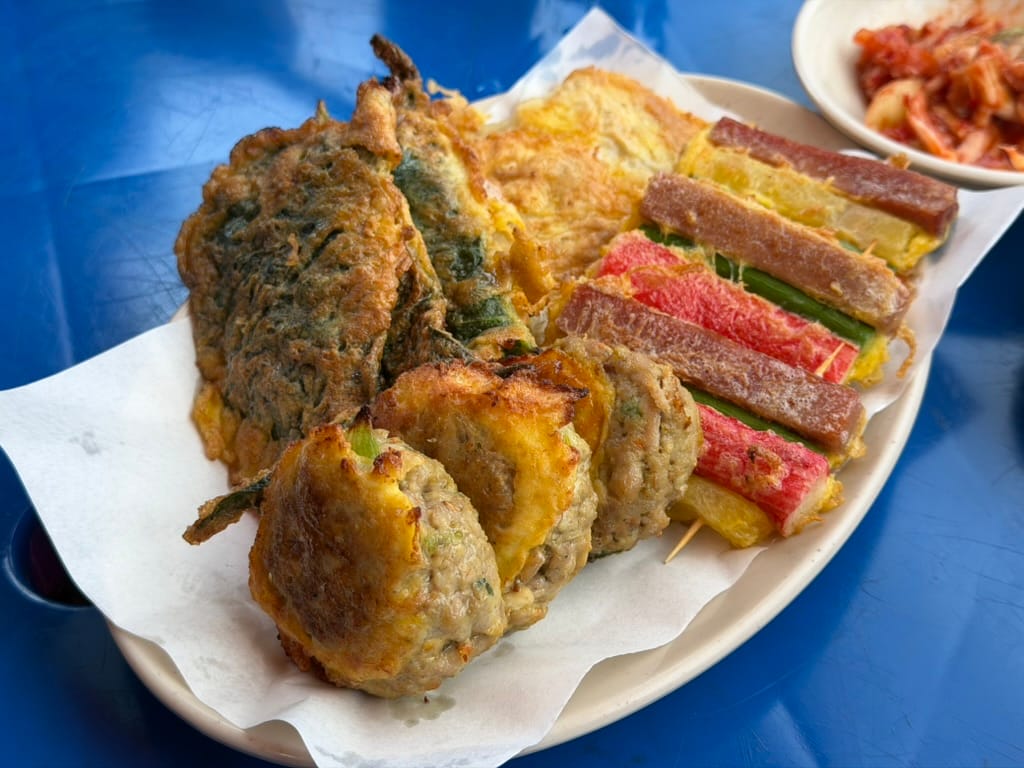
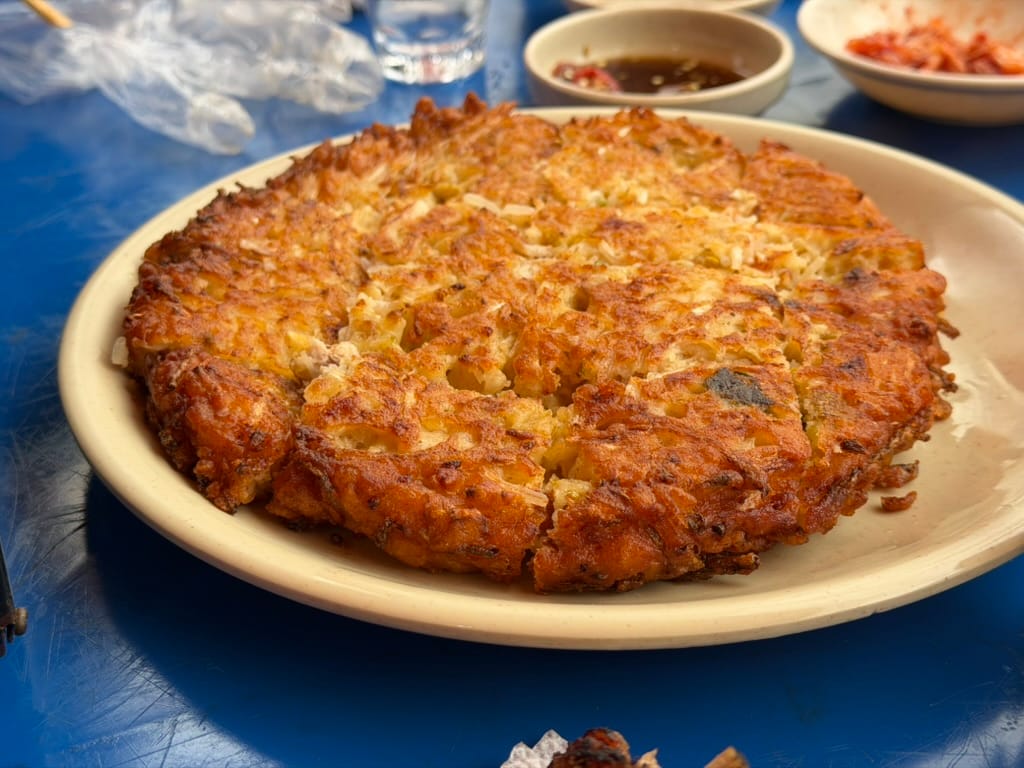
Assorted Mo-deum-jeon and the crispy Nok-du-jeon served with simple side dishes.
5. Practical Information for Visitors
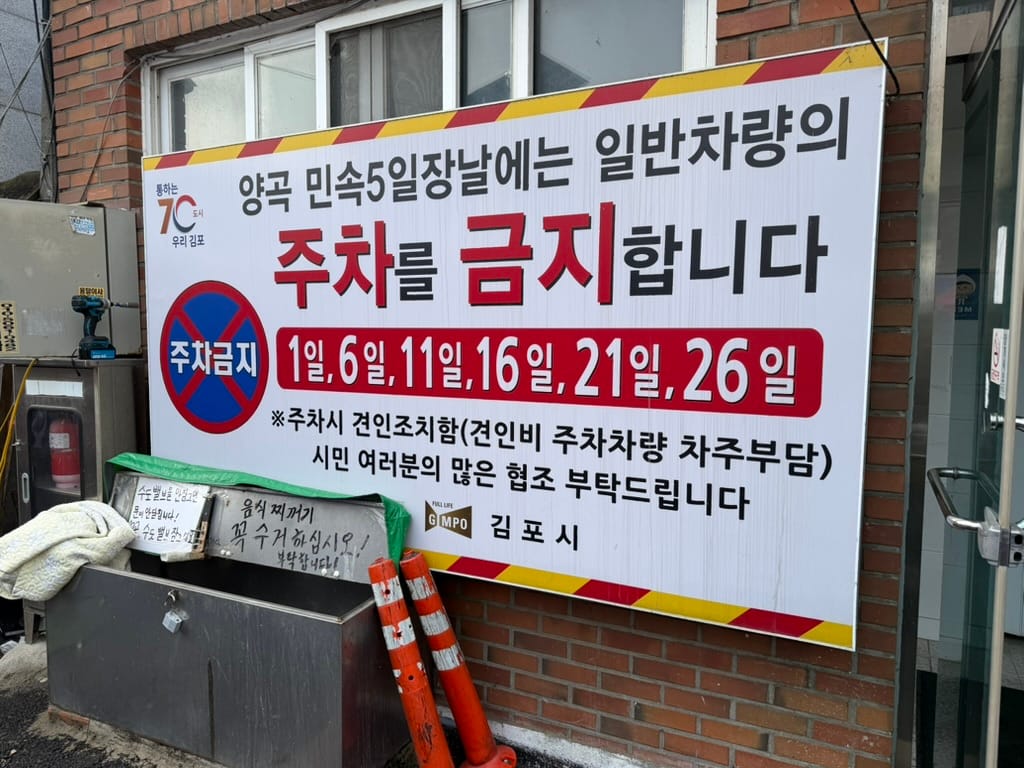
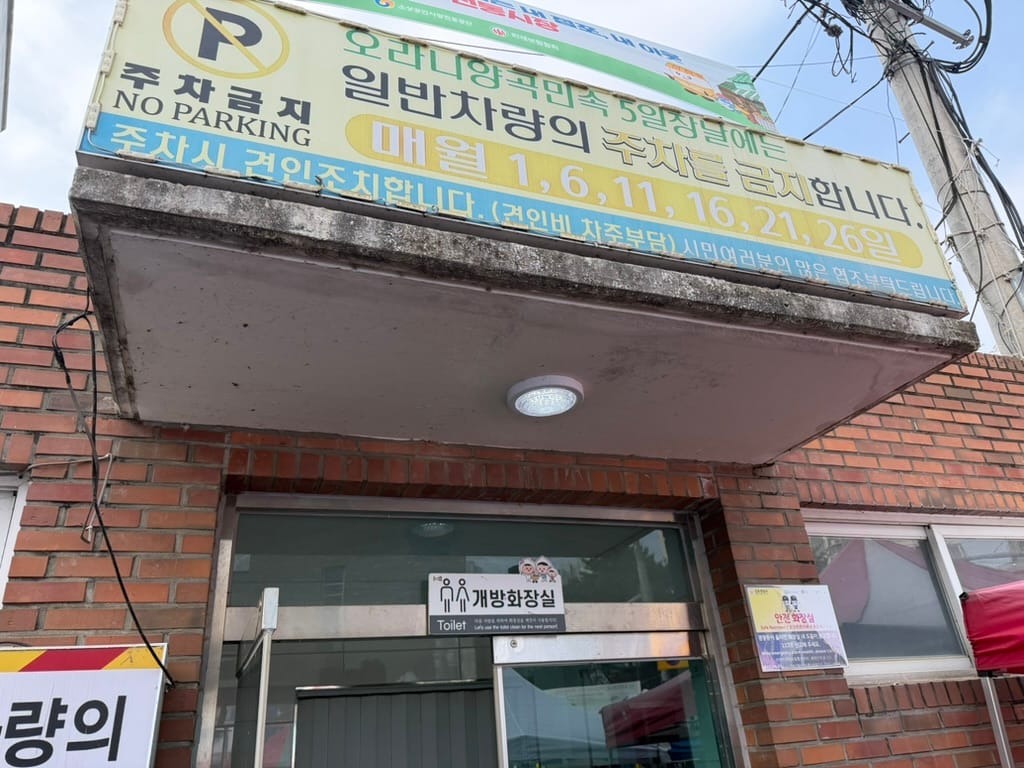
For those planning to visit Yang-gok 5-Day Market, parking is available at the public parking lot located in front of the market area. Regarding convenience facilities, visitors can use the public restrooms provided nearby. These amenities offer essential support for a comfortable exploration of the marketplace.
Glossary
- Yang-gok 5-Day Market(양곡오일장): A traditional market held every five days in Yangchon-eup.
- Gimpo 5-Day Market(김포장): A large-scale traditional market located in Buk-byeon-dong.
- Wando-jip(완도집): The sole food stall operating within Yang-gok 5-Day Market.
- Deung-gal-bi(등갈비): Grilled pork back ribs.
- Mo-deum-jeon(모듬전): A platter of assorted Korean savory pancakes.
- Nok-du-jeon(녹두전): A savory pancake made of ground mung beans.
- Soju(소주): A clear, distilled Korean alcoholic beverage.