
An Honest Review of Cheongjeong Haemul-tang(청정해물탕) in Yangchon-eup
An honest review of Haemul-tang(해물탕) at Cheongjeong Haemultang(청정해물탕) in Yangchon-eup(양촌읍). Comparing the restaurant experience with the freshest homemade versions from memory.

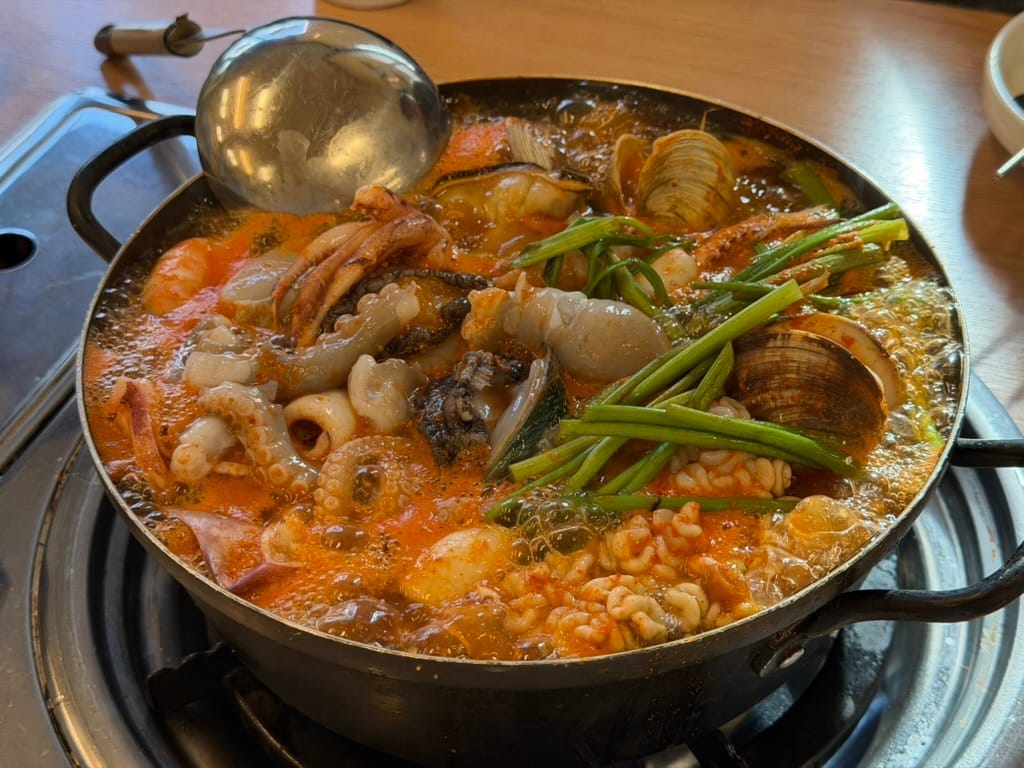
1. Info: What Haemul-tang Is
Haemul-tang(해물탕) is a representative Korean seafood stew built around a spicy yet clear broth. Crabs, shrimp, and assorted shellfish are cooked together with garlic and chili powder, creating a dish known for its clean and refreshing depth of flavor. Typically served in a large communal pot, Haemul-tang emphasizes abundance and shared dining rather than individual portions.
2. Menu and Specialties of Cheongjeong Haemul-tang
Located in Yangchon-eup(양촌읍), Cheongjeong Haemultang(청정해물탕) offers a menu focused on classic seafood dishes. Diners can choose from Haemul-tang, Haemul-jjim(해물찜), and Agu-jjim(아구찜), with portion sizes adjusted to the number of people. Additional options such as Gyeran-jjim(계란찜) and Bokkeum-bap(볶음밥) allow the meal to be completed in a straightforward way.
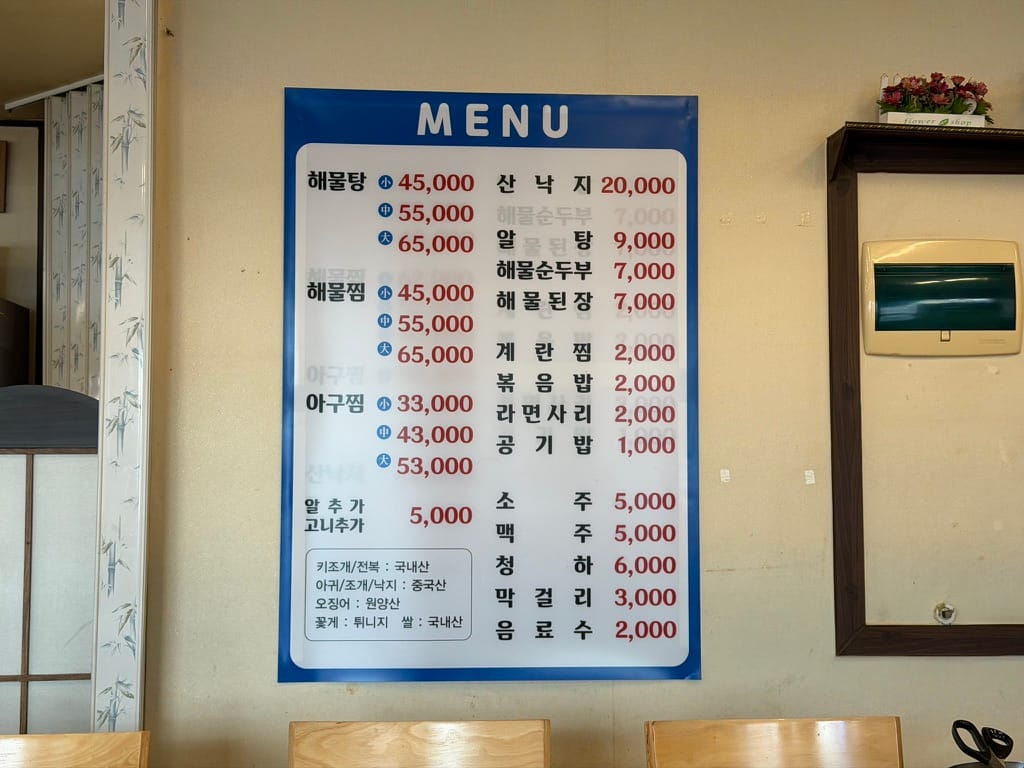
3. A Clean and Varied Selection of Side Dishes
The side dishes were served neatly and kept the table balanced. Mul-kimchi(물김치) and a simple vegetable salad helped refresh the palate, while Yangpa-jangajji(양파 장아찌) added a sharp contrast. The thin Jeon(전) worked as a light starter and matched the restrained tone of the overall meal.
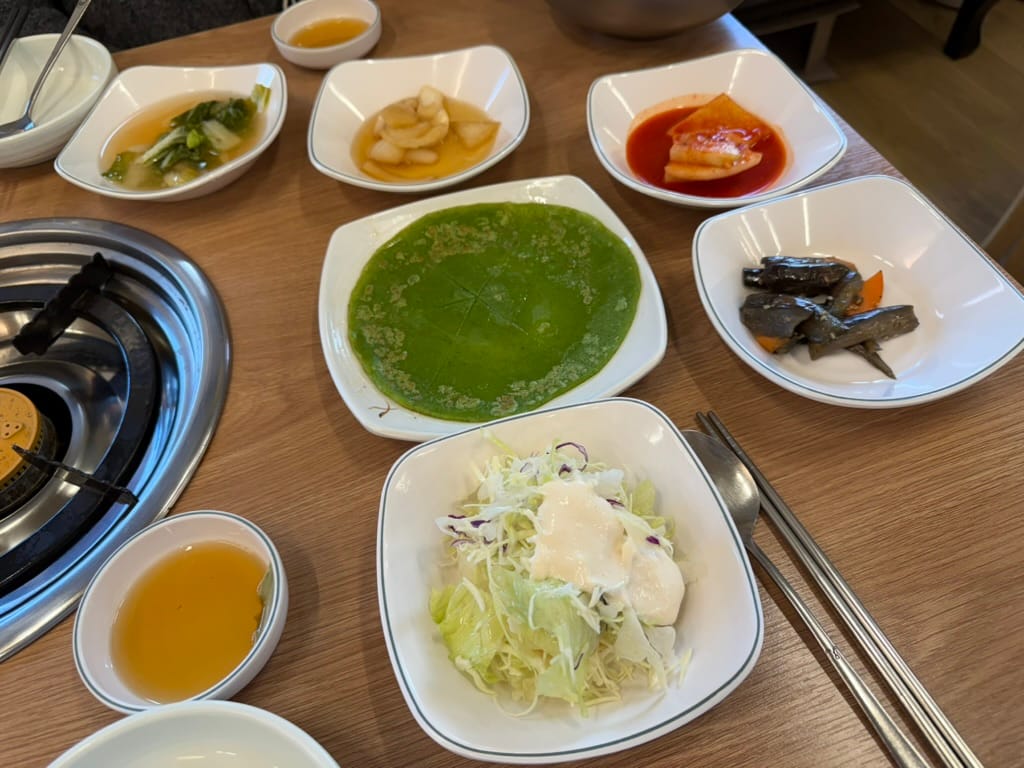
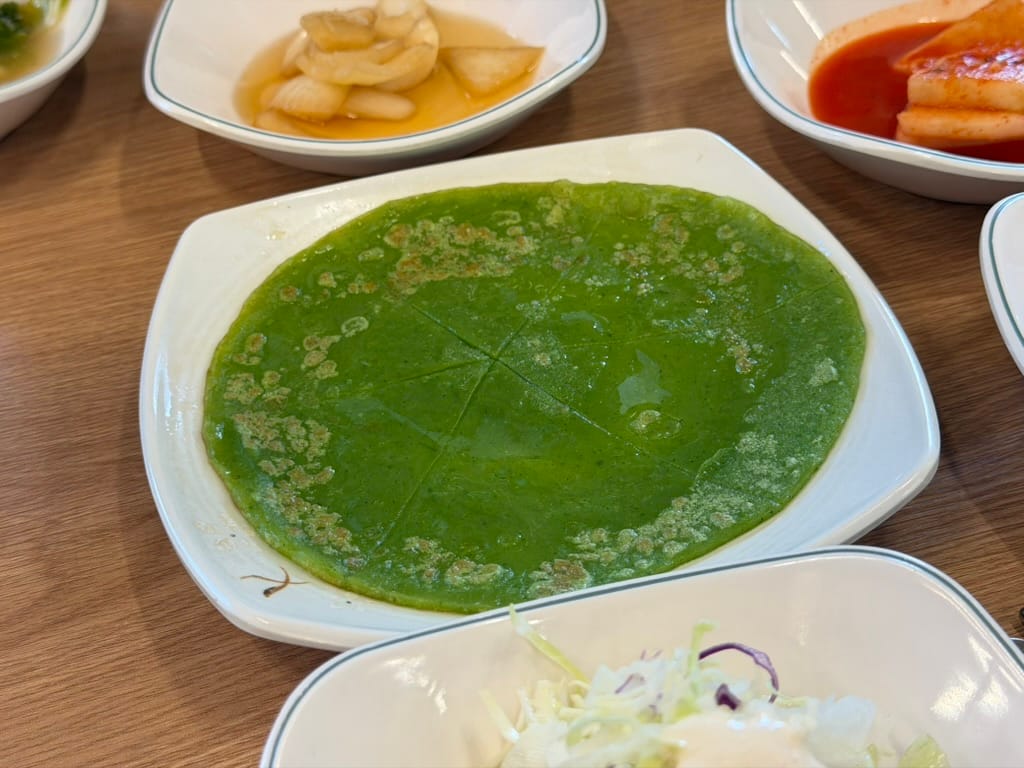
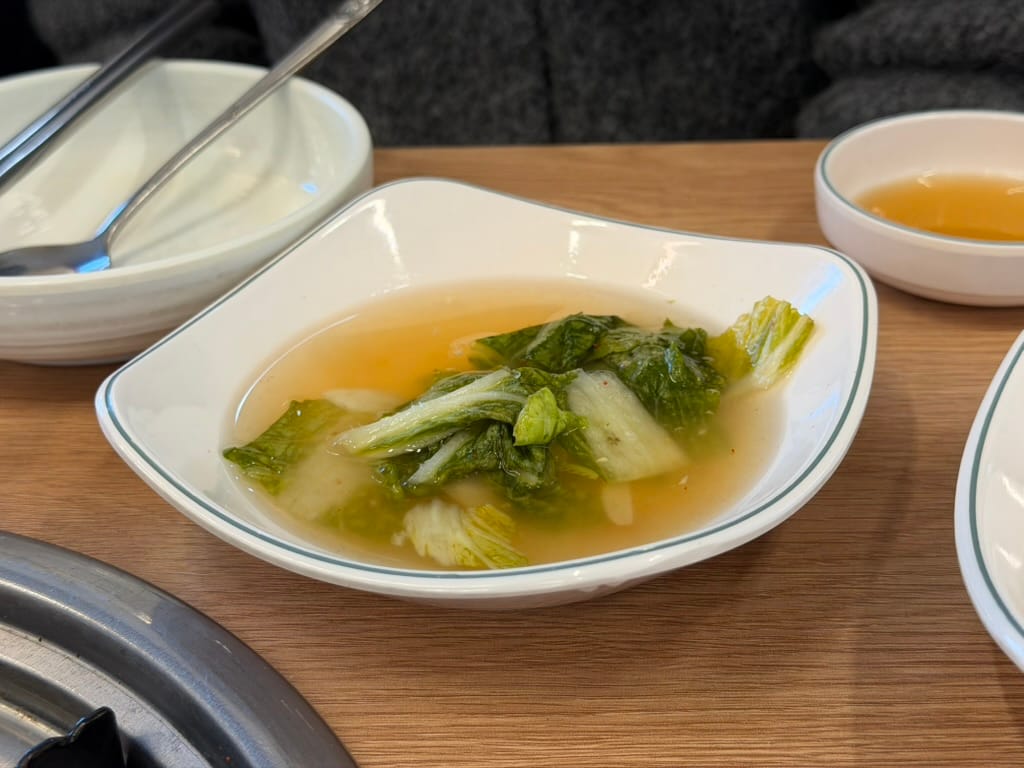
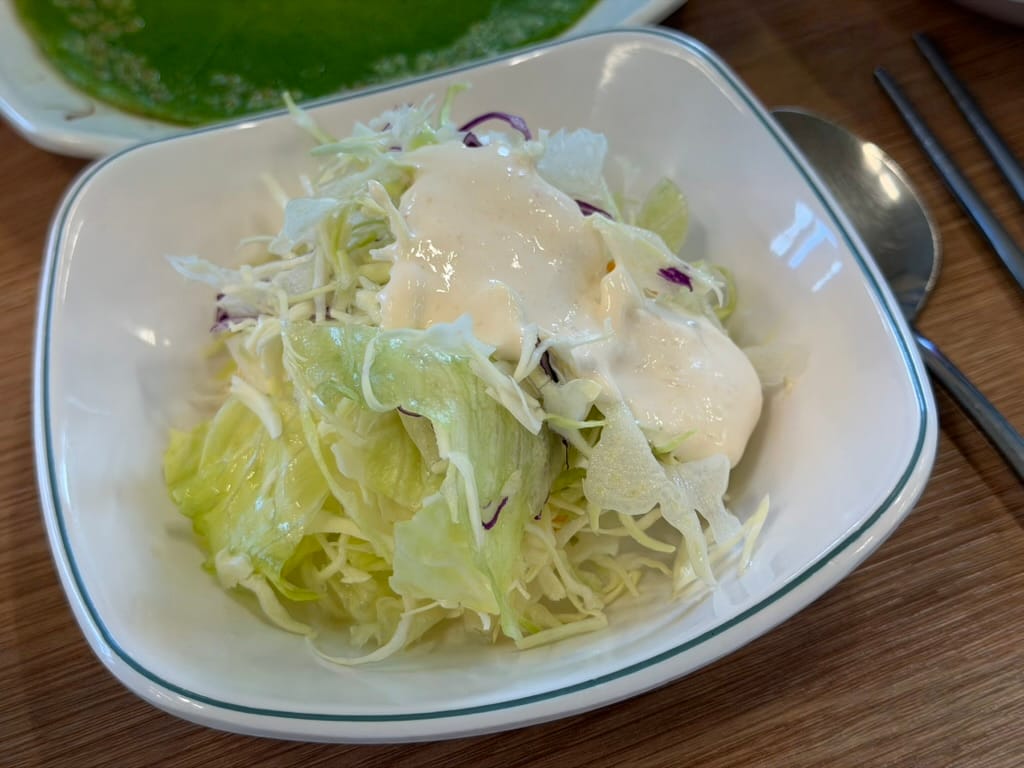
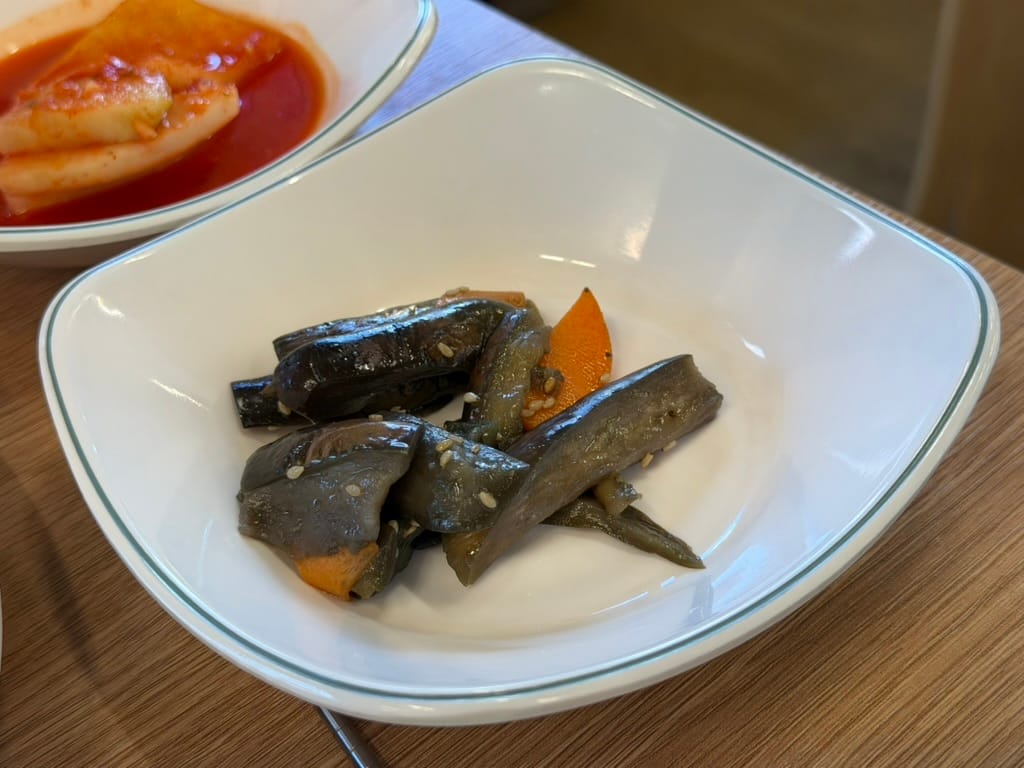
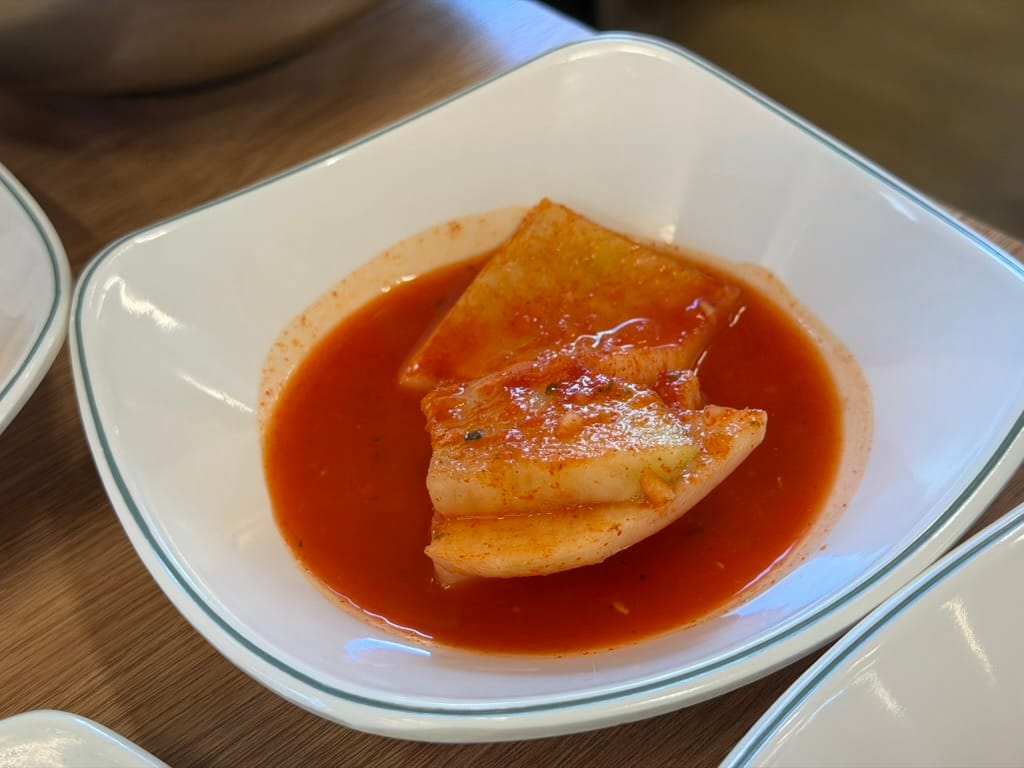
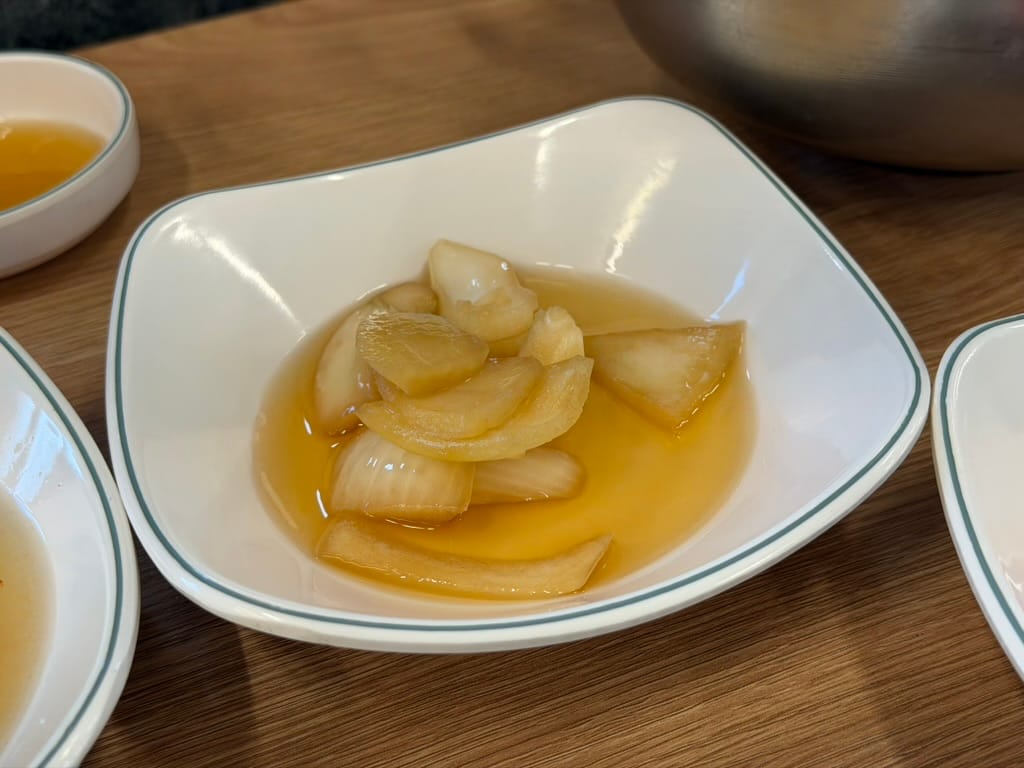
A variety of neatly prepared side dishes, including a thin savory Jeon, Mul-kimchi, and Yangpa-jangajji.
4. Main Course and Additional Side Dish
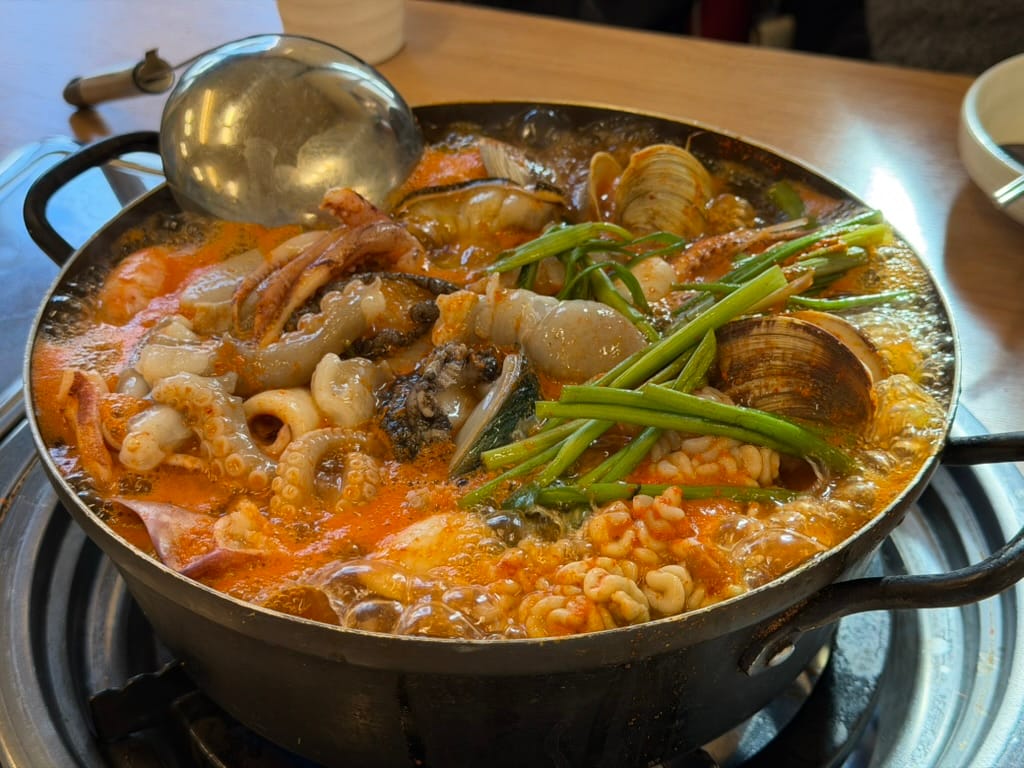
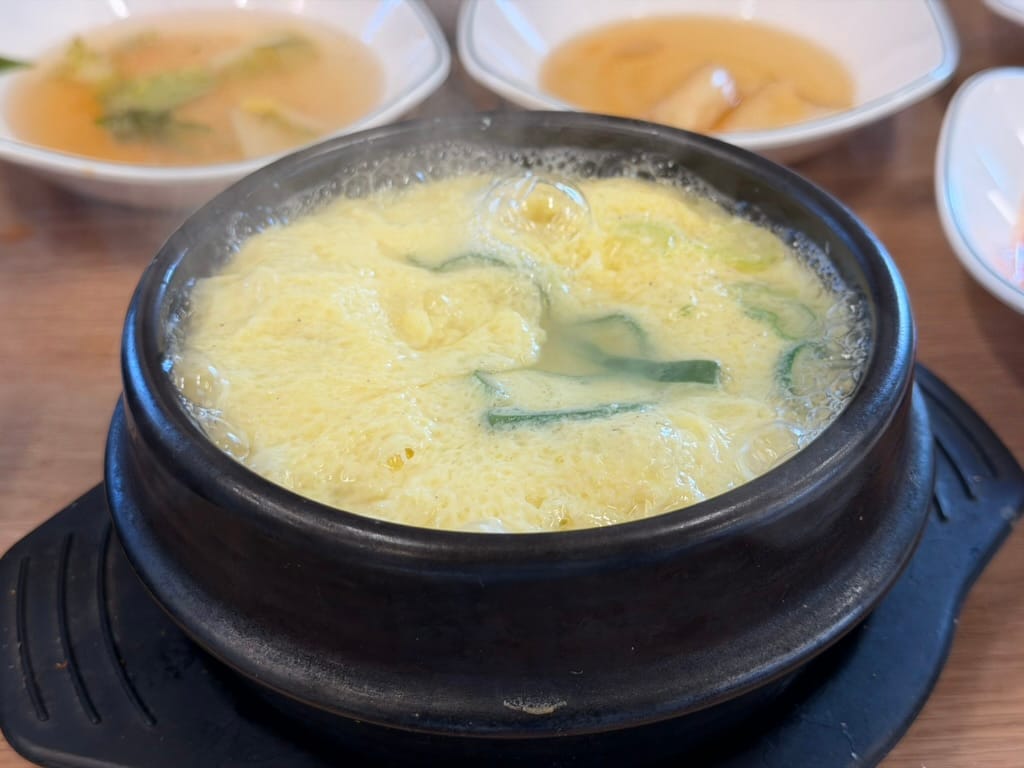
The Haemul-tang(해물탕) arrived in a large pot with seafood and vegetables piled high, creating a clear sense of volume. To balance the spiciness of the stew, Gyeran-jjim(계란찜) was ordered as an additional side dish. Its soft texture and mild flavor provided a brief pause between bites.
5. Honest Evaluation and Personal Reflection
Overall, Cheongjeong Haemultang can be described as average rather than memorable. While the presentation was generous, the quality of the seafood felt inconsistent. The shrimp lacked elasticity, and the mussels showed a faded color with excessive moisture, which suggested the use of frozen ingredients. In a dish where freshness defines the experience, this detail remained noticeable.
For comparison, the most satisfying Haemul-tang in my memory is still the one my mother prepared at home using seafood purchased fresh from the market. That version felt cleaner and more vivid in flavor, and it continues to serve as a personal reference point.
Glossary
- Haemul-tang(해물탕): A Korean seafood stew served in a spicy, clear broth.
- Haemul-jjim(해물찜): Seafood braised with vegetables in a spicy sauce.
- Agu-jjim(아구찜): A spicy braised monkfish dish.
- Mul-kimchi(물김치): Watery kimchi with a refreshing brine.
- Yangpa-jangajji(양파 장아찌): Onions pickled in a soy-based brine.
- Jeon(전): A savory pan-fried batter dish.
- Gyeran-jjim(계란찜): A Korean steamed egg custard.
- Bokkeum-bap(볶음밥): Stir-fried rice often ordered at the end of a meal.