
A Refined Gangwon-style Feast at Eomma-ui Bomnal in Gimpo
A delightful journey through Gangwon-do(강원도)'s authentic flavors at Eomma-ui Bomnal(엄마의 봄날) in Gimpo(김포). From savory Nokdu-dak(녹두닭) to chewy Gamja-ongsimi(감자옹심이), experience a healthy and refined Hanjeongsik(한정식) course that captures the essence of Korean tradition.

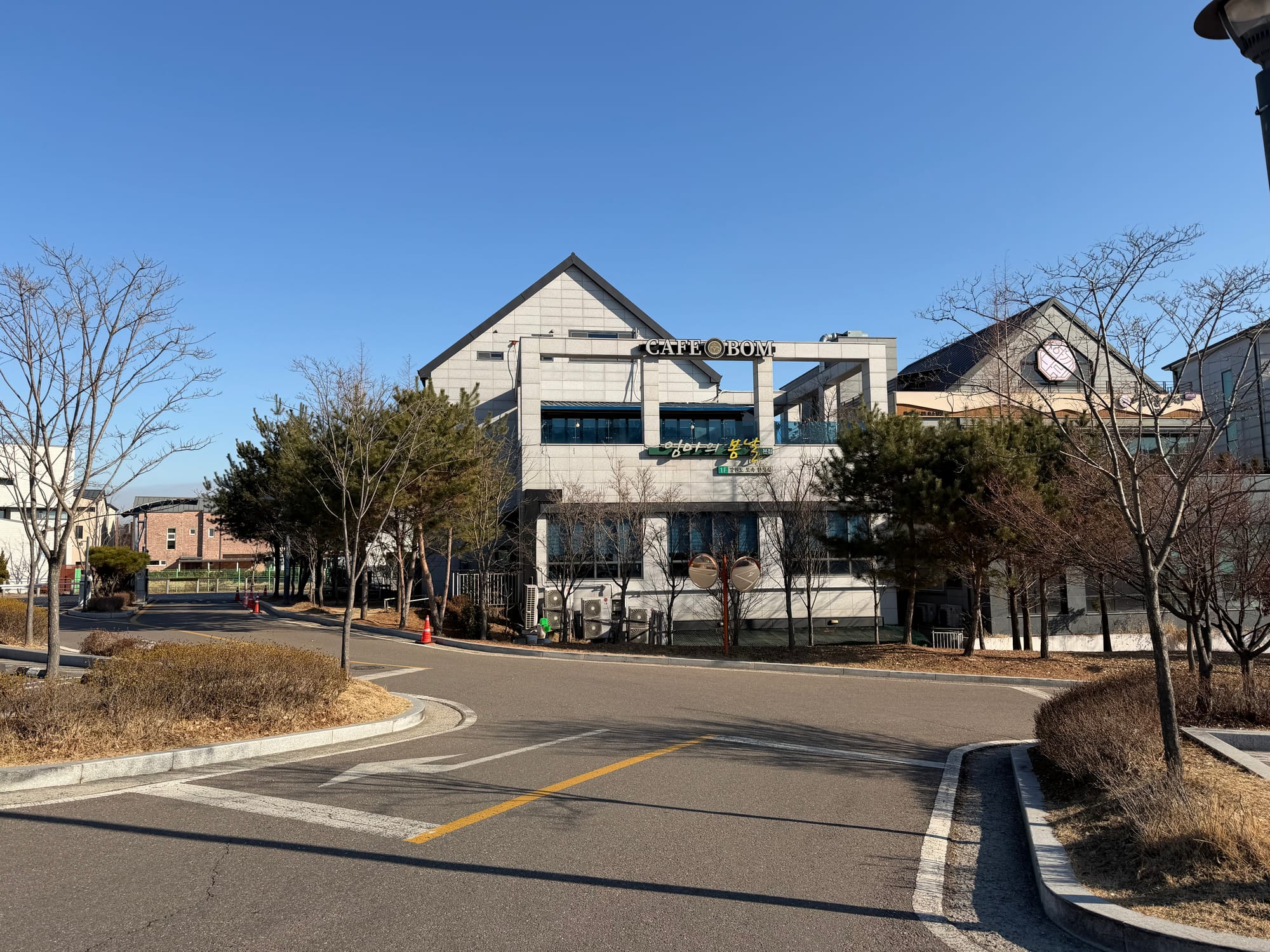
I visited Eomma-ui Bomnal (엄마의 봄날) in Gimpo, a place famous for its neat and delicious Gangwon-do style course meals. The building has a modern look, and since it is located right next to the Gimpo Art Village, the surroundings are very pleasant.
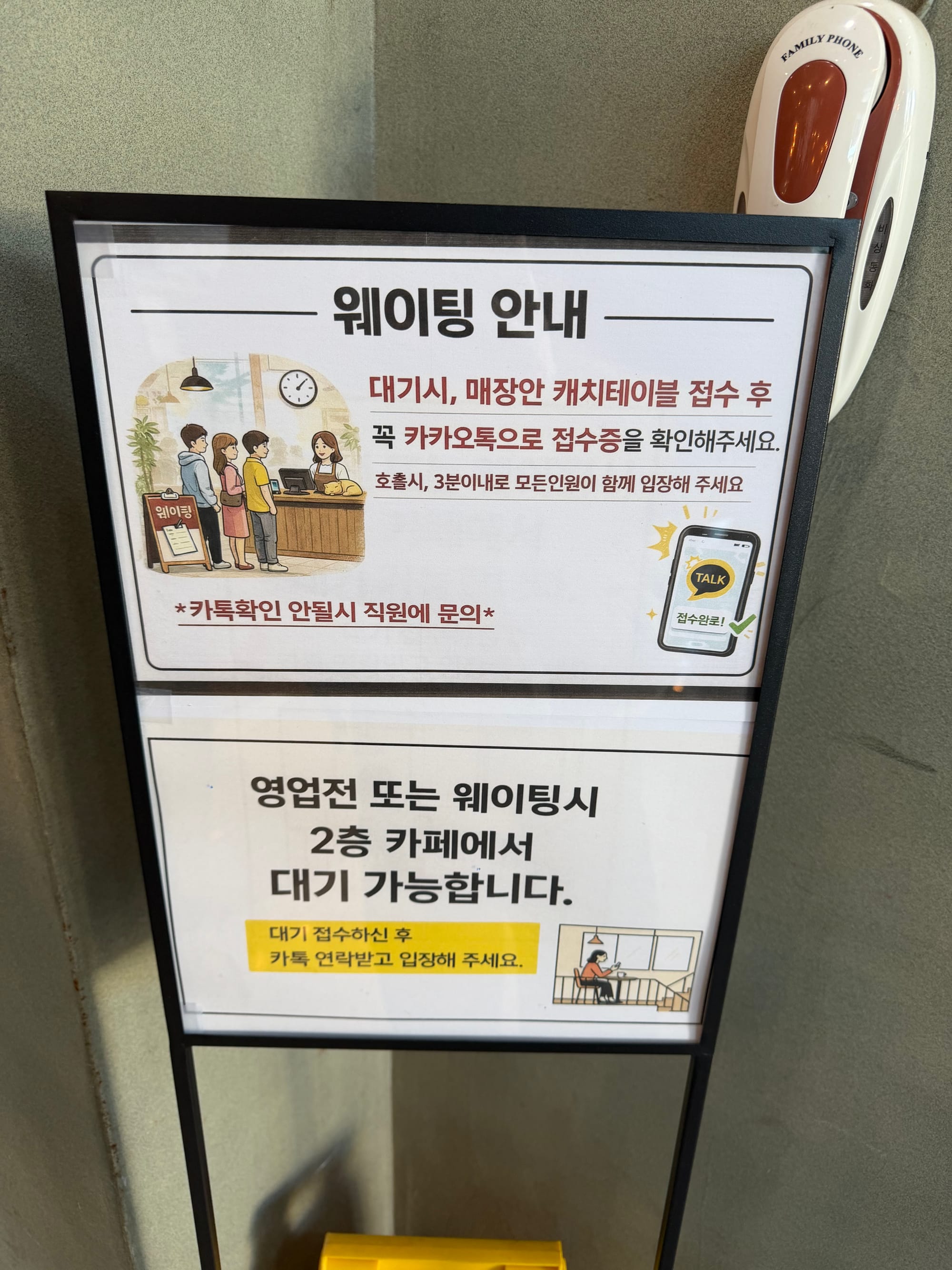
Since this is a very popular restaurant, there is a 'Catch Table' kiosk for waiting registration. I arrived right at the opening time, so I was able to enter immediately without any wait.
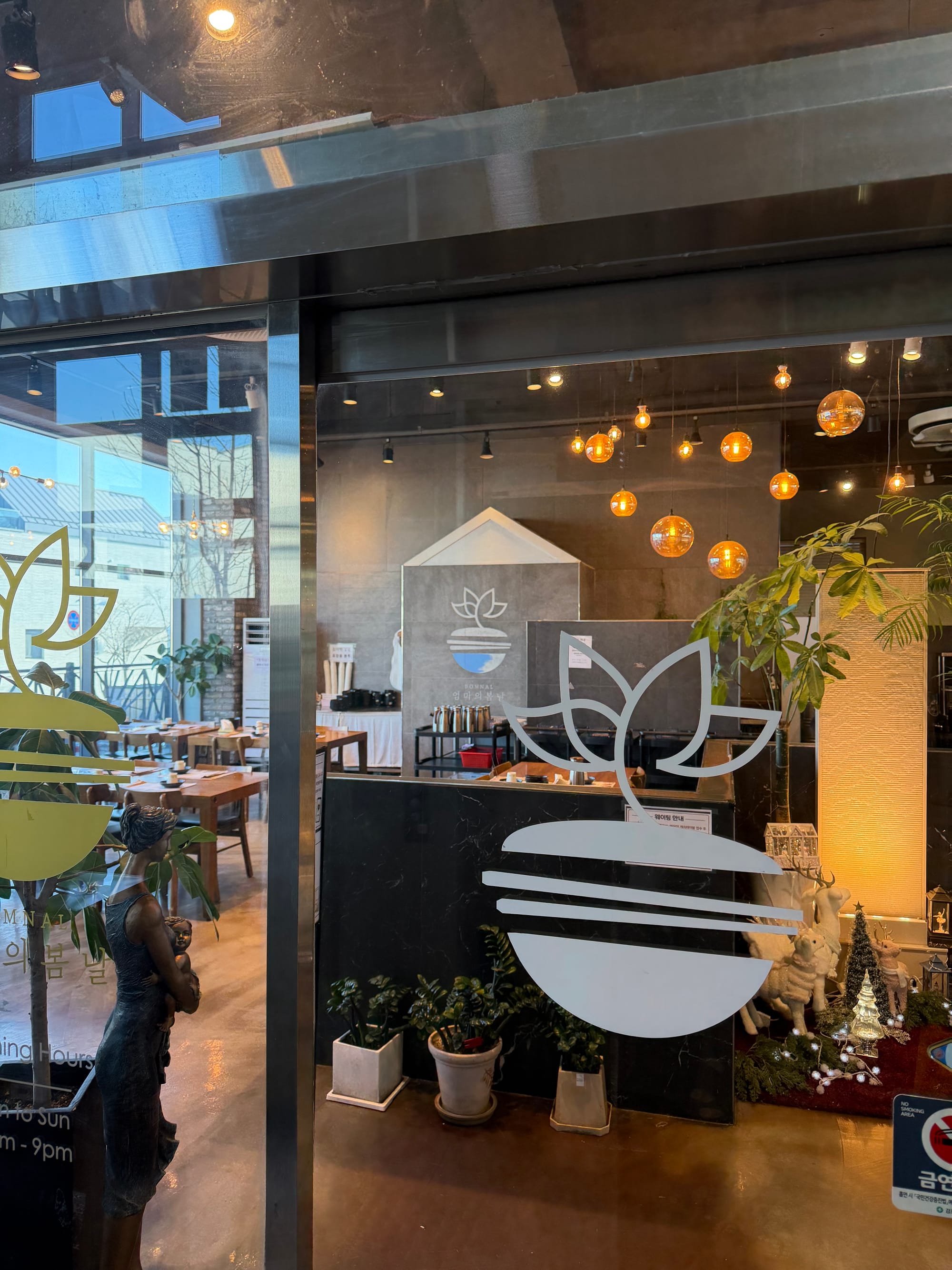
The interior of the restaurant is sophisticated and very clean. The bright and tidy atmosphere makes it an ideal place for family gatherings or special occasions.
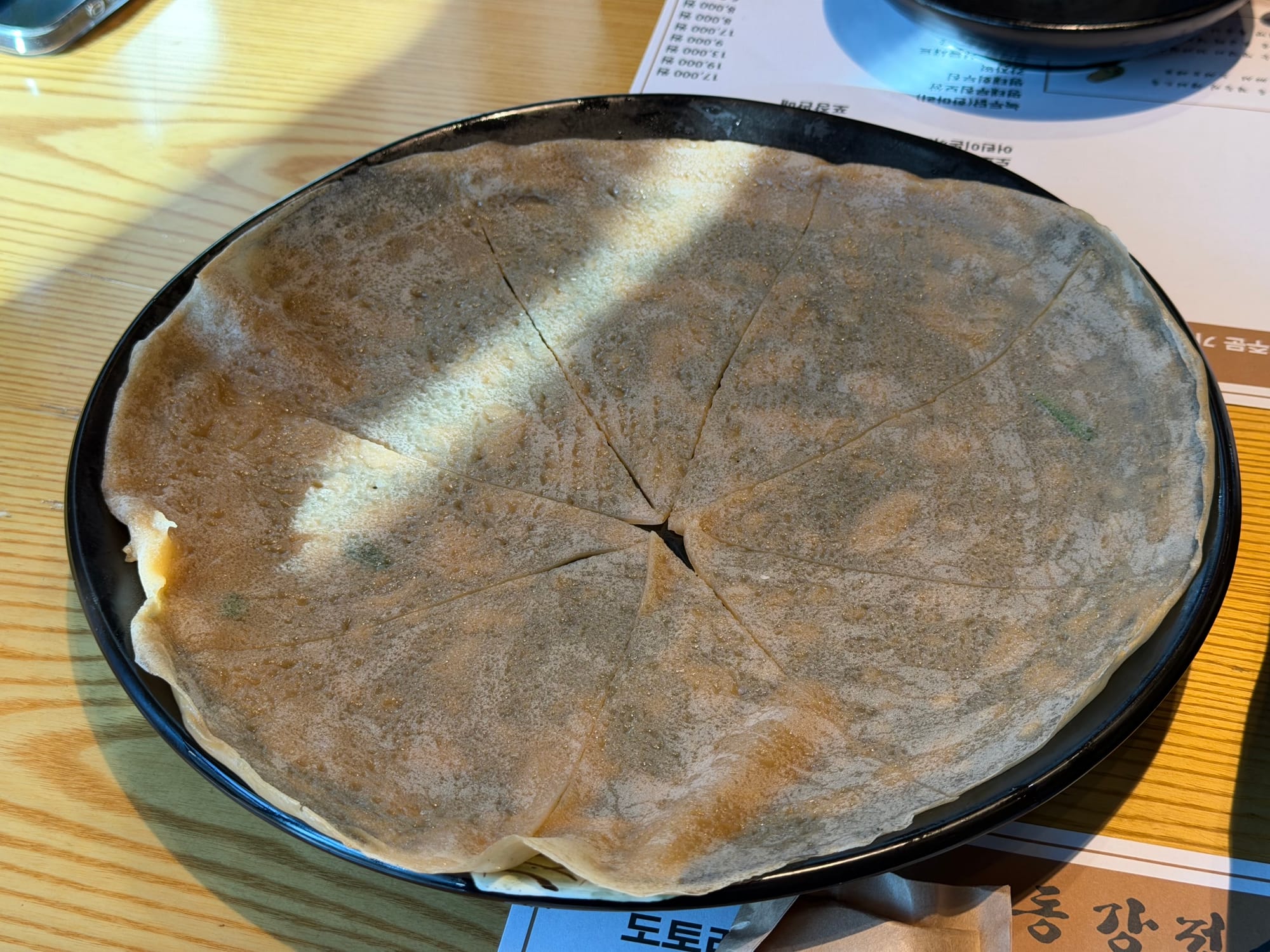
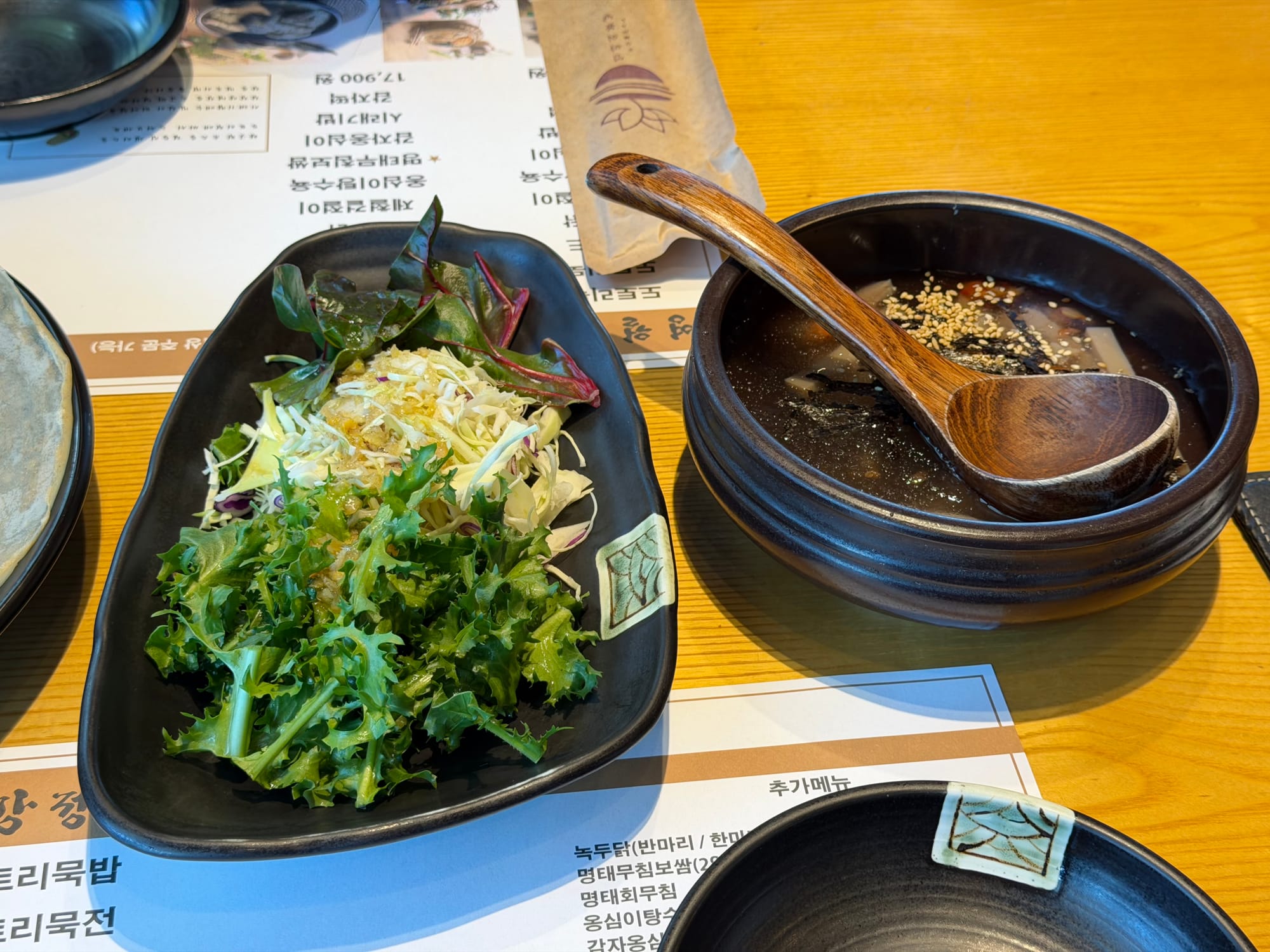
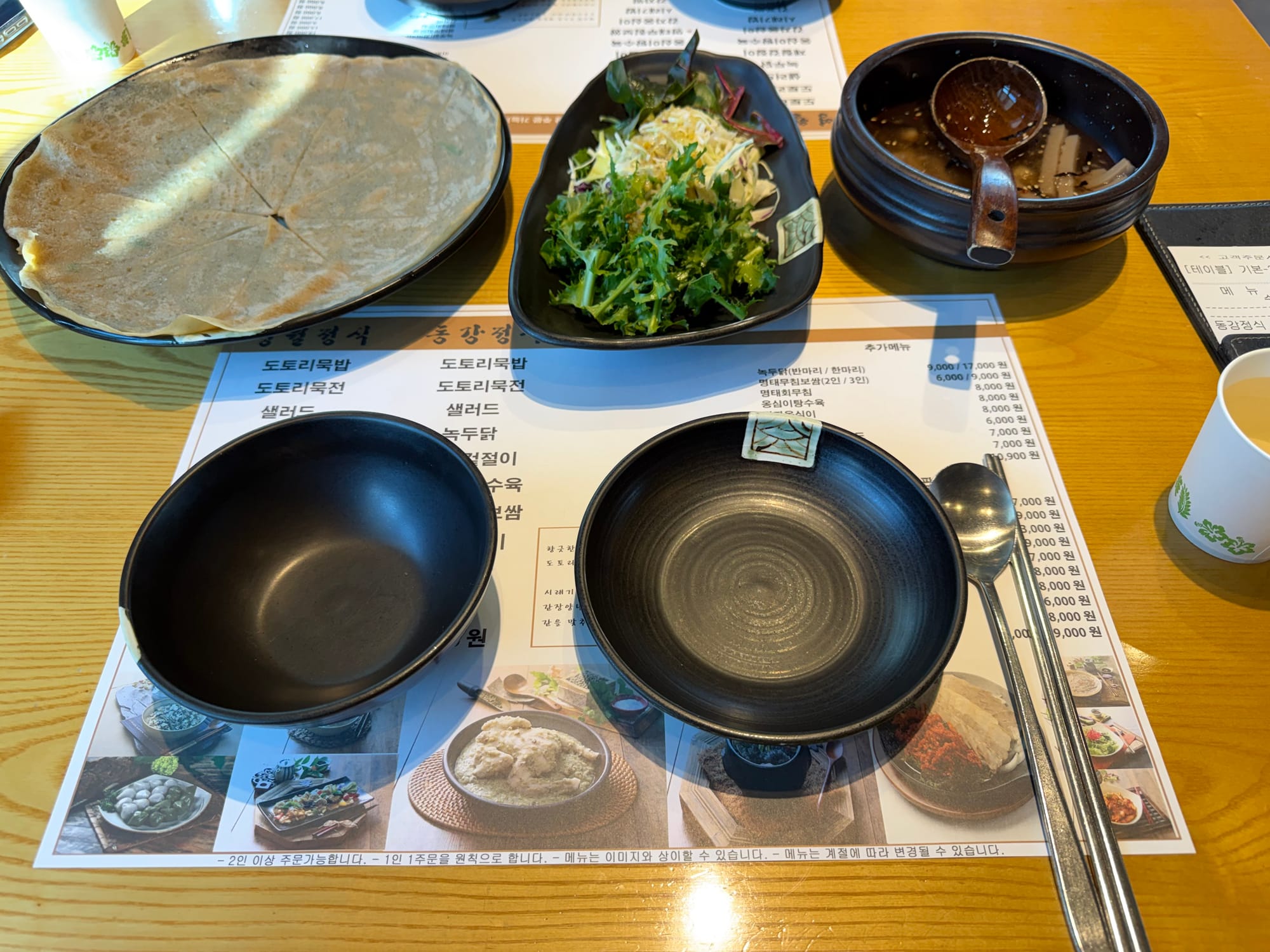
I ordered the 'Donggang-jeongsik' (동강정식) course. The meal began with a variety of appetizers that showcased the unique flavors of Gangwon Province.
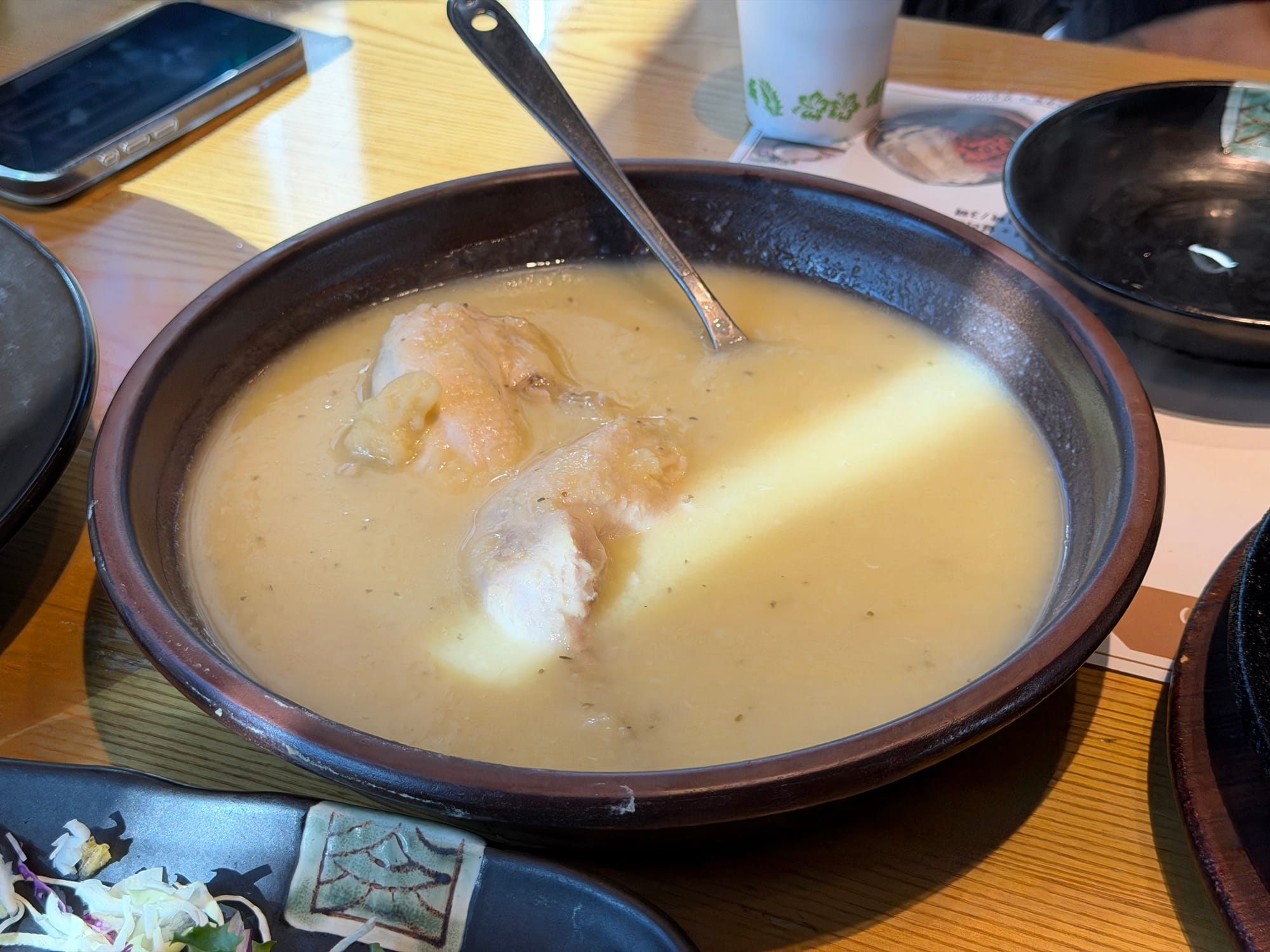
Next, Nokdu-dak(녹두닭) was served. It consisted of a tender chicken leg and savory mung bean porridge, which offered a very unique taste.
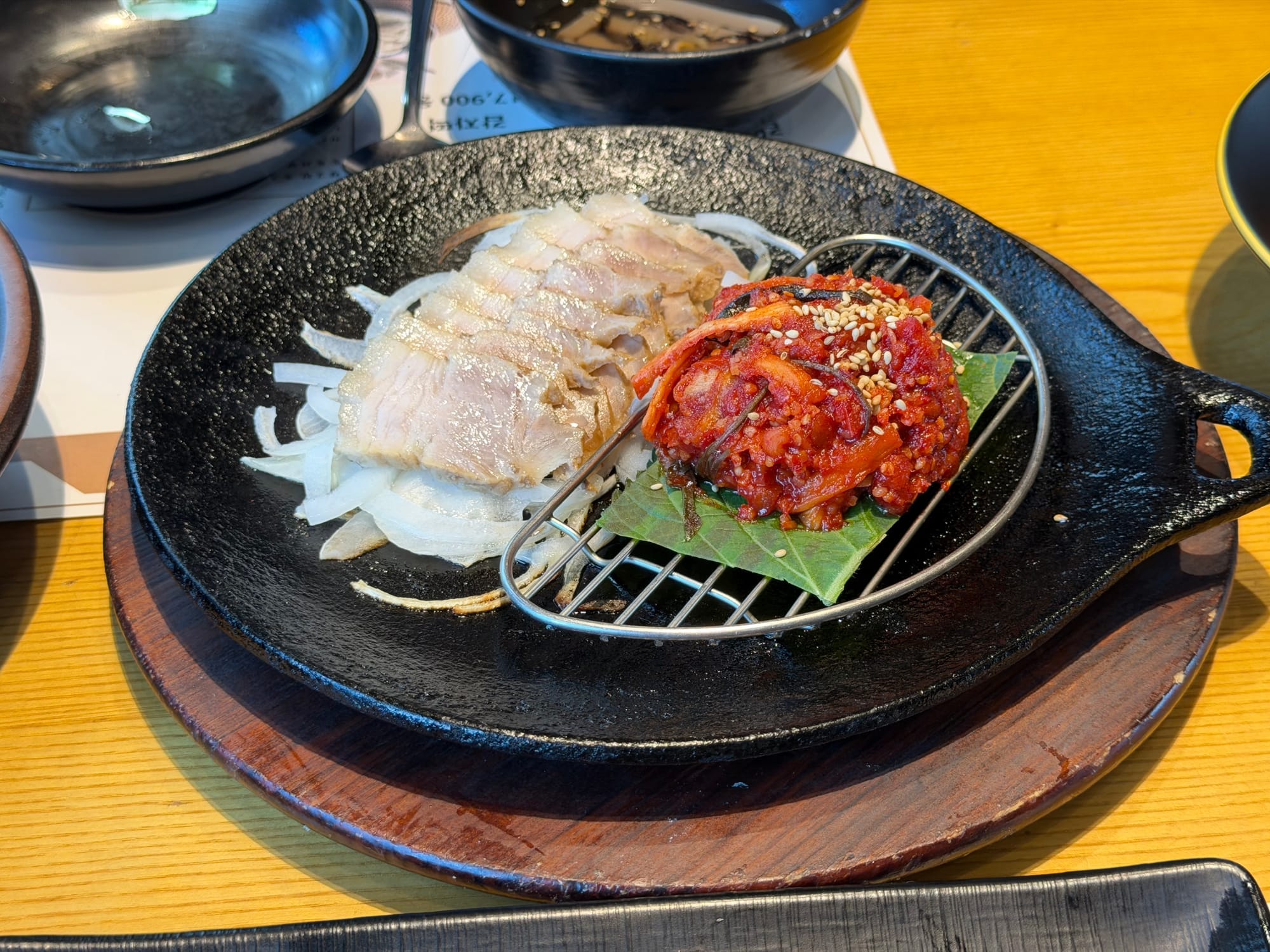
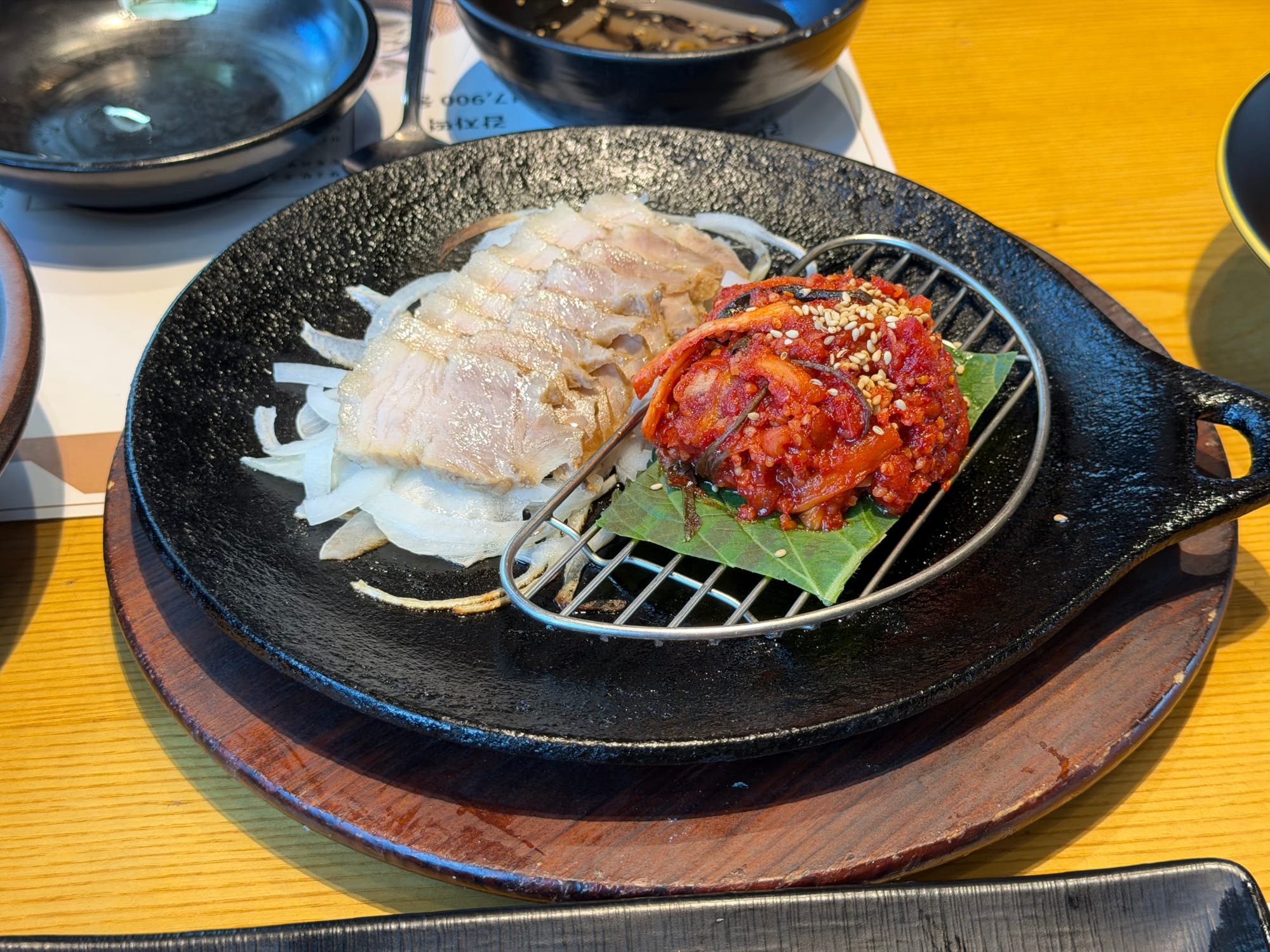
The Myeongtae-muchim Bossam(명태무침보쌈) was also excellent. Placing a piece of Myeongtae-muchim(명태무침) on top of the Bossam(보쌈) made for a perfect bite.
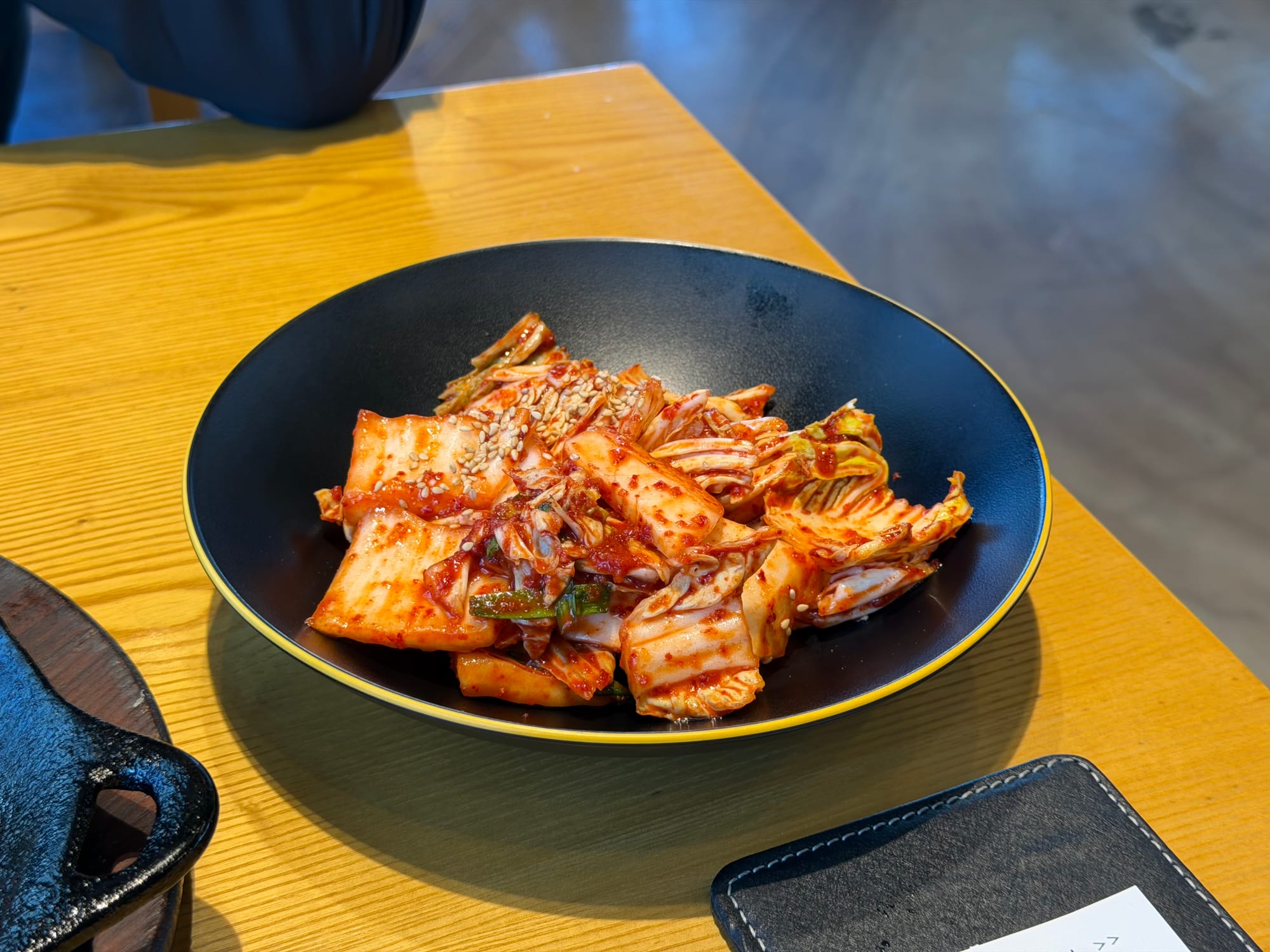
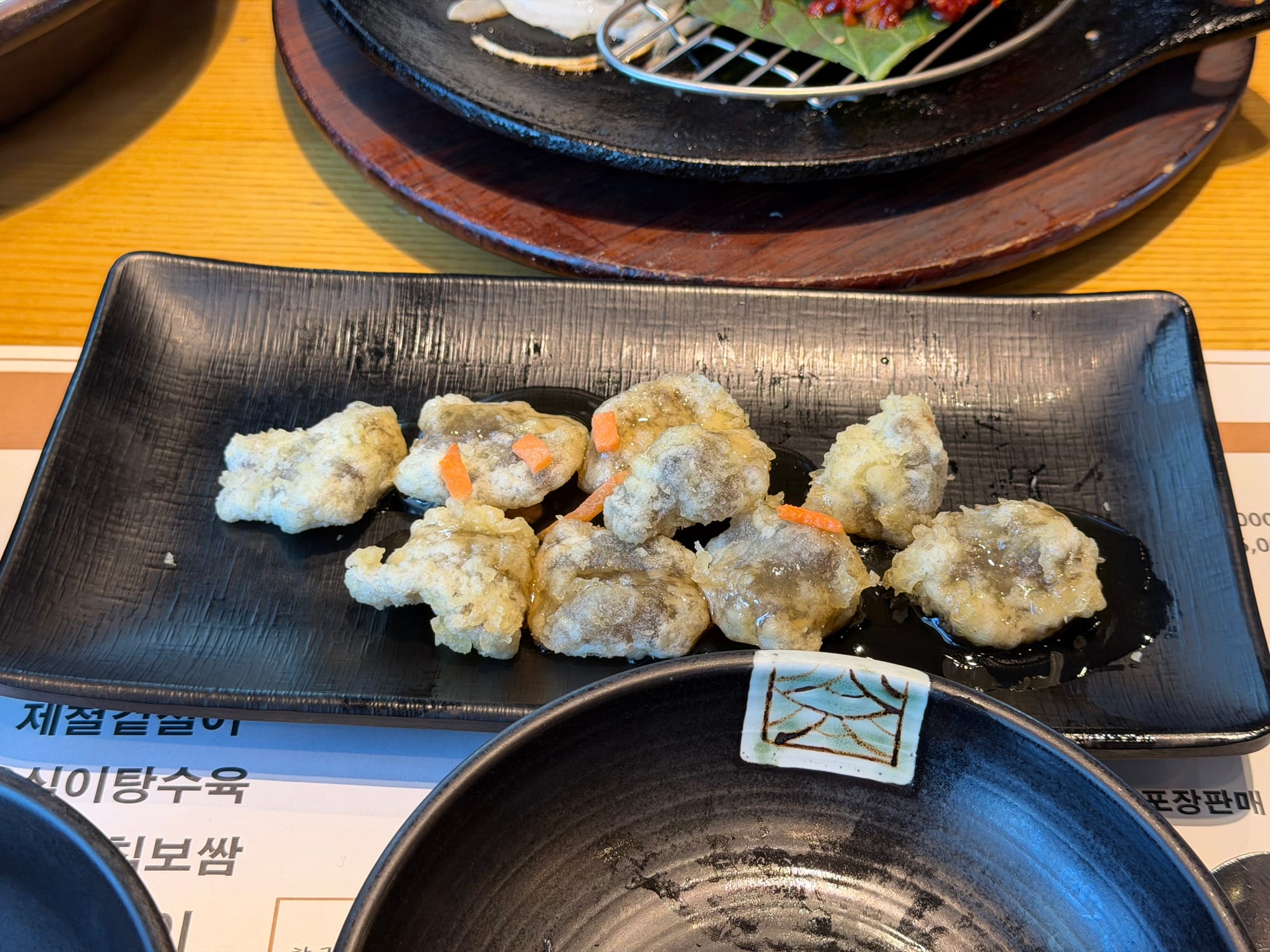
The Ongsimi Tangsuyuk(옹심이 탕수육) was also delicious. At first, I thought it was mushroom, but the chewy texture was delightful.
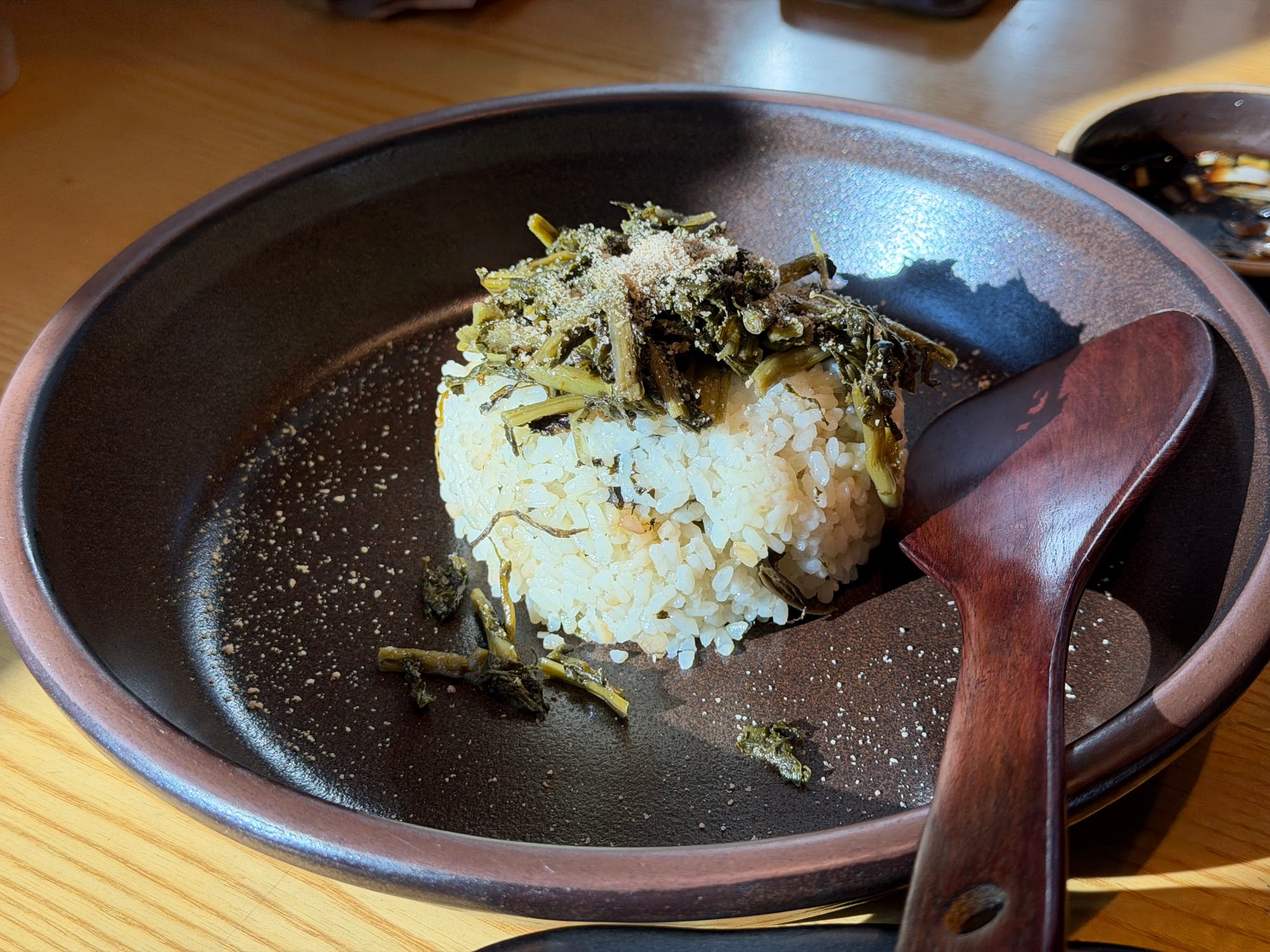
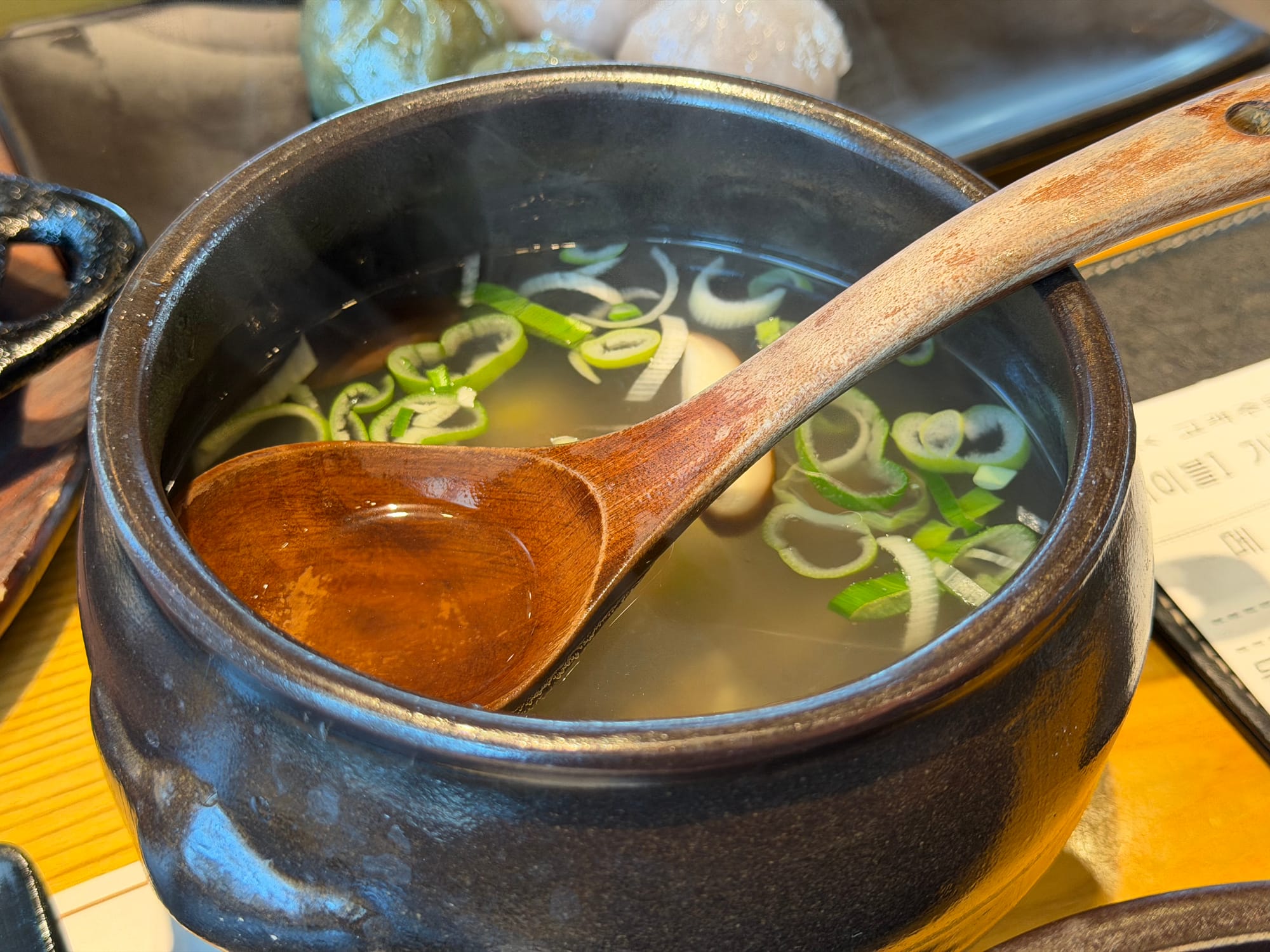
For the main course, Siraegi-bap(시래기밥) and Gamja-ongsimi(감자옹심이) were served. Mixing the rice with soy sauce created a savory flavor.
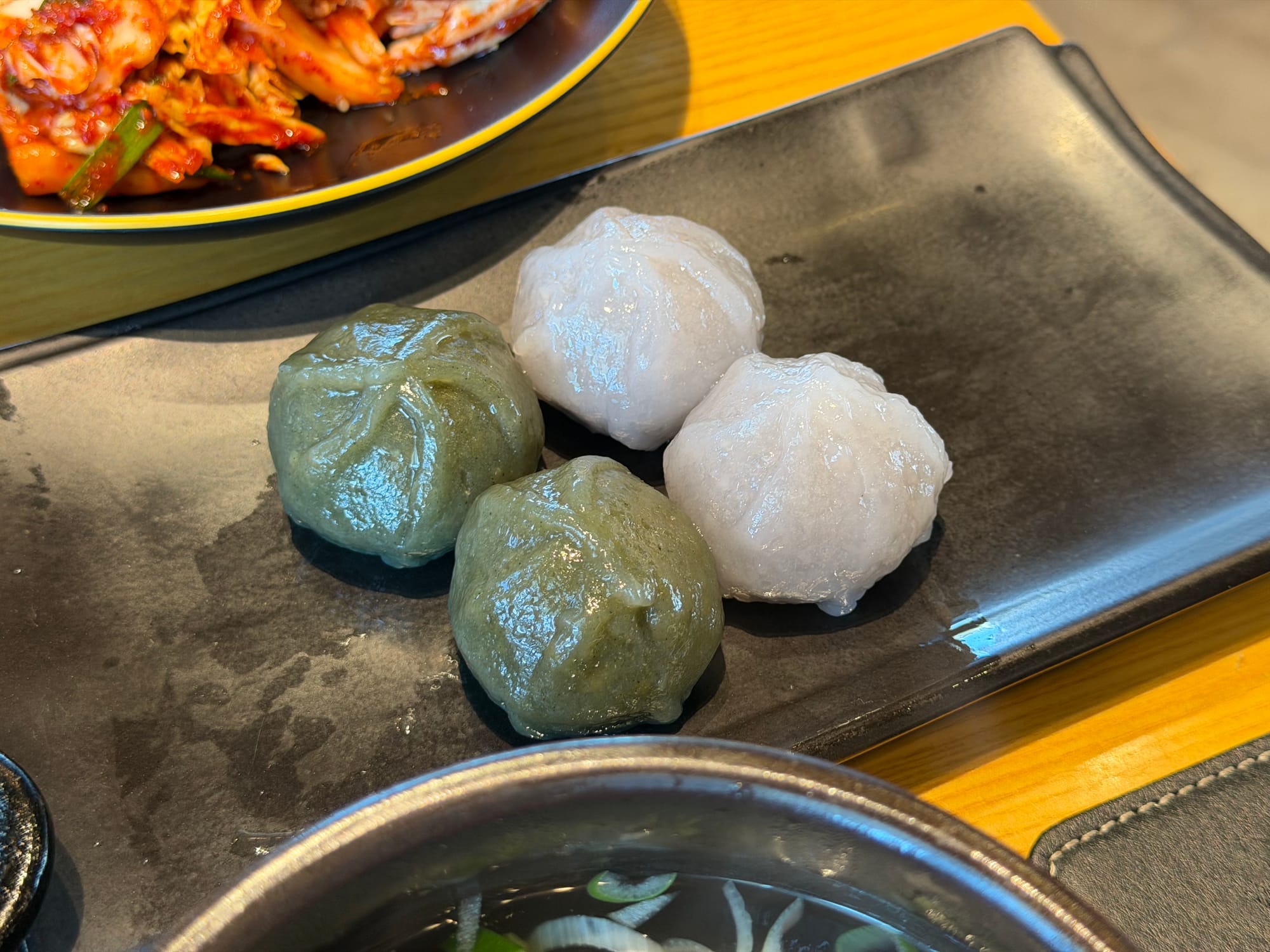
To finish the meal, Gamja-tteok(감자떡) was served as dessert. It was chewy and satisfying, even though I was already very full.
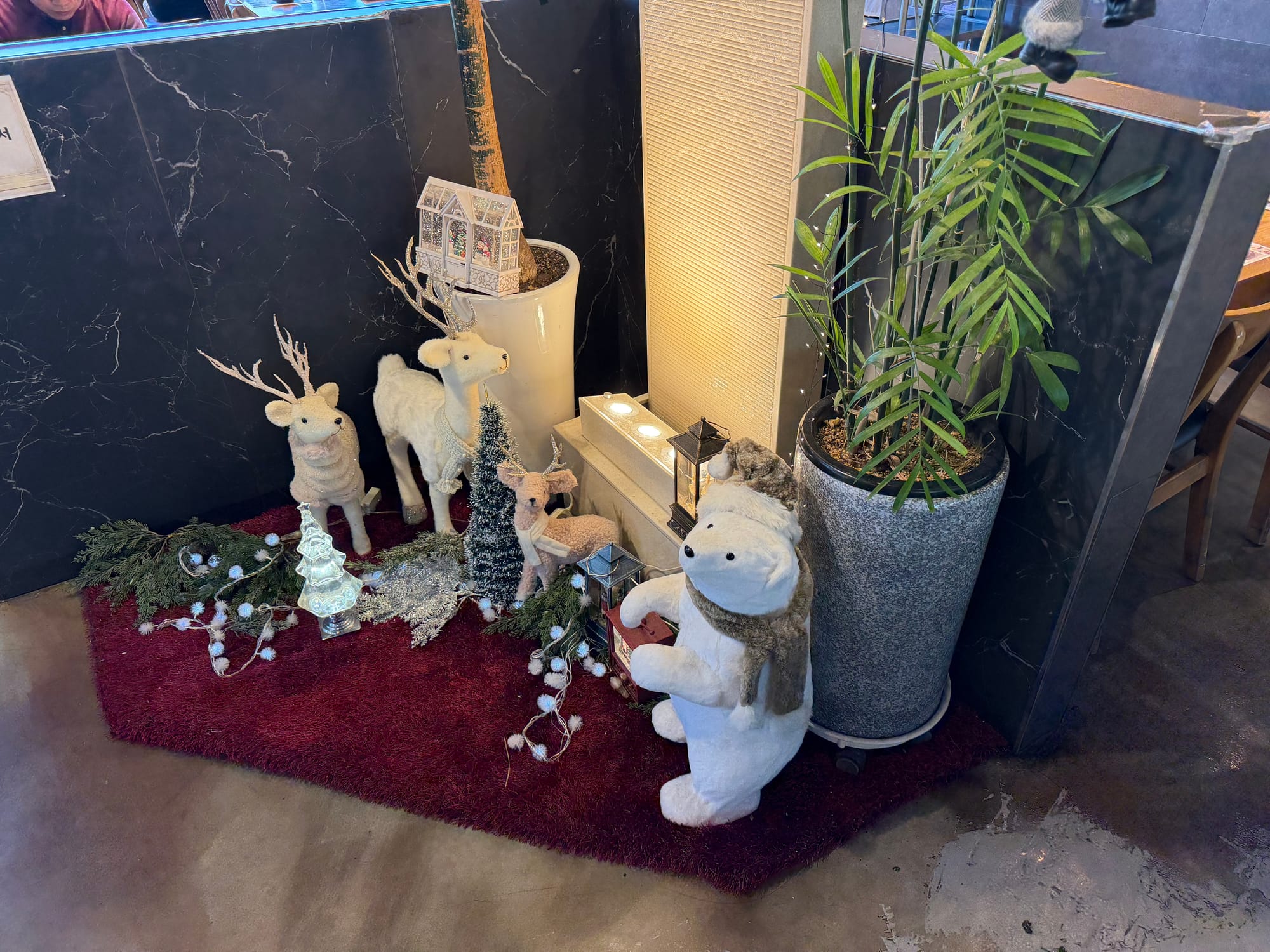
The interior was decorated with charming props like bears and deer, creating a warm Christmas vibe.
After lunch, I visited the nearby Gimpo Art Village Art Center(김포아트빌리지 아트센터). Admission is free, and I enjoyed a beautiful media art exhibition inside.
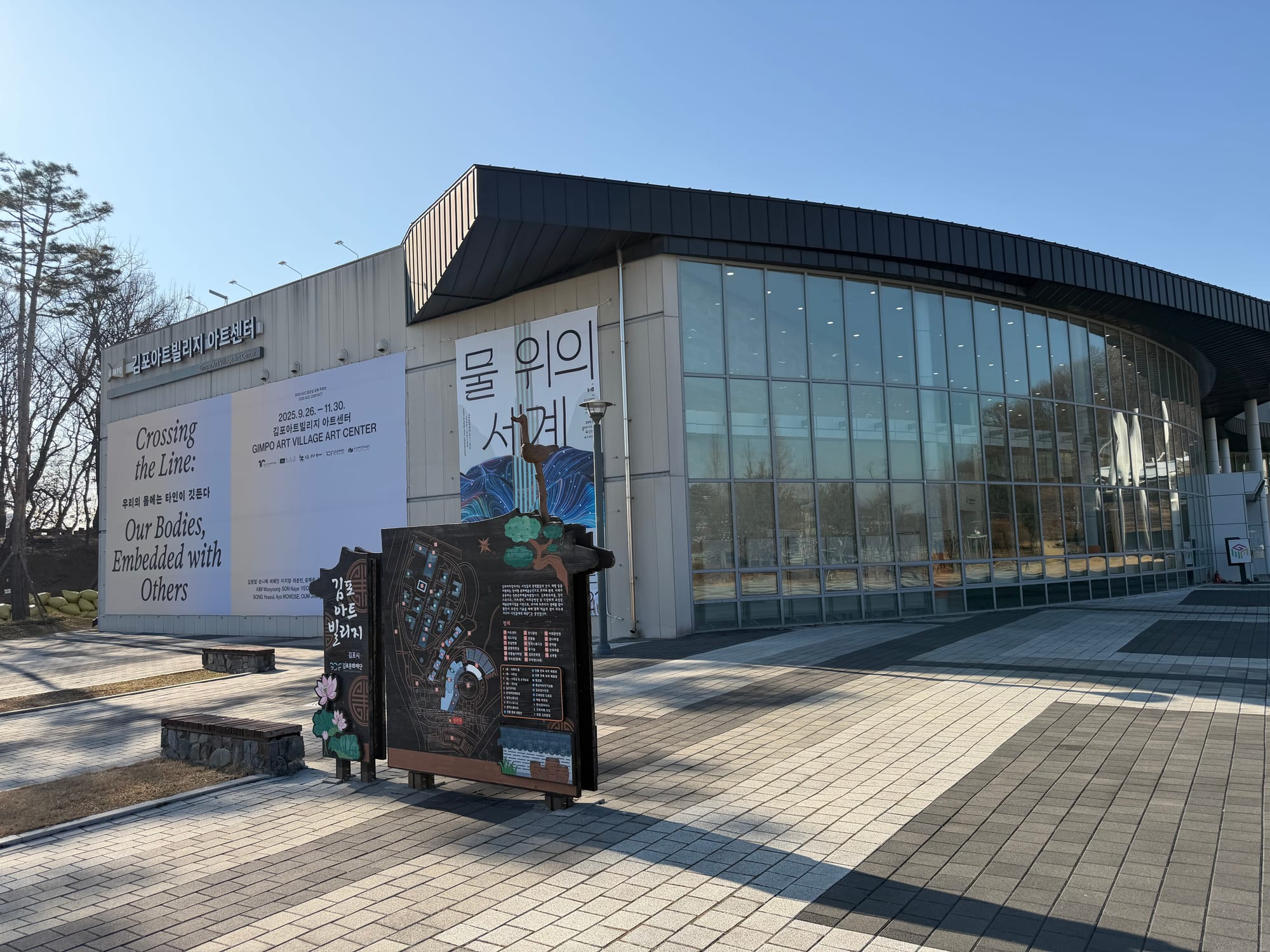

It was a perfect day with a satisfying meal and beautiful art.
[Glossary: Korean Terms in This Post]
- Gimpo(김포): A city in Gyeonggi Province, South Korea.
- Eomma-ui Bomnal(엄마의 봄날): The name of the restaurant.
- Gangwon-do(강원도): A province in Korea famous for potato and buckwheat dishes.
- Gimpo Art Village Art Center(김포아트빌리지 아트센터): A local cultural center.
- Donggang-jeongsik(동강정식): A signature course menu.
- Dotori-jeon(도토리전): Acorn flour pancake.
- Muksabal(묵사발): Cold acorn jelly soup.
- Nokdu-dak(녹두닭): Chicken with mung bean porridge.
- Myeongtae-muchim(명태무침): Seasoned pollack.
- Bossam(보쌈): Boiled pork slices.
- Geotjeori(겉절이): Freshly made kimchi.
- Ongsimi(옹심이): Small potato dough balls.
- Siraegi-bap(시래기밥): Rice with dried radish greens.
- Gamja-tteok(감자떡): Potato rice cakes.