
A Legacy of 40 Years at Gimpo Wonjo Dolgopchang
A sensory review of Gimpo Wonjo Dolgopchang(김포원조돌곱창), a 40-year-old local favorite in Buk-byeon-dong. This guide covers ordering tips, the significance of freshness, and the unique stone plate grilling experience.

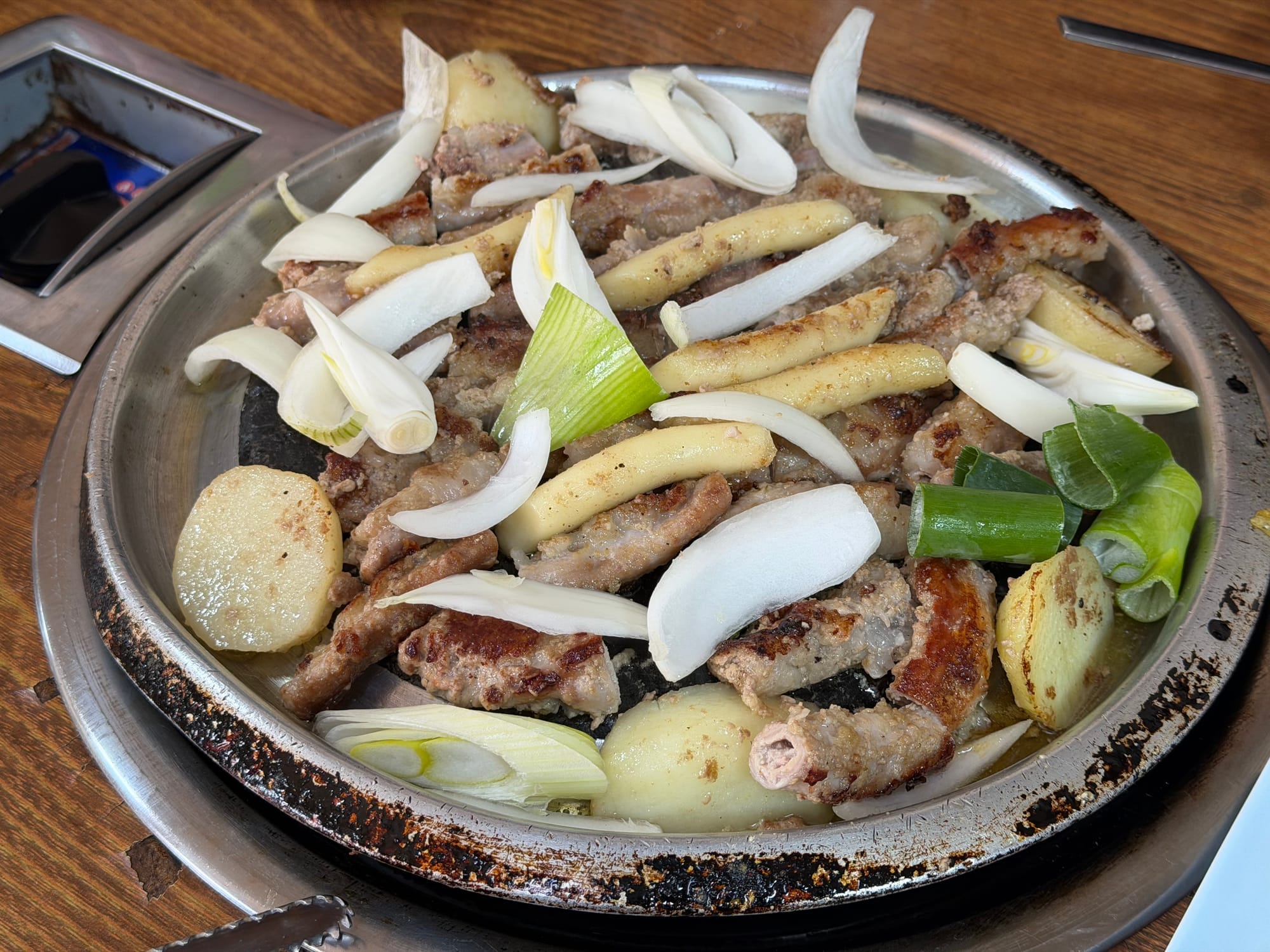
Info: The Sizzling Heritage of Grilled Intestines
There is a distinct pleasure in hearing fat sizzle on a thick stone plate, followed by the deep, nutty aroma of grilled beef. When the surface begins to crisp and the rendered fat bubbles at the center, you know the meal has truly begun. This is Gop-chang(곱창), grilled beef intestines—one of Korea’s most beloved comfort foods. Celebrated for the rich interior fat known as gop, it is also a dish that naturally gathers people around the table. In Buk-byeon-dong, one long-standing restaurant has preserved this tradition for over four decades.
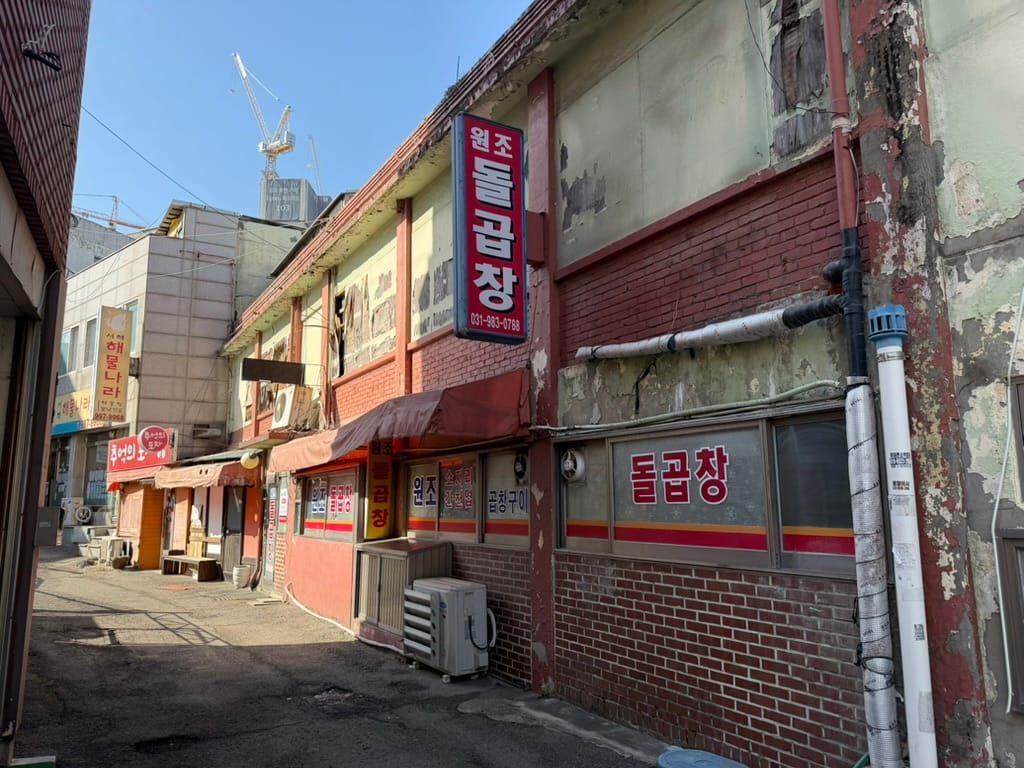
1. A Humble Legacy of 40 Years in Buk-byeon-dong
Gimpo Wonjo Dolgopchang has remained in the same location for approximately 40 years, preserving its unpretentious and welcoming character. Unlike modern franchise restaurants, this establishment feels like a time capsule. Operated by an elderly owner who has witnessed the neighborhood’s transformation, the space carries a quiet sense of continuity. Worn wooden tables and a simple interior reflect decades of steady service to local residents.
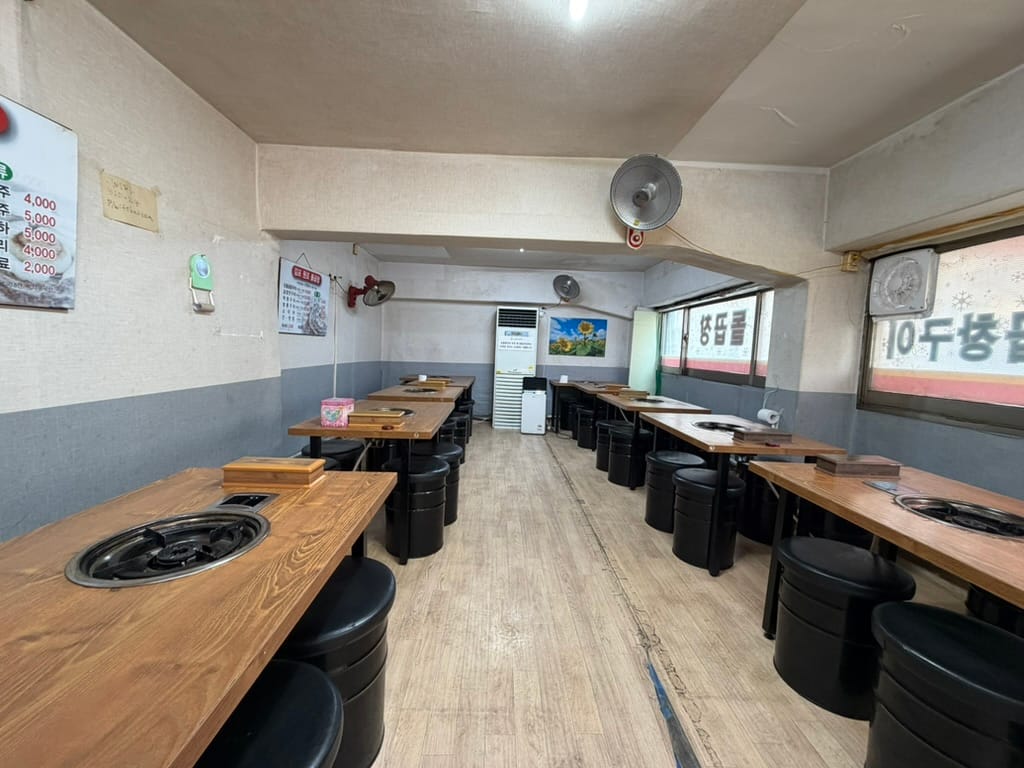
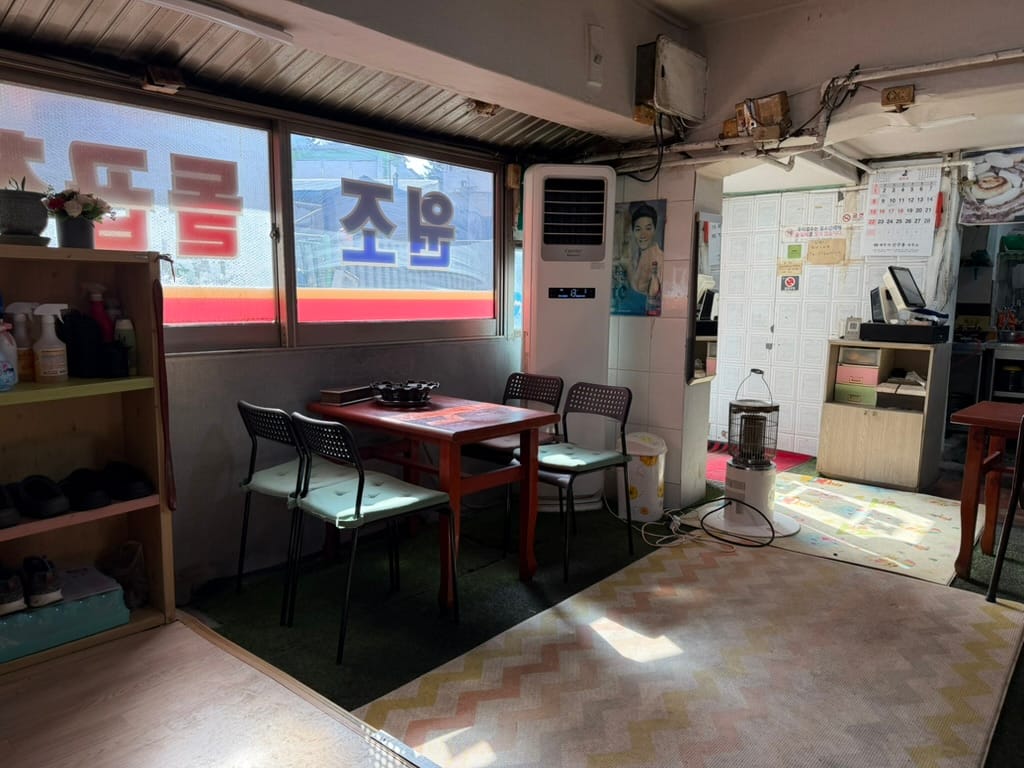
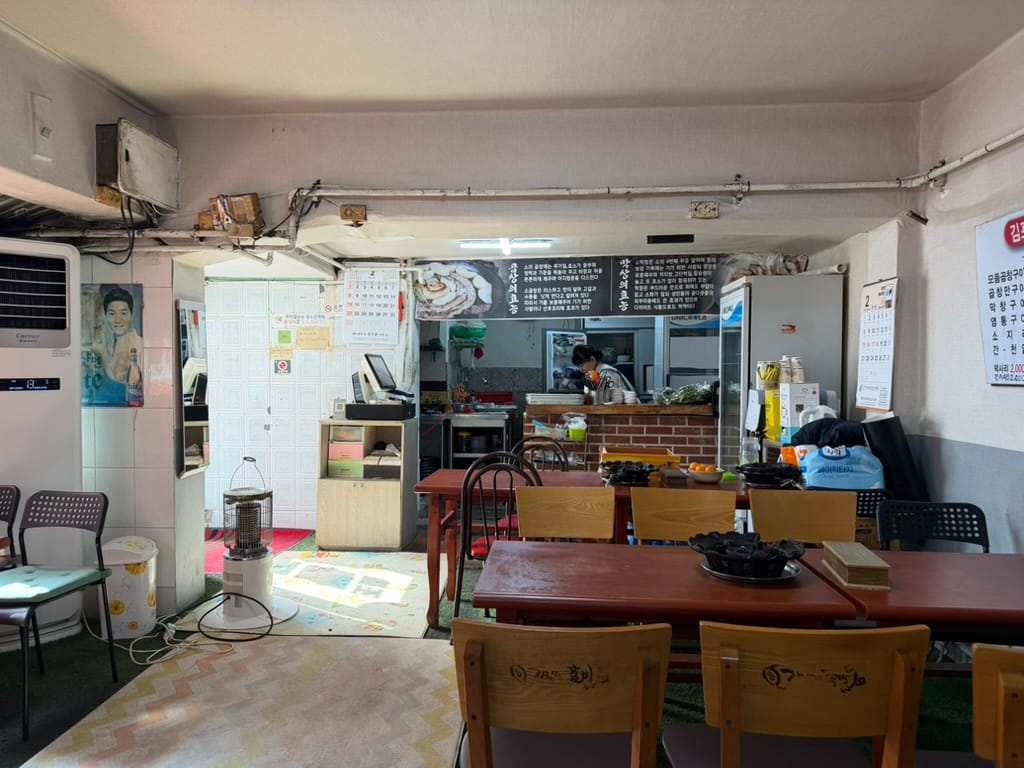
The interior of the restaurant featuring long wooden tables and a warm, lived-in atmosphere.
2. Guide to the Specialized Menu and Freshness
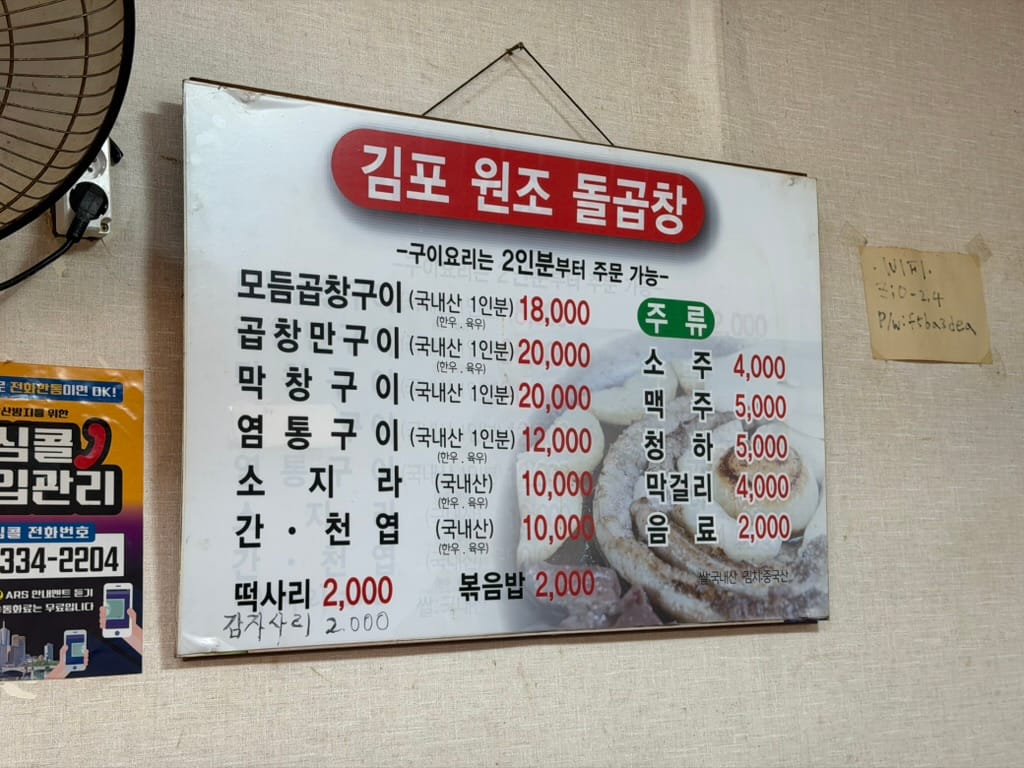
For first-time visitors, ordering Modeum-gopchang-gui(모듬곱창구이) is the most balanced choice. It allows you to sample different cuts such as Makchang(막창) and Yeomtong(염통) before deciding which texture you prefer. The menu also features rarer specialties like So-jira(소지라), or beef spleen, and Saeng-gan(생간), fresh raw liver. On this visit, which coincided with the start of the Lunar New Year holiday, these raw items were unavailable because cattle were not slaughtered that day. Although missing them was slightly disappointing, this strict adherence to freshness standards ultimately reinforced trust in the restaurant’s quality.
3. The Art of the Stone Plate and Side Dishes
The meal begins with simple accompaniments such as Cheon-yeop(천엽), raw omasum served with sesame oil and salt. Soon after, the heavy stone plate arrives, loaded with Gop-chang, potatoes, onions, and pieces of Tteok(떡). The stone retains heat exceptionally well, keeping every bite warm and flavorful throughout the meal. As the fat renders, it pools at the center of the plate. Grilling raw garlic in this savory oil deepens the flavor and adds contrast to the crispy exterior of the intestines. The interplay between textures—crispy, chewy, and tender—defines the experience.
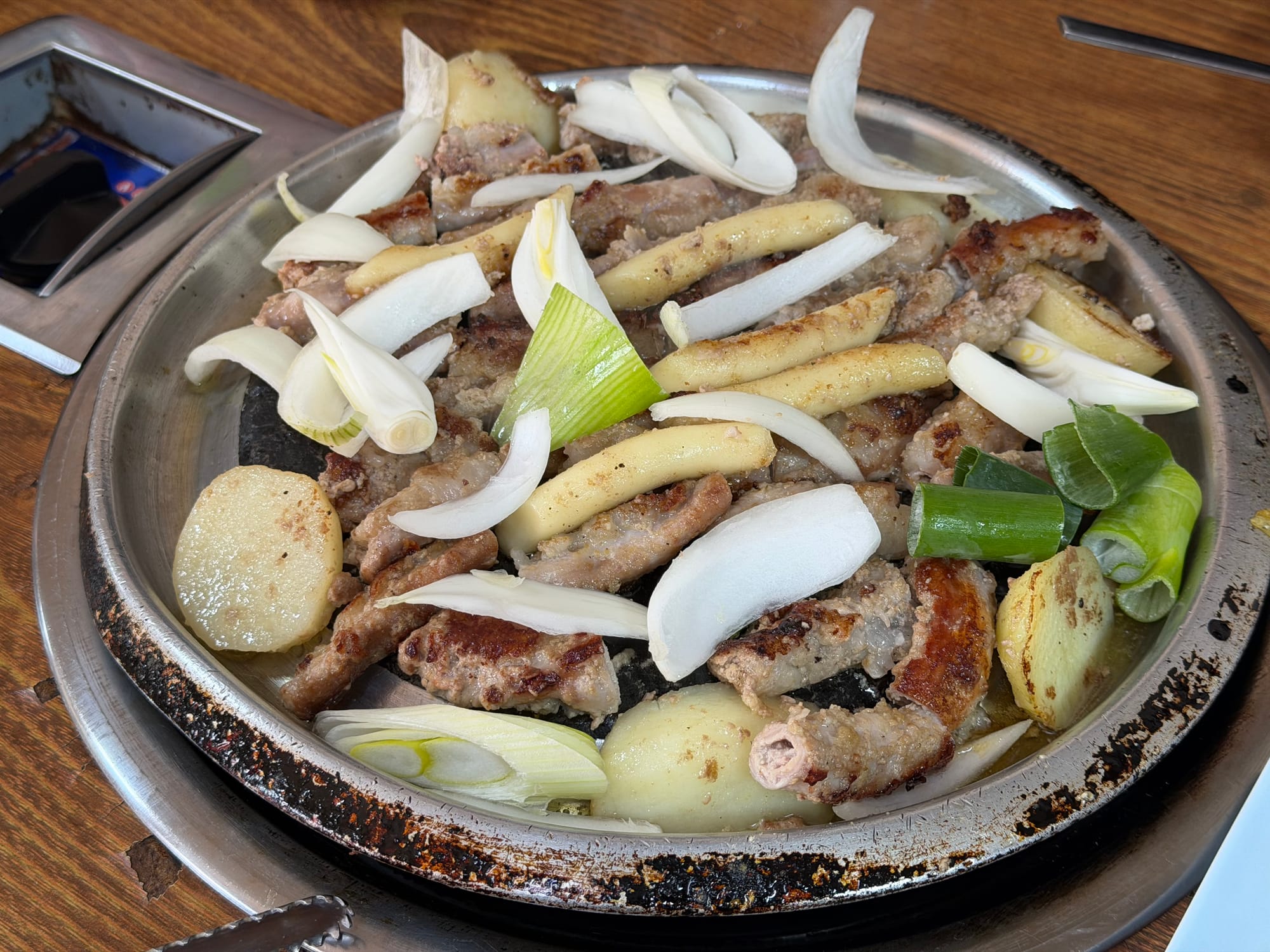
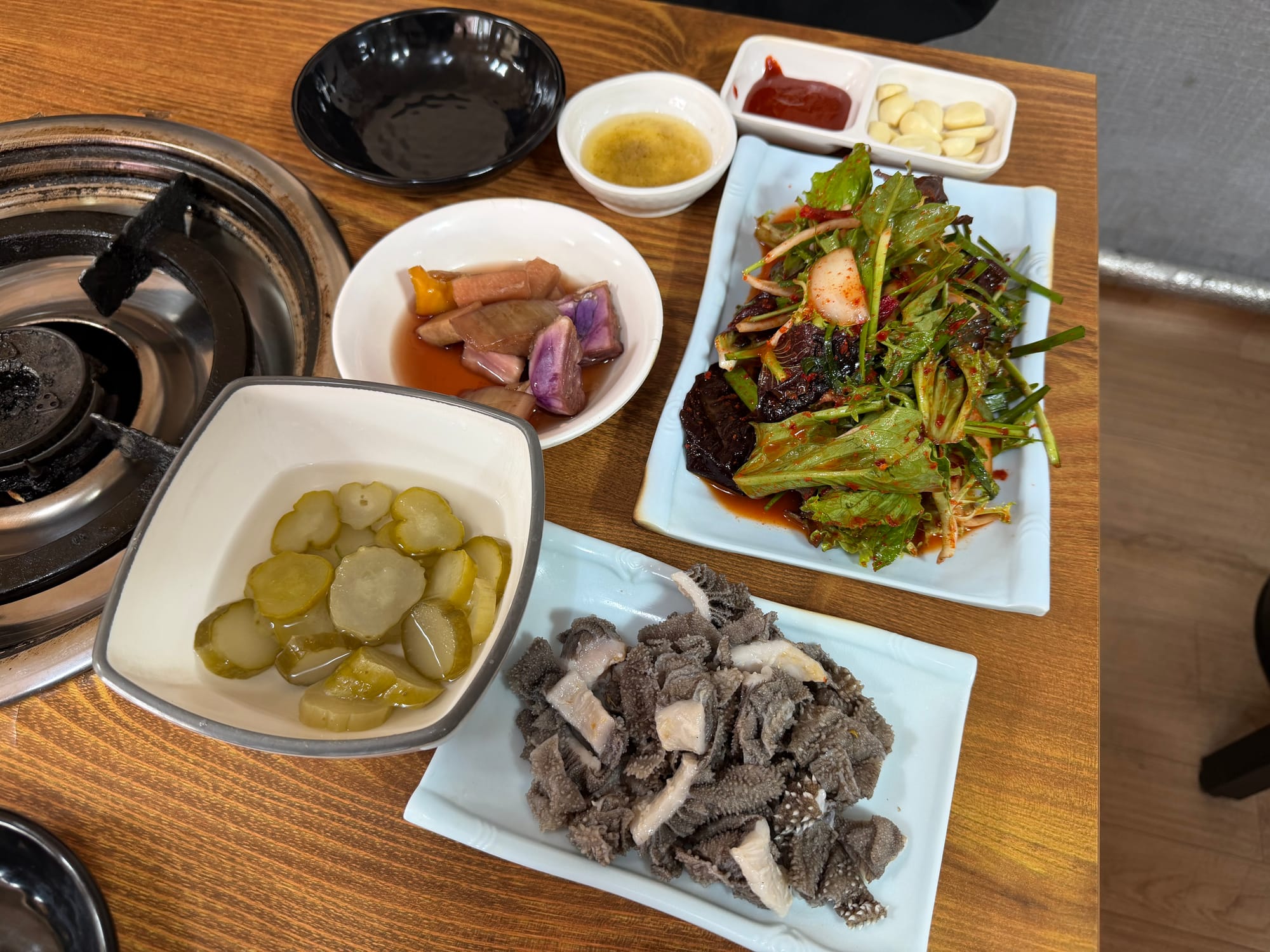
Traditional side dishes and the stone plate filled with assorted grilled ingredients.
4. Summary: A Recommended Spot for Authenticity
Gimpo Wonjo Dolgopchang represents reliability grounded in tradition. By prioritizing freshness over convenience, even if it means not selling certain items on specific days, the restaurant demonstrates quiet confidence in its standards. The intestines are generously filled with rich gop, and the side dishes remain consistently well-prepared. This is not a polished dining experience—and that is precisely its strength. For those who value authenticity over trendiness, or for anyone looking for a long-loved local spot in Gimpo, this restaurant remains a dependable choice.
Glossary
- Gimpo Wonjo Dolgopchang(김포원조돌곱창): A 40-year-old traditional restaurant specializing in grilled beef intestines.
- Gop-chang(곱창): Small intestines of cattle, a popular grilled dish.
- Makchang(막창): Beef abomasum, known for its chewy texture.
- Yeomtong(염통): Beef heart, which has a meaty texture.
- So-jira(소지라): Beef spleen, a rare specialty part.
- Saeng-gan(생간): Fresh raw beef liver.
- Cheon-yeop(천엽): Beef omasum, often served raw.
- Tteok(떡): Korean rice cakes.